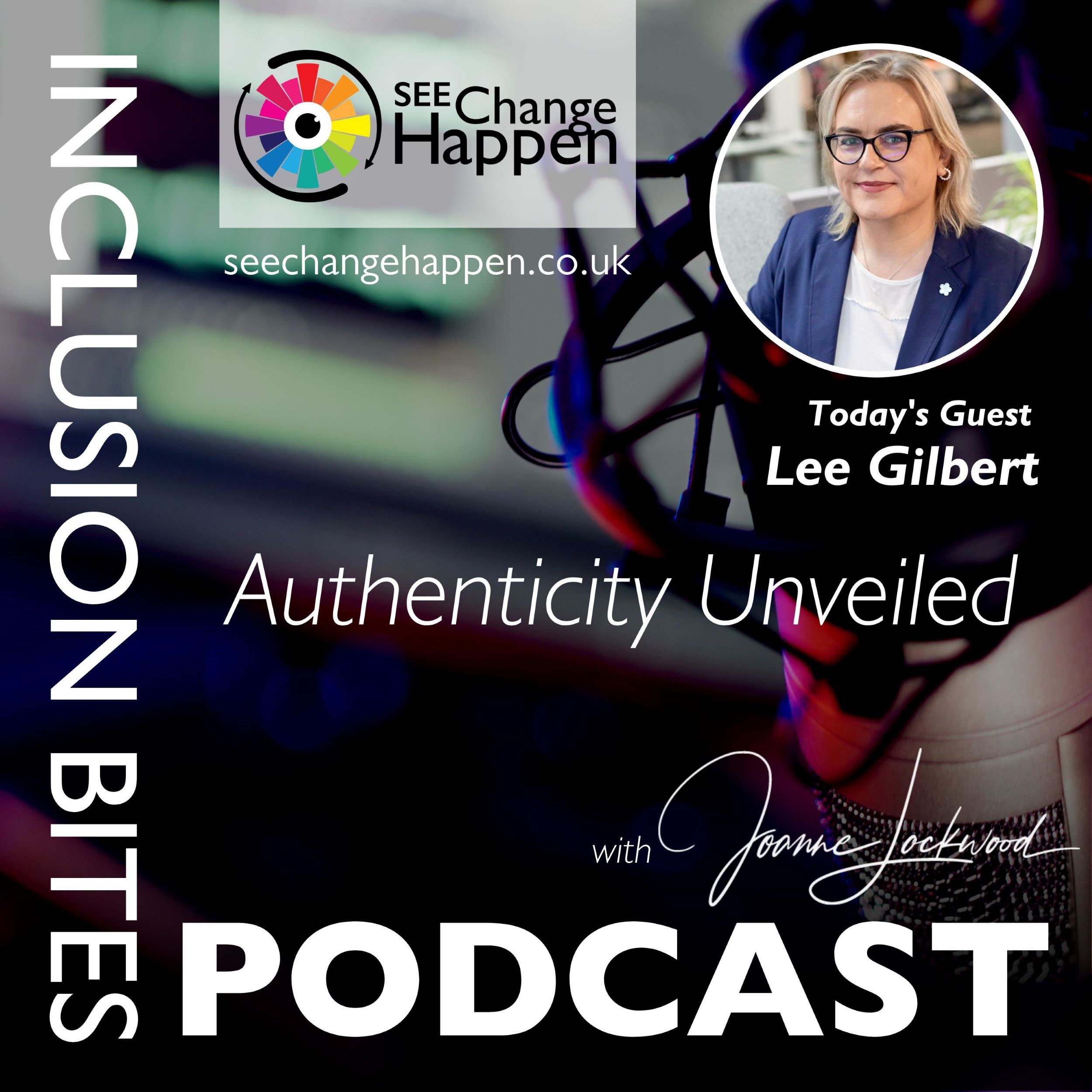
Authenticity Unveiled
with Lee Gilbert · 01 February 2024
Lived Experience Identity
Lee Gilbert joins Joanne Lockwood to talk through what it took to move from decades of masking to living openly and authentically.
Lee reflects on knowing she was transgender from childhood, the absence of information and role models in the 1980s and 1990s, and how that isolation contributed to shame and a severe mental health crisis in her teens. She describes building a life that looked successful from the outside while feeling deeply misaligned internally, and how music, relationships, and time helped her survive and make sense of who she was.
The conversation explores the practical and emotional “cliff edges” of coming out to a spouse, family, and then professionally, including how visibility can affect loved ones as well as the person transitioning. Joanne and Lee discuss vulnerability as a strength, the search for belonging, and the experience of “rebooting” life once authenticity becomes possible.
They also touch on the current media and political climate for trans and nonbinary people, and why Lee chooses to focus on mentoring, role-modelling, and one-to-one impact rather than being drawn into public debate. The episode closes with a clear message: authenticity and vulnerability can be transformative, and being visible in everyday life can challenge damaging stereotypes and make space for others.
About Lee Gilbert
One-sentence summary
Lee’s story is about the cost of living someone else’s script for decades — and the freedom, power and peace that came when she finally chose herself.
---
Synopsis
Lee Gilbert spent 40 years performing a life that looked enviable from the outside — successful businesses, supercars, speaking engagements, the picture of achievement — while privately carrying the knowledge she had been trans since childhood. Growing up in the 1980s, with no language, no role models and only sensationalist headlines to cling to, she learned early that silence felt safer than truth. That silence curdled into shame, and by her late teens she reached a point so dark she attempted to end her life. She survived, and instead of transitioning, she excelled — becoming, as she puts it, “one of the world’s best actors”, playing the role everyone expected.
In 2020, after years of private reckoning and a gradual, deeply personal unveiling, she stepped into the world as herself. It cost her status, identity and the comfort of a carefully built persona. But what she gained was belonging — real belonging — and a sense of wholeness she describes as becoming “the best me I can be”. Now she mentors young adults with gender dysphoria, not to be loud or combative, but to be visible — proof that trans people are ordinary, capable, fully human. She is not trying to win arguments; she is trying to make it easier for someone else to survive.
---
10 Small, digestible concepts for easy learning
1. Success can be a disguise.
Achievement doesn’t always equal authenticity.
2. Shame grows in silence.
A lack of language and representation can isolate a child from themselves.
3. Survival is not the same as living.
Coping strategies can keep you alive but disconnected.
4. You can outgrow the life you built.
Being proud of your drive doesn’t mean staying in the wrong story.
5. Coming out happens in layers.
Partner, family, work — each leap carries a different weight.
6. Vulnerability is strength with the armour removed.
Lee learned to transform shame into connection.
7. Belonging is a human need, not a luxury.
Entrepreneurship didn’t replace her longing for home.
8. Visibility challenges stereotypes quietly.
Simply living well can disrupt harmful narratives.
9. Rebooting your life is allowed.
Midlife can be a doorway, not a crisis.
10. Authenticity expands your capacity.
When you stop hiding, energy returns.
---
The “why” in the story
What they believe is true about people
That everyone deserves to belong as themselves — and that people are capable of extraordinary growth when freed from shame.
What they cannot unsee
The damage caused by silence, stigma and a vacuum of representation — especially for young people trying to understand who they are.
What they are no longer willing to tolerate
Living as a performance. Numbing with alcohol. Allowing public stereotypes to define private reality.
What they are trying to build instead
A life — and a visible example — where truth, dignity and leadership coexist.
---
Narrative structure
1. The trigger
Knowing she was trans at seven, but growing up in a time with no words, no role models, only mocking headlines. The silence became unbearable by 1995 when she hit her lowest point.
2. The tension
The conflict between external success and internal discomfort. Drive and entrepreneurship masked deep disconnection. Even as she accumulated wealth and recognition, she felt fraudulent.
3. The insight
Lockdown created space. In that quiet she realised authenticity was not a risk to manage but a necessity to survive fully. Shame could either shrink her or be reframed as vulnerability — and connection.
4. The pivot
She chose visibility. First with her wife, then family, then professionally. She closed the door on a successful public persona and looked for belonging rather than applause.
5. The destination
A life that “hums to my inner beat” — where she feels whole, emotionally intelligent, capable and aligned. A future where being trans is unremarkable and dignity isn’t debated.
---
Five key takeaways and learning points
1. You can be the architect of a life that doesn’t fit you.
So what: Pause periodically and ask whose expectations you are meeting.
2. Shame loses power when spoken.
So what: Safe conversations can transform isolation into relief.
3. Belonging is worth rebuilding for.
So what: Sometimes you must leave familiar spaces to find real alignment.
4. Visibility matters — especially for someone watching quietly.
So what: Living openly might be someone else’s lifeline.
5. Authenticity increases capacity.
So what: When you stop splitting yourself in two, your energy multiplies.
---
Ten distinct ideas explained
1. The cost of no representation
Growing up without language for your identity creates confusion and self-blame.
2. The performance of masculinity
Cars, alcohol, laddish spaces — not joy, but camouflage.
3. Marriage and moral conflict
Loving someone while hiding truth creates deep ethical tension.
4. Lockdown as interruption
When busyness stopped, suppressed questions surfaced.
5. Three cliffs of disclosure
Partner, family, profession — each requiring courage of a different kind.
6. The myth of the “sudden” transition
What looks instant publicly may be decades in the making.
7. From entrepreneur to employee
Seeking belonging instead of independence was an emotional shift.
8. Media avatars vs real people
Harmful stereotypes collapse under everyday visibility.
9. Reclaiming emotional bandwidth
Authenticity sharpened both empathy and intellect.
10. Quiet advocacy
Change doesn’t always arrive shouting; sometimes it shows up and works hard.
---
How people should change as a result
1. Think
- Move from “Why would someone do that?” to “What must it have cost them not to?”
- Understand that public change often follows years of private struggle.
- Recognise that visibility isn’t vanity — it can be protection for others.
- Question media portrayals before accepting them as truth.
2. Feel
- Shift from scepticism to curiosity.
- From discomfort to empathy.
- From pity to respect.
- From fear of difference to appreciation of courage.
3. Act
- Create space for someone to speak without interruption or judgement.
- Challenge lazy stereotypes in everyday conversation.
- Offer practical support to someone coming out — help with appointments, logistics, or simply presence.
- Follow and amplify voices that model thoughtful visibility.
- Check in on the emotional wellbeing of those navigating identity shifts.
- Examine where you might be “performing” rather than living truthfully.
---
One thing to remember
You don’t have to keep performing a life that was never written for you.