Lived Experience Identity
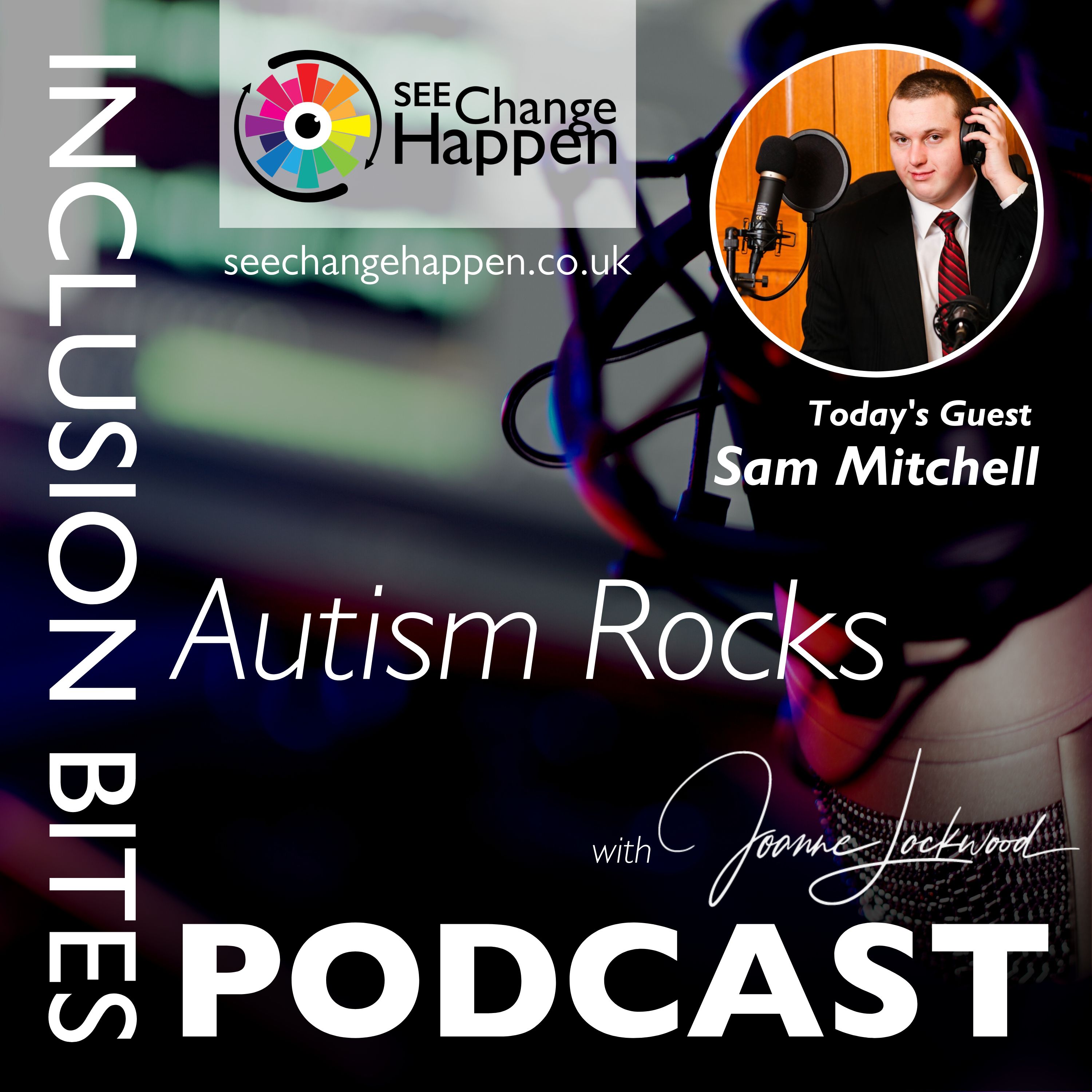
Sam Mitchell joins Joanne Lockwood to talk about why “autism rocks,” sharing how autism shapes his creativity, preference for structure, and day-to-day experiences navigating social cues. He reflects on being misunderstood, the impact of exclusion, and what it means to feel included—whether in friendships, hobbies, education, or work.
Sam also discusses turning his podcast into a wider advocacy mission, including building a nonprofit, finding sponsors, and creating community partnerships. He shares his public speaking experiences and the messages he brings to organisations about supporting autistic people—especially the importance of understanding different communication styles, creating space for participation, and responding with compassion when someone is overwhelmed or having a meltdown.
The conversation touches on mental health advocacy, the effects of the pandemic on social connection, and the role that purpose, routine, and supportive networks can play in helping people thrive. Sam closes by sharing how listeners can connect with him and follow his work.
About Sam Mitchell
One-sentence summary
Sam Mitchell’s message is simple and defiant: autistic people are not problems to be managed — they are creative, structured, passionate human beings who just want to be included without being misunderstood.
---
Synopsis (two paragraphs)
Sam Mitchell describes his superpower as “wisdom” — and there’s a quiet steadiness in that claim. Growing up as an autistic man in Indiana, he learned early that being different often meant being misread. He speaks openly about missing social cues, about moments when others labelled behaviour as rude or abnormal when he was simply navigating the world in his own way. Yet he doesn’t frame autism as a deficit. “Autism rocks,” he says, because it makes him creative, structured and capable of thinking in ways that don’t follow the expected route. He loves pro wrestling, the outdoors, podcasting, business — and he has built a life around those passions.
What drives him now is making sure others on the spectrum don’t feel like “freaks and bizarros”, as he puts it bluntly. Through his organisation and podcast, Autism Rocks and Rolls, he is creating space — for stories, for advocacy, for practical connection. He speaks to nurses, educators, community groups. He hosts galas. He takes part in accessible fishing days. He believes inclusion is not complicated: “All we want to do is just be involved.” Beneath the entrepreneurship is a very human hope — that autistic people are allowed to contribute, succeed and belong without having to apologise for how their minds work.
---
10 Small, digestible concepts for easy learning
1. Different isn’t defective.
A different way of processing the world can be a strength, not a flaw.
2. Structure can be safety.
Routines aren’t rigidity — they’re anchors in a chaotic world.
3. Missing a cue isn’t missing respect.
Social differences are not deliberate rudeness.
4. Inclusion is involvement.
Being present isn’t enough — people want to participate.
5. Meltdowns aren’t choices.
Distress is not misbehaviour; it’s overwhelm.
6. Passion can become purpose.
A hobby can grow into a business when it’s rooted in meaning.
7. Visibility changes narratives.
When autistic people speak for themselves, stereotypes weaken.
8. Advocacy can be joyful.
Fishing trips, interviews and galas are as powerful as lectures.
9. Mental health has nuances.
Even anxiety, he suggests, can carry alertness and awareness.
10. Success doesn’t need a grand blueprint.
Sometimes the goal is simply to “be successful in life in some shape or form.”
---
The “why” in the story
What they believe is true about people
Sam believes people want to contribute. He believes autistic people bring creativity, order and unique thinking to the table. He believes most misunderstandings come from ignorance, not malice.
What they cannot unsee
He cannot unsee how quickly autistic traits are labelled as strange or wrong. He cannot forget the feeling of being misread because of a missed social cue.
What they are no longer willing to tolerate
He is no longer willing to accept that meltdowns are seen as deliberate disruption, or that inclusion is treated as optional.
What they are trying to build instead
He is building platforms where autistic voices lead — where inclusion means genuine involvement, and where difference is seen as value.
---
Narrative structure
1. The trigger
Repeated experiences of being misunderstood — moments when behaviour was judged instead of understood — and the recognition that others on the spectrum were facing the same thing.
2. The tension
Living in a world that expects unspoken rules to be instinctively understood. Constantly navigating when to monitor social cues and when to relax. Facing the stereotype that difference equals deficiency.
3. The insight
“If we’re not involved with someone’s hobbies, we’ll find something ourselves to get involved with.” Autistic people don’t lack drive — they may simply channel it differently.
4. The pivot
He didn’t retreat. He started a podcast. He formed a corporation and a non-profit. He stepped onto stages. He turned his difference into a platform.
5. The destination
A world where autistic people are included instinctively — where involvement is normal, meltdowns are met with compassion, and creative, structured minds are valued as part of the human mix.
---
Five key takeaways and learning points
1. Autism is lived from the inside out — not observed from the outside in.
So what: Listen to autistic voices before forming conclusions.
2. Distress has context.
So what: Respond to meltdowns with understanding, not punishment.
3. Routine is often regulation.
So what: Before disrupting someone’s structure, ask what it protects.
4. Passion builds confidence.
So what: Encourage deep interests — they may become careers.
5. Inclusion is participation, not proximity.
So what: Make sure people are actively engaged, not just present in the room.
---
Ten distinct ideas explained
1. Being misunderstood leaves a residue.
When your intentions are repeatedly misread, you begin to feel watched rather than welcomed.
2. Social rules are often invisible.
For autistic people, what others absorb unconsciously may require active decoding — and that takes energy.
3. Structure reduces anxiety.
Predictability can calm a nervous system that is constantly processing heightened stimuli.
4. Meltdowns are nervous system overload.
They are not tantrums; they are stress responses.
5. Creativity thrives outside conformity.
Thinking differently allows new routes where others might not look.
6. Entrepreneurship offers autonomy.
Building your own platform can mean fewer barriers and more self-determination.
7. Community work restores dignity.
Events like accessible fishing days show that belonging can be practical and joyful.
8. Mental health conversations matter for autistic people too.
Anxiety and depression intersect powerfully with social misunderstanding.
9. Visibility challenges stigma.
Interviewing public figures and speaking publicly disrupts narrow narratives.
10. Belonging feels like ease.
It’s the freedom to “let loose” without scanning for every social cue.
---
How people should change as a result
1. Think
- Move from “Why are they acting like that?” to “What might they be experiencing?”
- See structure as support, not stubbornness.
- Understand that behaviour is communication.
- Recognise that autism shapes perception — it doesn’t erase humanity.
- Replace the idea of “normal” with “different needs”.
2. Feel
- Shift from judgement to curiosity.
- Move from discomfort to empathy.
- Let go of pity and adopt respect.
- Replace defensiveness with openness.
- Feel responsibility instead of indifference.
3. Act
- Ask autistic colleagues what helps them work best — and adjust where possible.
- Be explicit about expectations instead of relying on implied rules.
- Offer predictability: agendas, clear timings, advance notice of change.
- Respond calmly to overwhelm; reduce stimulation rather than escalating.
- Create real participation opportunities, not token invitations.
- Amplify autistic-led initiatives and platforms.
- Pay autistic speakers and professionals fairly for their expertise.
---
One thing to remember
All we want to do is just be involved.