Being A Woman In A Man’S World
with Mandy Hickson · 26 August 2021
Lived Experience Identity
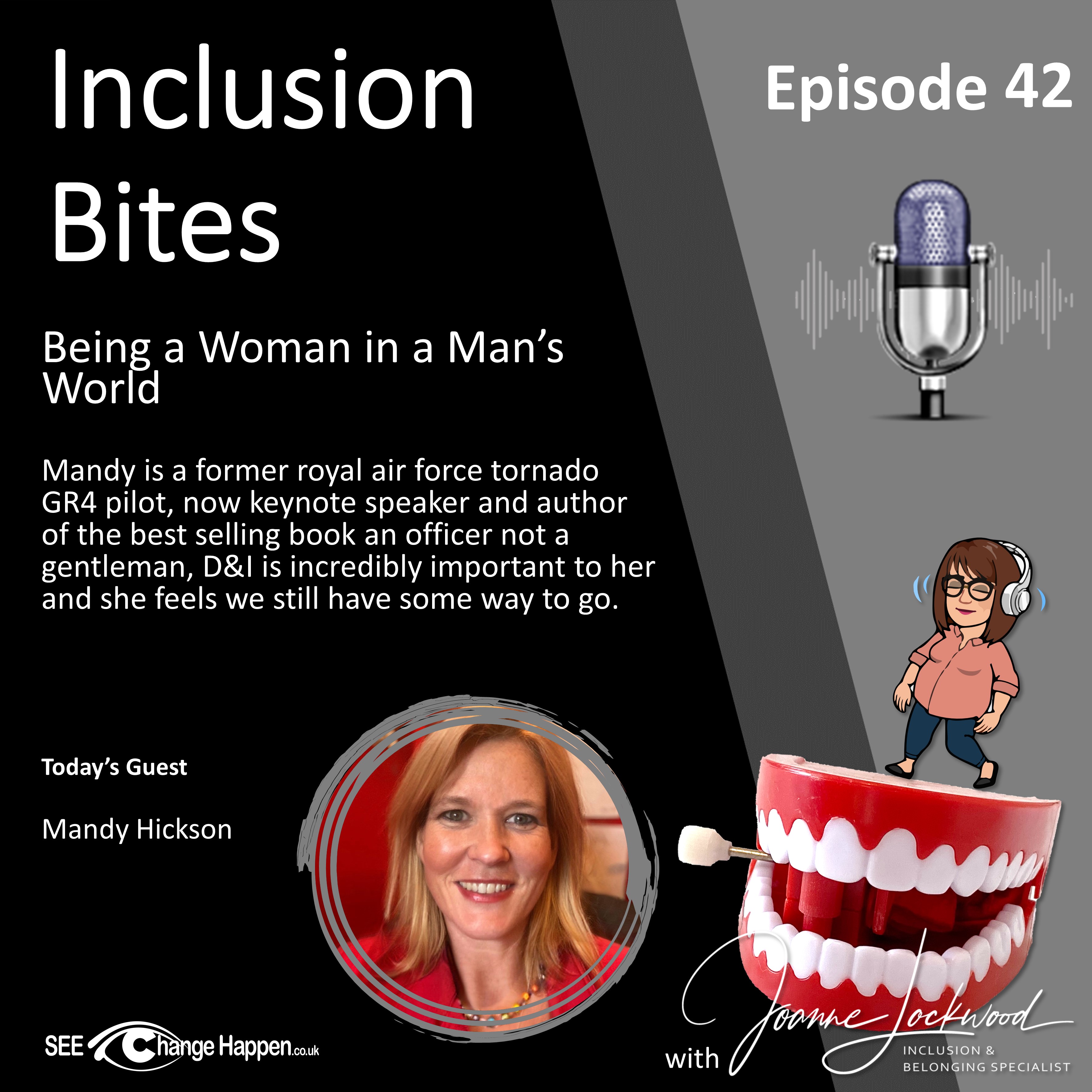
Mandy Hickson, a former Royal Air Force Tornado GR4 pilot, joins Joanne Lockwood to talk about being one of the first women allowed to fly fast jets on the front line and what it meant to build a career in a strongly male-coded culture.
They explore the difference between fitting in and belonging, including the pressure to become “one of the boys,” the realities of life on deployment, and the impact of subtle bullying and exclusion. Mandy reflects on learning to hold onto her identity and authenticity while still succeeding in an intense performance environment.
The conversation also widens into culture change: how rules and policies can shift faster than mindsets, how unconscious bias shapes expectations from childhood to the workplace, and why meaningful progress often requires those with privilege and power to actively support change.
Joanne shares parts of her own transition experience, including the relief of living without secrecy, the importance of visibility and storytelling, and the challenges of accessing adequate gender-related healthcare support. The episode closes with Mandy’s reflections on confidence, changing priorities across life stages, and how her book and speaking work aim to inspire others to follow their own path.
About Mandy Hickson
One-sentence summary
Mandy Hickson’s story is about refusing to shrink to fit a man’s world, choosing authenticity over approval, and widening the runway for others so they can belong without pretending.
---
Synopsis
Mandy Hickson joined the Royal Air Force at 21 and became one of the first women to fly the Tornado GR4 on the front line. Tall, loud, naturally confident, she says she “never really massively struggled” at the start — yet looking back, she can see the ways she tried to survive by becoming “one of the boys”. She stripped pornography from her room in silence, laughed off underhand comments, queued for showers wrapped in a towel alongside 39 men, and carried the quiet loneliness of craving women’s conversation in a world built for male ease. There were moments that shaped her — being told she was “one of the boys” when a colleague called her beautiful; watching a close friend live in fear of being outed as gay; realising that fitting in and belonging are not the same thing.
What she is trying to change is not simply representation but culture. She wants young girls to see possibilities before stereotypes close them down. She wants men to want flexible working too, because “you’re not going to see true change until the men want it too.” She wants people to notice their unconscious assumptions — the fast jet pilot we still picture as male — and gently unpick them. Above all, she is building a world where people do not have to contort themselves to participate; where authority does not depend on gender; where ambition can flex with motherhood; and where authenticity is not a risk, but a strength.
---
10 Small, digestible concepts for easy learning
1. Fitting in is not the same as belonging.
You can adapt to survive — but belonging begins when you no longer have to edit yourself.
2. Representation reshapes imagination.
You can’t aspire to what you’ve never seen.
3. Unconscious bias thrives on statistics.
If 90% of pilots are men, we picture a man — until someone stands on stage and quietly disrupts it.
4. Loneliness can exist in a room full of people.
Being the only woman meant missing the depth of conversation she craved.
5. Microaggressions accumulate.
One porn-plastered room might be a joke; three years running reveals intent.
6. Authenticity reduces strain.
“Be yourself” sounds simple — but it removes the exhausting work of performance.
7. Culture outlives policy.
Changing regulations is quick; changing mindsets takes evidence and time.
8. Career paths are jungle gyms, not ladders.
Flight paths shift with children, priorities and seasons of life — and that is not failure.
9. Change needs power onside.
Progress accelerates when those with privilege want it too.
10. Stories move people more than statistics.
A human account opens empathy where arguments cannot.
---
The “why” in the story
What they believe is true about people
That most people want to do well and be accepted — and that when you show them reality rather than theory, they are capable of changing.
What they cannot unsee
The stress of living closeted. The exhaustion of trying to be “one of the boys.” The deeply ingrained stereotypes in children and careers advisers alike.
What they are no longer willing to tolerate
Purposeful, vindictive behaviour disguised as banter. Assumptions that shrink opportunity. Systems that quietly push women to adapt rather than evolve themselves.
What they are trying to build instead
Workplaces where difference is ordinary, where ambition adapts with life, and where a young girl can picture herself in the cockpit — without apology.
---
Narrative structure
1. The trigger
Walking into her room on deployment and finding the walls plastered with pornography — repeatedly. Hearing, “She’s one of the boys,” and realising she had been performing belonging.
2. The tension
The constant negotiation: stand out or blend in; push back or laugh it off; pursue career or adjust for motherhood. The wider fear that women’s progress will be seen as men’s loss.
3. The insight
She saw that belonging requires strength — not just skill. That you can fly at the top of your game and still be internally isolated. And that assumptions are often invisible to those who hold them.
4. The pivot
She chose authenticity over assimilation. She stopped trying to over-perform masculinity and instead embraced being “a woman in a man’s world” without shrinking or exaggerating.
5. The destination
A world where authority has no gender, where flexibility is normal, and where authenticity is expected rather than exceptional.
---
Five key takeaways and learning points
1. Belonging demands courage.
So what: You may need to risk being seen before you feel welcomed — but the freedom is worth it.
2. Visibility is responsibility.
So what: Your presence might give someone else permission to imagine themselves differently.
3. Bias is not always malicious — but it is consequential.
So what: Even kind people can reinforce ceilings unless they consciously widen them.
4. Careers evolve with identity.
So what: Shifting ambition to prioritise family or wellbeing is not settling; it’s steering.
5. Change accelerates when everyone benefits.
So what: Invite men into conversations about flexibility and caregiving — equity grows faster when shared.
---
Ten distinct ideas explained
1. The emotional cost of “one of the boys”.
Acceptance gained through mimicry leaves a quiet ache — because it affirms performance, not personhood.
2. Loneliness inside success.
You can reach the front line, achieve the dream, and still feel isolated by cultural difference.
3. Humour as camouflage.
Laughing along can be a shield — but shields are heavy to carry daily.
4. Motherhood as a career crossroads.
When systems assume someone else will absorb the care, women’s trajectories bend first.
5. The power of normal conversation.
Craving “just talk to me about normal stuff” reveals how belonging is built in small, ordinary exchanges.
6. Stereotypes begin early.
Children naming all pilots as men shows how deeply expectation is planted before ability is tested.
7. Authority and embodiment.
Height, voice, presence — visible traits shape how credibility is granted before a word is spoken.
8. The relief of living openly.
Watching others shed secrecy underlined how authenticity reduces mental strain.
9. Storytelling as cultural leverage.
A personal story can soften resistance more effectively than a policy memo.
10. Ambition across seasons.
Success changes meaning as life expands; dignity comes from choosing your path, not clinging to old definitions.
---
How people should change as a result
1. Think
- Move from “Is she capable?” to “What assumptions am I making?”
- Understand that adaptation does not equal belonging.
- See flexible ambition as strength, not inconsistency.
- Recognise that policy change is only the first step — culture follows behaviour.
- Accept that inclusion benefits those with privilege too.
2. Feel
- From defensiveness to curiosity.
- From token admiration to everyday respect.
- From silent tolerance to protective allyship.
- From guilt about bias to ownership of change.
3. Act
- Interrupt “jokes” that rely on exclusion.
- Rotate opportunities visibly — don’t wait for confidence to appear fully formed.
- Share parental leave, openly and proudly.
- Introduce children to varied role models — books, stories, conversations.
- Ask in meetings: whose voice haven’t we heard yet?
- Speak about flexibility in ways that include men as beneficiaries.
- Tell your story in a way that makes space for someone else’s.
---
One thing to remember
Belonging begins the moment you stop trying to be “one of the boys” and start insisting on being fully yourself.