Being On The Periphery Of Society
with Khakan Qureshi · 06 January 2022
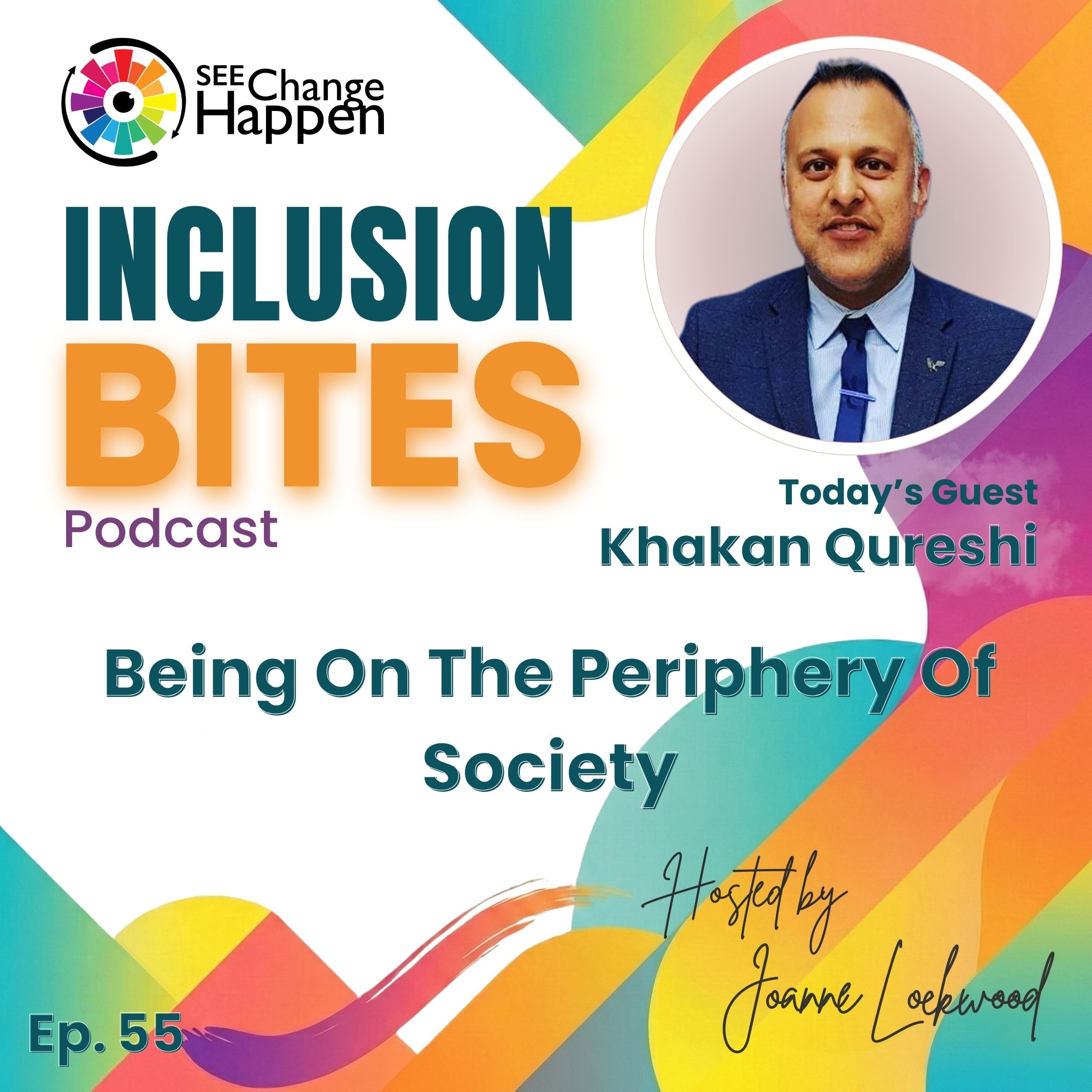
Lived Experience Identity
Khakan Qureshi reflects on growing up feeling different and on the edges of multiple communities, from school playground dynamics and gender expectations to the pressures of culture, faith, and community norms. He describes how not fitting neatly into perceived boxes shaped his confidence, relationships, and sense of belonging, and how those experiences followed him into adulthood and the workplace.
The conversation explores being gay and Muslim, navigating family expectations, and the impact of stigma and political hostility over time. Khakan shares pivotal moments that strengthened his willingness to speak up, including experiences of homophobia, the legacy of Section 28, and the ongoing debates around conversion therapy and wider LGBTQ+ rights.
Khakan also discusses the role of resilience and support networks, the importance of visibility and role models, and what meaningful social change could look like. The episode closes with his reflections on advocacy within the South Asian community, his recognition with a British Empire Medal for LGBTQ+ equality work, and observations from his work supporting young people where anxiety and depression are increasingly common.
About Khakan Qureshi
One-sentence summary
Khakan Qureshi’s life is a quiet act of defiance: choosing honesty over fear, dignity over belonging-by-compromise, and building a home where others once told him he had none.
---
Synopsis
Khakan grew up knowing he was different long before he had words for it. In the playground he didn’t fit with the boys, yet he wasn’t allowed to mix with the girls; at home he didn’t match the expectations placed on sons; in his wider community he was neither “Muslim enough” nor “South Asian enough”. He describes himself as living “on the peripherals of society”, marked out by his softness, his introspection, and later by being a gay, brown, Muslim man. As a young adult in the early 1990s, surrounded by political hostility, religious guilt and silence around mental health, he wrestled with internalised shame so deeply that he believed he had only two options: endure or end it. What steadied him was love — especially his mother’s — and the courage, drawn from that bond, to tell the truth about who he was.
Today, Khakan is still working at the edges — but by choice. He advocates for LGBT+ equality within South Asian communities, challenges homophobia with reason rather than rage, and refuses to allow faith to be weaponised against people like him. He accepted a British Empire Medal not as a badge of perfection, but as recognition that someone from the margins can help reshape the centre. What he is trying to change is simple but radical: a world where saying “I am gay” or “I am different” is met not with shock, but with “so what?” — where young people are not forced to choose between family, faith and themselves.
---
10 Small, digestible concepts for easy learning
1. Difference isn’t discovered — it’s felt early.
Many of us know we stand out long before we know why.
2. Belonging without authenticity is a slow erosion.
Fitting in at the cost of yourself is not belonging at all.
3. Faith and sexuality are not natural enemies.
It is interpretation, not identity, that creates conflict.
4. Silence can be as heavy as hostility.
Growing up without role models leaves you alone with your questions.
5. Internalised shame is learned — and can be unlearned.
What you absorb from society can be replaced with self-acceptance.
6. Love can steady courage.
His mother’s words — “Whatever makes you happy makes me happy” — changed everything.
7. Challenge can be calm.
Logic and reason are forms of resistance.
8. Visibility is oxygen for the next generation.
What he didn’t have growing up, he now tries to be for others.
9. Resilience is renewable — but not limitless.
Even the strongest advocates must protect their mental health.
10. The goal is normality, not novelty.
The dream is a world where identity is ordinary, not headline-worthy.
---
The “why” in the story
What they believe is true about people
Khakan believes people are capable of growth — that faith can coexist with acceptance, and that communities can expand without losing themselves.
What they cannot unsee
He cannot unsee the damage done by religious rigidity, political hostility and everyday homophobia — especially the toll on mental health.
What they are no longer willing to tolerate
He is no longer willing to stay silent when people describe gay people as unnatural, nor accept policies that debate LGBT+ existence as if it were theoretical.
What they are trying to build instead
He is building bridges: between faith and sexuality, between generations, between cultural pride and human dignity.
---
Narrative structure
1. The trigger:
Years of subtle exclusion — in playgrounds, in family expectations, in religious spaces — compounded by a workshop where a colleague compared gay people to something unnatural. He went home angry, not just at her, but at himself for staying quiet.
2. The tension:
The constant pull between identities: Muslim and gay, South Asian and British, son and self. The emotional collision with his father. The fear that honesty might cost him family, faith or safety.
3. The insight:
Authenticity is non-negotiable. Not living truthfully damages mental health more deeply than rejection does.
4. The pivot:
He chose to come out to his mother, telling himself he would face whatever followed. He began speaking up calmly but firmly in workplaces and public debates. He stopped shrinking.
5. The destination:
A world where a young person never feels they must choose between God, family and identity — and where being asked about your partner is just small talk, not social risk.
---
Five key takeaways and learning points
1. You cannot fake yourself into peace.
Suppressing identity erodes mental health; honesty is preventative care.
2. Acceptance at home is life-saving.
A single parent’s unconditional love can anchor someone through social hostility.
3. Representation shifts possibility.
If you cannot see someone like you thriving, hope shrinks.
4. Calm courage is powerful.
Challenging prejudice with reason can invite reflection rather than defensiveness.
5. Progress is fragile.
Legal change does not automatically mean cultural safety; vigilance still matters.
---
Ten distinct ideas explained
1. Peripheral identity
Living at the edges means constantly reading the room, adjusting, deciding how much of yourself is safe to show.
2. Cultural compartmentalising
Behaving one way at home and another outside is a survival skill — but it fragments the self.
3. Religious guilt
When faith is taught as punishment rather than compassion, identity becomes a source of fear.
4. Internalised homophobia
Looking at others with the freedom you crave and feeling both admiration and disgust — that contradiction is taught, not innate.
5. Chosen family
When biology is uncertain ground, relationships built on trust become lifelines.
6. Visibility as protection
Seeing laws change, or a public advert declaring homophobia a crime, can make someone feel safer overnight.
7. Mental health under pressure
Anxiety grows when identity, safety and belonging are all in question at once.
8. Intersectional isolation
Being a minority within a minority can mean having no template for your life.
9. Reason as activism
Not all activism is loud; some of it is careful, steady questioning.
10. Utopia as ordinariness
The future he imagines is not dramatic — just boringly inclusive.
---
How people should change as a result
1. Think
- Move from seeing “conflict of values” to seeing a person navigating survival.
- Recognise that faith communities are not monolithic; nuance matters.
- Understand that authenticity and mental health are directly linked.
- Separate doctrine from dignity — no belief requires cruelty.
---
2. Feel
- Shift from defensiveness to curiosity when someone challenges prejudice.
- Move from pity to respect for those who live at intersections of identity.
- Replace discomfort with compassion when someone comes out.
- Feel protective of young people who are still searching for mirrors.
---
3. Act
- Ask open, neutral questions about partners and family structures.
- Interrupt casual homophobia with calm clarity.
- Support inclusive education that teaches children difference without fear.
- Check in on young people navigating identity — especially in faith communities.
- Report hate incidents and believe those who share their experiences.
- Create spaces where speaking honestly does not carry social penalty.
- Celebrate difference without turning it into spectacle.
---
One thing to remember
No one should have to stand on the edge of every community just to be themselves at the centre of their own life.