Workplace Culture Systems
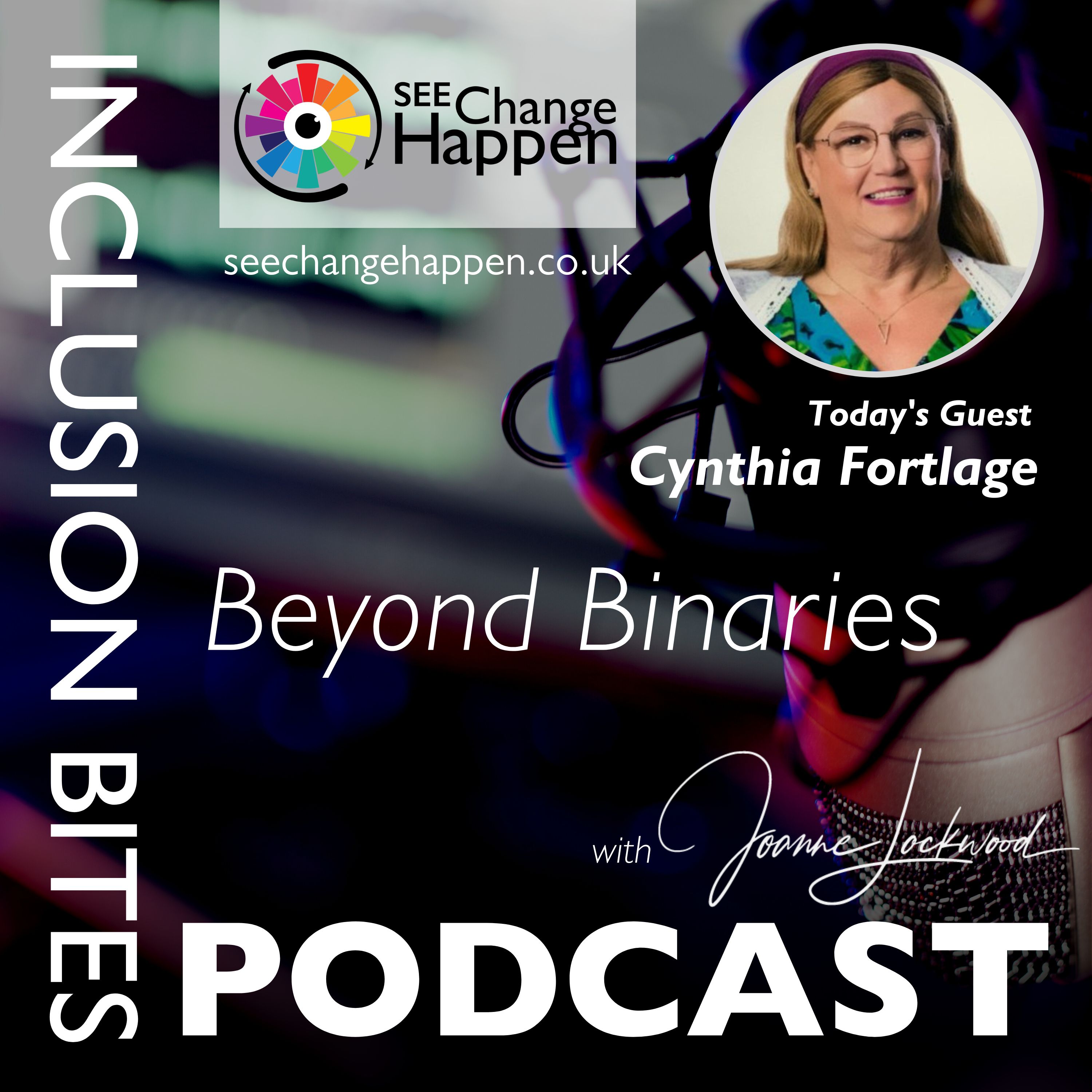
Joanne Lockwood is joined by gender diversity speaker and consultant Cynthia Fortlage for a wide-ranging conversation about how binary thinking has shaped society and workplaces, and what it takes to build cultures where people can belong.
Cynthia unpacks what she means by gender as an innate sense of self as well as a set of social expectations, and explores how language and norms shift over time. The discussion challenges common assumptions about sex and gender, draws attention to biological diversity including intersex realities, and reflects on how colonisation and religious interpretation have influenced gender roles and inequality.
They bring the conversation into the workplace, looking at why progress on gender equity remains slow, what COVID revealed and exacerbated, and how bias shows up in pay, progression and everyday safety. Cynthia argues that organisations can be leading forces for change, especially when they treat culture as an ongoing practice rather than a one-off initiative.
Practical themes include the need for psychological safety to enable disclosure and trustworthy data, the importance of continuous learning, and the role of allies and those with power and privilege in shifting systems. Cynthia also shares elements of her own leadership journey, including transitioning while in a C-suite role, and how that experience informs her work with organisations around the world.
About Cynthia Fortlage
One-sentence summary
Cynthia Fortlage’s message is that when we dare to question the stories we’ve inherited about gender, we create room for people to live – and work – without having to shrink themselves to fit a box that was never true in the first place.
---
Synopsis
Cynthia Fortlage describes herself as “one leader with two genders of experience”, and that is more than a clever line – it’s the spine of her life. For decades she moved through the world as a white, heterosexual male executive, holding power, influence and all the invisible privileges that come with them. Then, in her fifties, she “flipped my binary”. Almost overnight, the boardroom table felt different. The voice that once carried authority was interrupted or ignored. The safety she had taken for granted became something she had to assess every time she stepped outside. She did not become less capable. She became, in her own words, marginalised. She also became clearer about what she had never been forced to see before.
What Cynthia is trying to change is not simply how organisations handle gender diversity. She is challenging the belief that gender has ever truly been binary. Drawing on history, religion and lived experience, she argues that much of what we assume is “natural” is, in fact, constructed – and often constructed to preserve power. For her, this work is about dignity: about ensuring that no one becomes invisible at fifty, unheard at the executive table, or unsafe on the street because of how their gender is perceived. She believes organisations can move the needle where society often stalls – but only if leaders are willing to confront their own privilege and make the unconscious conscious.
---
10 Small, digestible concepts for easy learning
1. Binary is a recent story, not an ancient truth.
Much of what we call “traditional” about gender is only a few hundred years old.
2. Privilege isn’t always loud – it’s often invisible to the person who has it.
You only notice it when it disappears.
3. Identity is internal; gender roles are imposed.
One is about who you are. The other is about what the world expects of you.
4. Data without safety is meaningless.
People won’t disclose who they are unless they feel protected.
5. Culture is not a project; it’s a daily habit.
You cannot launch inclusion once and expect it to sustain itself.
6. Women do not become less valuable with age – they become less visible.
Invisibility is a social decision, not a reflection of competence.
7. Equality laws don’t erase bias.
Legislation may change; beliefs take longer.
8. You cannot change what you refuse to see.
Awareness is the first uncomfortable step.
9. Flexibility is equity in action.
One way of working rarely works for everyone.
10. Real change begins before it is measurable.
You have to do the work before the numbers shift.
---
The “why” in the story
What they believe is true about people
Cynthia believes people are inherently diverse – biologically, psychologically and socially. Human beings do not come in neat, opposing pairs.
What they cannot unsee
She cannot unsee the difference in how she was treated before and after her transition – the sudden loss of assumed authority, the creeping invisibility, the everyday calculations about safety.
What they are no longer willing to tolerate
She is no longer willing to tolerate cultures that say the right words but fail to live them; nor systems that quietly sideline women and marginalised people while insisting nothing is wrong.
What they are trying to build instead
She is trying to build workplaces where psychological safety is real, where data reflects lived truth, and where leaders recognise their privilege as a tool for uplift rather than dominance.
---
Narrative structure
1. The trigger
The turning point came when she transitioned while holding a C-suite role. One day she inhabited the world with unexamined privilege; the next, she felt the weight of marginalisation. The contrast was stark and personal.
2. The tension
She continually meets resistance: leaders who see inclusion as a “project”, cultures that treat training as a tick-box exercise, and individuals who struggle to acknowledge their own power. There is fatigue in pushing against centuries of bias.
3. The insight
The key insight was that much of what we defend as “natural” is constructed – shaped by history, religion and power. If it was constructed, it can be reconstructed.
4. The pivot
Rather than retreat, she chose to use her dual experience as evidence. She began working with organisations across countries, guiding them to examine data, build intentional cultures, and confront bias directly.
5. The destination
She is aiming for a world where no one becomes invisible because of gender; where walking down the street does not require hypervigilance; where leadership is measured by wisdom and contribution, not by proximity to a dominant identity.
---
Five key takeaways and learning points
1. Your comfort may be someone else’s exclusion.
So what: Notice who benefits from the current way of working – and who quietly pays the cost.
2. Inclusion cannot be outsourced.
So what: Consultants can guide, but leaders must live the culture daily.
3. Privilege carries responsibility, not guilt.
So what: Use your influence to open doors rather than defend them.
4. Flexibility is not a favour; it’s fairness.
So what: Adapt working patterns to real lives, not idealised norms.
5. Awareness precedes action.
So what: Take time to reflect on your own biases before attempting change.
---
Ten distinct ideas explained
1. Gender as lived experience
Gender is not reducible to body parts; it is how a person knows themselves and how society responds to that identity. When those align, life feels coherent. When they don’t, friction emerges everywhere.
2. The social construction of norms
Pink for girls and blue for boys feel timeless, yet they are recent inventions. When we see how arbitrary some norms are, we loosen their grip.
3. Privilege revealed through loss
Cynthia experienced the sudden shift from assumed authority to being talked over. That contrast exposes how much of power is unearned familiarity.
4. Invisibility with age
Women in their fifties are often treated as diminishing assets. The emotional cost is despair – not because ability fades, but because recognition does.
5. Psychological safety as foundation
Without safety, people hide. Hidden people cannot be counted, heard or supported.
6. Intersectionality matters
Not all women experience inequity in the same way. Race, ethnicity and other identities layer additional barriers.
7. Religious and historical narratives shape bias
Religious texts and philosophical writings have been edited, interpreted and weaponised over centuries. These narratives subtly underpin modern expectations.
8. Economic systems reinforce gender roles
Return-to-office mandates and rigid schedules often prioritise property values over caregiving realities, disproportionately affecting women.
9. Education as continuous work
Training once is insufficient. Bias reasserts itself unless learning is ongoing.
10. From unconscious to conscious
Change requires recognising bias, accepting it exists, choosing to address it, and then acting – a four-step emotional journey.
---
How people should change as a result
1. Think
- Move from “this is how it’s always been” to “who decided this?”
- Shift from seeing gender as fixed to seeing it as layered and contextual.
- Replace defensiveness about privilege with curiosity about its impact.
- Understand culture as behaviour repeated daily, not statements on a wall.
2. Feel
- From indifference to responsibility.
- From guilt to constructive accountability.
- From scepticism to openness.
- From fear of change to empathy for lived experience.
3. Act
- Ask whose voices are missing in decisions – and invite them in intentionally.
- Review data collection and ask whether people feel safe enough to be honest.
- Challenge interruptions or dismissive behaviour in meetings.
- Offer flexible working patterns based on individual needs.
- Invest in ongoing learning, even when budgets tighten.
- Reflect on moments where your identity gives you unearned ease – and use that ease to advocate.
---
One thing to remember
If a belief about gender was constructed, it can be reconstructed – and that reconstruction begins with the courage to see what privilege has hidden.