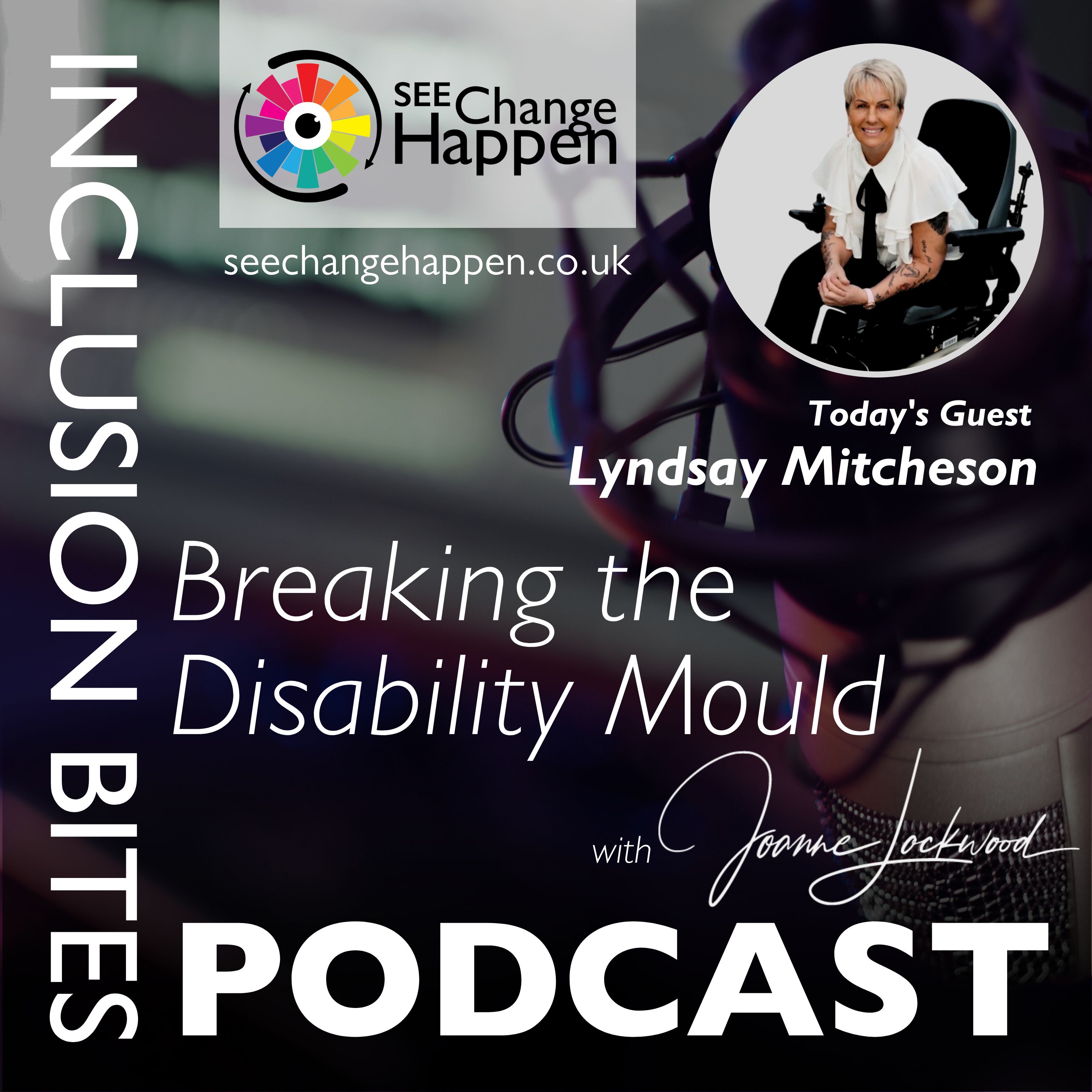
Breaking The Disability Mould
with Lindsay Mitchison · 05 June 2025
Lived Experience Identity
Joanne Lockwood is joined by Lindsay Mitchison, an award-winning disabled entrepreneur and founder of NeoWalk, to talk about what it means to “break the disability mould” and reclaim agency after life-changing health events.
Lindsay shares the story of a catastrophic MRSA infection following knee surgery, the long period of pain and loss of mobility that followed, and why choosing amputation became a way to take control back. Together they explore rehabilitation, learning to use a prosthetic, and how identity and confidence can shift when you move from being defined by what happened to you to actively shaping what comes next.
The conversation also looks beyond personal experience to the realities of living in a world not designed for disabled people—from inaccessible spaces and poor facilities to everyday assumptions and stigma. Lindsay describes how community connection and visibility matter, why disabled people should be spoken to directly rather than about, and how assistive technology can be both functional and an expression of style.
Lindsay also reflects on building NeoWalk—creating bespoke acrylic walking sticks that spark confidence, invite connection, and help turn a mobility aid into something people feel proud to use. The episode closes with a clear message about choice, dignity, and belonging, and the practical need for society and organisations to remove barriers instead of hiding behind excuses.
About Lindsay Mitchison
One-sentence summary
Lindsay Mitchison’s story is about refusing to be reduced by loss, and choosing instead to rebuild her life around dignity, creativity and belief — not just for herself, but for others who have been told to shrink.
---
Synopsis
Lindsay Mitchison never planned to become an amputee, a circus performer, a film extra, or the founder of a global mobility aid brand. She was a mum with arthritis who went in for routine knee surgery and came out with a life-altering MRSA infection that eventually cost her leg. By the time amputation came, she says she had “already lost it” — and that honesty shaped everything that followed. Standing up again on a prosthetic wasn’t tragedy; it was relief. “I didn’t want to be a woman with one leg. I wanted to be a woman with a prosthetic leg.” What followed was less about survival and more about self-definition: circus training, hanging beneath a motorbike at the Paralympics, acting roles, relentless experimentation — and, quietly at first, making her own walking sticks because nothing available reflected who she was.
What she is trying to change now goes far beyond mobility aids. She wants disabled people to feel seen without being pitied, admired without being patronised, and supported without being spoken over. She wants people to stop asking, “What happened to you?” and start saying, “I love your stick.” Her business grew from a moment of magic when the conversation shifted from her missing limb to something beautiful she had created. Behind the colour and acrylic shine is a deeper mission: helping people move through the world with pride instead of apology, in a system that still assumes wheelchair users are “less than” until proven otherwise.
---
10 Small, digestible concepts for easy learning
1. Loss isn’t always where the grief is — sometimes the grief came earlier.
By the time Lindsay chose amputation, she had already mourned the life she couldn’t live.
2. Agency can exist inside the worst circumstances.
Choosing the amputation gave her control back.
3. Pain can shrink you — relief can set you free.
Once the infected leg was gone, possibility returned.
4. Visibility changes the rules.
A visible disability invites assumptions; speaking up disrupts them.
5. Design shapes dignity.
A walking stick can either whisper “decline” or declare “style”.
6. Community reduces loneliness, not just isolation.
Disabled life can be solitary — shared stories make it bearable.
7. Belief isn’t naïve — it’s survival.
“Believe” became her anchor long before it became popular.
8. Being looked over is its own injury.
Being asked about your PIN via someone else cuts deeper than stairs without ramps.
9. You are not broken because you are different.
She doesn’t wish to go back. She likes being her.
10. Thriving is a form of protest.
Choosing joy, colour and business ownership challenges pity culture.
---
The “why” in the story
What they believe is true about people
People want to feel proud, not pitied. They want choice. They want to stand out for something good, even when their body has changed.
What they cannot unsee
The way the world talks over disabled people. The dirty accessible toilets. The casual assumption of incompetence. The loneliness of chronic illness.
What they are no longer willing to tolerate
Being reduced to trauma. Having mobility aids treated as symbols of decline. Watching disabled people shrink themselves to make others comfortable.
What they are trying to build instead
A world where mobility aids are beautiful, where disabled people are heard directly, and where community replaces isolation.
---
Narrative structure
1. The trigger
A catastrophic hospital infection that “burbled away” and destroyed her leg. Three years of pain and limitation before finally choosing amputation.
2. The tension
Living in a body that changed again and again. Being judged as weaker. Being spoken over. Running a business while living with daily pain and fatigue.
3. The insight
The problem wasn’t just mobility — it was shame. When strangers said, “I love your walking stick,” she realised design could change how people saw themselves.
4. The pivot
She stopped hiding. Ripped the cosmetic cover off her prosthetic. Said yes to opportunities. Turned a personal solution into a business built around pride and visibility.
5. The destination
A future where disabled people feel confident using aids, where community replaces isolation, and where standing out feels powerful, not risky.
---
Five key takeaways and learning points
1. Choice restores dignity.
When people choose how they present themselves, shame loses its grip.
2. Don’t speak about someone when you can speak to them.
It sounds simple, but it restores humanity immediately.
3. Design either reinforces stigma or dismantles it.
Functional doesn’t have to mean joyless.
4. Chronic illness is dynamic.
People may need different support on different days — flexibility matters.
5. Thriving after trauma isn’t luck — it’s effort and support.
Lindsay’s resilience is built on belief and the people around her.
---
Ten distinct ideas explained
1. Already grieving before the amputation
The hardest part wasn’t losing the leg — it was the years of pain before it. Systems often focus on the “event”, not the long decline leading up to it.
2. Relief as transformation
When pain lifted, movement became possibility. Healthcare isn’t just about survival; it’s about restoring lived life.
3. Being visibly disabled
A wheelchair means assumptions arrive before conversation does. Visibility invites judgement — and resilience.
4. Being spoken over
Asking a companion about her bank PIN implies incompetence. These moments chip away at dignity.
5. The loneliness of chronic illness
Not working, not leaving the house some days — isolation becomes structural, not just emotional.
6. Aesthetic pride in mobility aids
Beauty reframes visibility. A stylish aid shifts attention from deficit to expression.
7. Dynamic disability
Some days require a stick; others a wheelchair. Systems built for “fixed” disabilities miss this reality.
8. Generational stigma
Younger people are more accepting. Older voices still equate aids with weakness.
9. Entrepreneurship as self-definition
Running a business while disabled challenges cultural expectations of dependency.
10. Liking yourself as a radical act
“I like me.” That statement carries weight in a culture that frames disability as tragedy.
---
How people should change as a result
1. Think
- Stop assuming the hardest moment is the visible one.
- Understand that disability does not equal incompetence.
- Recognise that design and aesthetics affect dignity.
- Accept that access needs may fluctuate.
- See mobility aids as tools of freedom, not decline.
2. Feel
- Shift from pity to respect.
- Move from awkwardness to curiosity (with consent).
- Replace defensiveness with humility when corrected.
- Feel responsibility rather than distant sympathy.
- Allow admiration without turning someone into “inspirational”.
3. Act
- Speak directly to the disabled person, not their companion.
- Keep accessible facilities clean and usable — always.
- Offer choice where possible (seating, layouts, flexibility).
- Include disabled voices early in design decisions.
- Challenge casual comments that question invisible disabilities.
- Support disabled-owned businesses.
- Ask “How can we make this easier?” and listen to the answer.
---
One thing to remember
She didn’t lose her life when she lost her leg — she chose to rebuild it on her own terms.