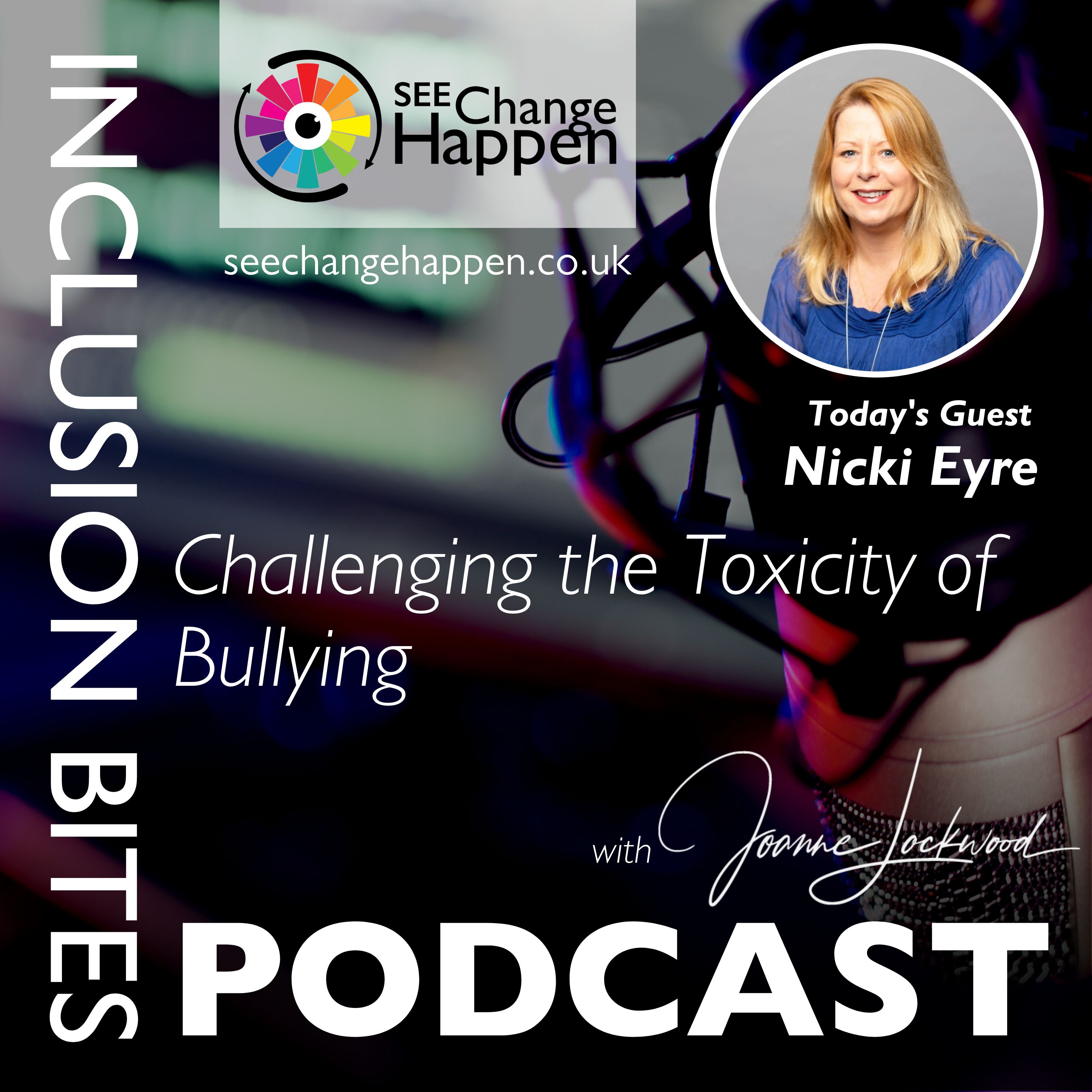
Challenging The Toxicity Of Bullying
with Nicki Eyre · 05 October 2023
Workplace Culture Systems
Joanne Lockwood is joined by workplace bullying expert Nicki Eyre to unpack what workplace bullying is, how it shows up day-to-day, and why it can be so difficult to evidence and challenge through formal routes.
They explore the spectrum of bullying behaviours—from incivility and exclusion through to intimidation and psychological manipulation—and the way repeated patterns and power dynamics can keep someone in a prolonged stress response. The conversation covers the legal and procedural gap in the UK around non-discriminatory bullying, the limitations of grievance processes, and how investigations can retraumatise those raising concerns when organisations focus on defensiveness rather than learning.
Nicki and Joanne also discuss the real impacts on wellbeing, including anxiety, depression, reduced confidence and self-esteem, and trauma responses that can persist long after someone leaves a role. They highlight the importance of trauma-informed approaches, early intervention and prevention, accountability alongside support for all parties, and the role of allies and collective voice in challenging harmful behaviour and pushing for change.
About Nicki Eyre
One-sentence summary
Nicki Eyre’s message is simple and fiercely human: no one should be broken just for going to work, and being heard shouldn’t require you to destroy yourself first.
---
Synopsis
Nicki Eyre didn’t set out to become a workplace bullying expert; she became one because she lived it. A senior leader, responsible and capable, she found herself slowly unravelling under a pattern of behaviour that made her doubt her judgement and lose her sense of self. She describes how she “felt like I lost myself” — how the drip, drip, drip of undermining moments changed her into someone she didn’t recognise. The fight for justice consumed her, not only because she was hurt, but because she couldn’t bear the thought of it happening to the hundreds of people she felt responsible for.
What drives her now is not revenge but repair. She wants bullying treated as an organisational failing, not a personal weakness; as trauma, not “just an HR case”. She speaks of people who “just want someone to say sorry” after being forced to relive their worst moments again and again through formal procedures that exhaust and retraumatise them. Nicki is working to change the law, yes — but more than that, she’s trying to change what work feels like: safe, fair, and grounded in dignity.
---
10 Small, digestible concepts for easy learning
1. Bullying is rarely loud at first.
It often starts with small moments of incivility that erode confidence over time.
2. Impact matters more than intent.
Harm doesn’t stop being harm just because it wasn’t meant.
3. A pattern makes the poison.
One slight can be dismissed; repeated ones become destabilising.
4. Power isn’t always positional.
It can come from information, influence, favouritism or silence.
5. Silence protects the behaviour, not the person harmed.
Turning a blind eye allows patterns to harden.
6. Processes can retraumatise.
Telling the story again and again keeps the nervous system in fight-or-flight.
7. Being heard is often more important than compensation.
Validation restores dignity.
8. Anger shows your values were crossed.
It’s a signal — but change must be led by values, not rage.
9. Prevention is kinder than procedure.
Early conversations can stop harm long before grievances begin.
10. Belonging requires psychological safety.
No one thrives where they are bracing for the next threat.
---
The “why” in the story
What they believe is true about people
Nicki believes most people do not wake up intending to cause harm — but that self-awareness is often missing, and impact is too easily dismissed. She believes people deserve to feel safe and respected at work, regardless of role or status.
What they cannot unsee
She cannot unsee the trauma: the depression, panic attacks, flashbacks, broken confidence — and the way grievance processes can deepen the wound. Nor can she forget how she herself changed under the strain.
What they are no longer willing to tolerate
She refuses to accept a system where 80–90% of complaints fail, where targets must prove their suffering repeatedly, or where the only route to justice is to leave your job or become medically unwell.
What they are trying to build instead
A culture, and ultimately legislation, that recognises workplace bullying as real harm; processes that are trauma-informed; workplaces where prevention and accountability sit side by side.
---
Narrative structure
1. The trigger:
A clear breaking point in her own leadership role, when persistent behaviour crossed from discomfort into undeniable harm. Realising she was changing — shouting, exhausted, consumed — shocked her into action.
2. The tension:
Fighting through formal systems that required her to relive events repeatedly, while feeling unheard and disbelieved. The conflict between wanting justice and the toll it took on her health.
3. The insight:
“You can’t change things from a place of anger.” Anger signalled her values had been breached — but sustainable change had to be values-led.
4. The pivot:
She channelled her experience into advocacy: education, conferences, campaigns and a legal push to recognise workplace bullying. She shifted from personal battle to collective movement.
5. The destination:
Workplaces where early intervention replaces escalation, where both parties receive support, and where no one has to accept “the apology I never received” in order to move on.
---
Five key takeaways and learning points
1. Bullying is cumulative, not dramatic.
So what: Don’t wait for a crisis; notice the small patterns early.
2. People leave workplaces to protect their sanity.
So what: Retention is often a wellbeing signal, not just a performance metric.
3. Formal justice can deepen trauma.
So what: Build informal, restorative pathways before things escalate.
4. Both harmed and accused parties need support.
So what: Fairness means safeguarding everyone’s dignity during investigation.
5. An apology can prevent years of damage.
So what: Courage in leadership often looks like humility.
---
Ten distinct ideas explained
1. The drip effect
Bullying often feels insignificant moment to moment — an eye roll, being excluded, subtle undermining. But the repetition keeps the body in constant vigilance, eroding confidence.
2. Trauma at work
Flashbacks, anxiety and physical symptoms are not overreactions. The brain responds to persistent threat as it would to danger elsewhere.
3. The exhaustion of proving harm
Targets must recall, gather evidence, write statements and relive meetings — reinforcing distress each time.
4. Secondary trauma through dismissal
Being told “we don’t believe you” compounds the original harm, creating deeper wounds.
5. The cost of silence
Colleagues who laugh, look away or minimise may unintentionally sanction the behaviour.
6. Duty of care is moral, not optional
Employers create the environment; if the workplace becomes the traumatiser, responsibility cannot sit solely with the individual.
7. Support before sanction
Early coaching and reflection can prevent defensive escalation and entrenched conflict.
8. Anger as a values signal
Rage often means fairness, dignity or integrity has been violated — it points to what matters.
9. Safety in numbers
Collective voices make it easier for individuals to speak. Movements reduce isolation.
10. Validation heals
Being told “I’m sorry” or “I believe you” restores agency and reduces the need to fight on.
---
How people should change as a result
1. Think
- Shift from “Was it intended?” to “What was the impact?”
- See bullying as a systemic risk, not a personality clash.
- Recognise small behaviours as possible precursors to larger harm.
- Understand grievance processes can retraumatise.
- Treat psychological safety as essential, not optional.
---
2. Feel
- Move from scepticism to curiosity.
- Shift from defensiveness to reflection.
- Replace indifference with responsibility.
- Allow anger to soften into values-led action.
- Feel compassion for both those harmed and those accused.
---
3. Act
- Check in privately if you witness questionable behaviour: “Are you okay?”
- Intervene early with calm, non-accusatory conversations.
- Document patterns before they escalate — factually and objectively.
- Ensure both parties have access to independent support.
- Apologise sincerely when harm is caused, even if unintentional.
- Review policies for trauma-informed investigation practices.
- Build cultures where feedback is normal, not threatening.
---
One thing to remember
No one should have to break themselves just to be heard at work.