Creating A Level Playing Field In Attitude And Action
with Sarah Burrell · 10 December 2020
Workplace Culture Systems
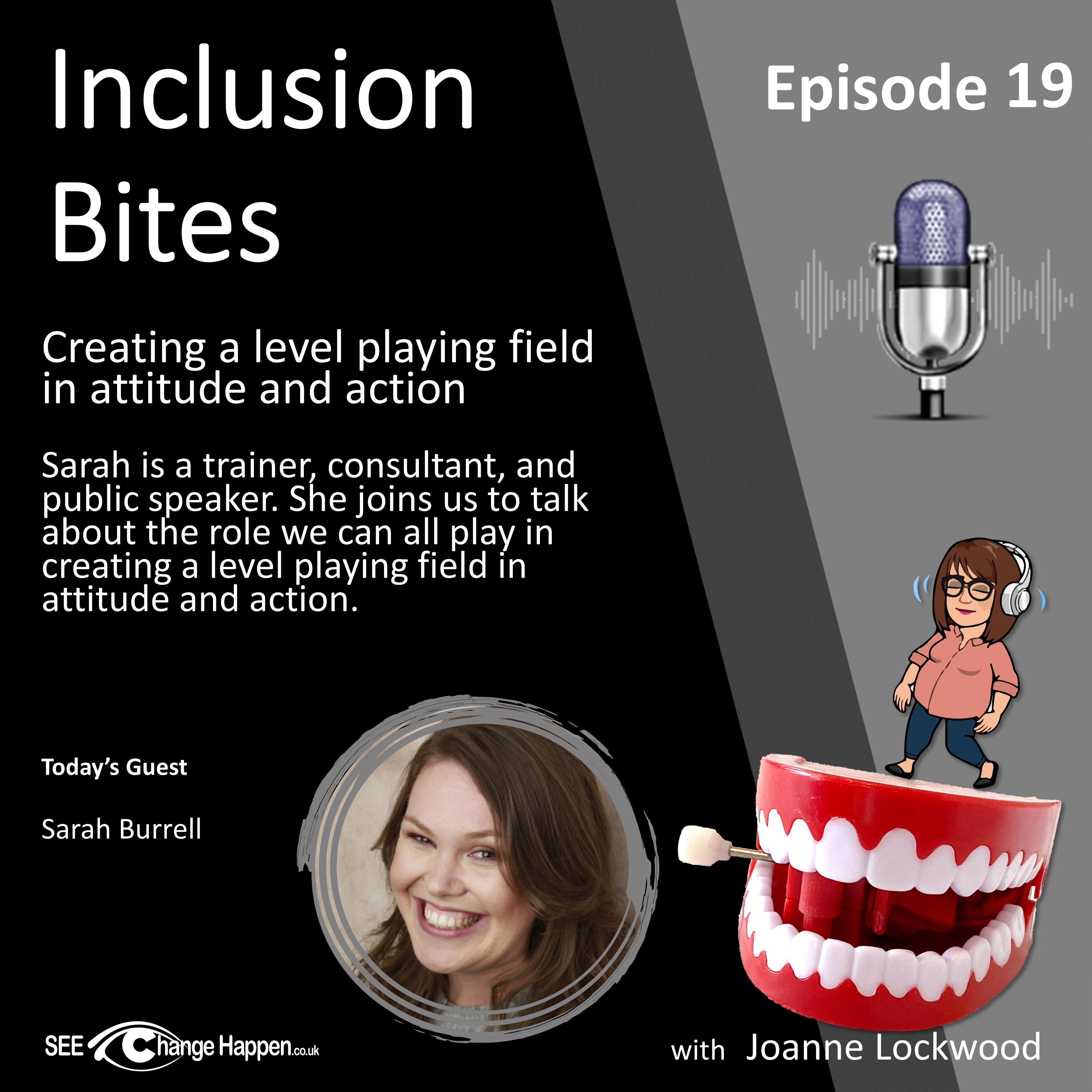
Joanne Lockwood is joined by trainer and inclusion consultant Sarah Burrell to explore what it really takes to create a level playing field in both attitude and action. They discuss why inequality is systemic and historical, and how the language and practice of privilege can be used constructively to empower others and move beyond “lip service” toward measurable change.
Sarah shares reflections from her own lived experience, including navigating a speech impairment, and how that shapes her approach to advocacy, empathy, and creating environments where people can contribute in the ways that work best for them. The conversation looks at disability and work, inclusive communication, and the value of proactively asking about support needs and preferred communication methods.
They also examine hiring and progression: the difference between tokenistic gestures and positive action, the limitations of meritocracy when people start from different points, and the responsibility leaders and organisations have to build inclusion into recruitment, induction, and day-to-day management. Finally, they reflect on how the pandemic accelerated flexible and inclusive ways of working, and what it will take to sustain that progress rather than slipping back to old habits.
About Sarah Burrell
One-sentence summary
Sarah Burrell chooses to use the very differences that once made her feel small as the tools to lift others onto a fairer starting line — because she knows what it costs to begin behind it.
---
Synopsis
Sarah Burrell is someone who has lived the gap between potential and opportunity. As a white woman, she recognises she holds privilege — education, a platform, a voice — yet she also carries a speech impairment that has shaped how she moves through the world. She admits, “I am terrified of speaking in recorded sessions like this one,” yet continues because “my passion overrides my fear”. Her life has been a series of problem-solving exercises most people never see: fighting to attend a mainstream school, preparing to be “that much more qualified” in every interview, navigating assumptions before she even steps into a room. These experiences have given her what she calls a gift — deep empathy, and an instinct to listen actively.
What she is trying to change is not simply who gets hired, but what happens next. She sees how easily organisations mistake representation for inclusion and how quickly good intentions slip into lip service. She believes meritocracy only works when everyone starts “at the same point” — and they do not. So she pushes for conversations that begin at recruitment and never really end: honest, person-centred, human conversations about how someone works best, communicates best, learns best. For Sarah, creating a level playing field is not about charity or tokenism. It is about dignity. It is about recognising the unseen labour some people carry every day — and valuing the strength that comes from having had to climb further just to stand level.
---
10 Small, digestible concepts for easy learning
1. Meritocracy only works if the starting line is equal.
If one person has had to climb uphill before the race begins, “equal” outcomes aren’t truly equal.
2. Privilege is not a guilt label – it is a lever.
It can be used intentionally to amplify others, not defend ourselves.
3. Unseen effort builds unseen strength.
The daily problem-solving many disabled people do creates resilience and agility others may never develop.
4. Inclusion begins before day one.
The real work starts at recruitment and induction — not six months into employment.
5. Representation without support is fragile.
Hiring someone different without changing culture leaves them carrying the weight alone.
6. Active listening is an act of respect.
Truly hearing someone — even slowly, even imperfectly — signals that they matter.
7. Preference is power.
Asking how someone prefers to communicate opens doors to confidence and contribution.
8. Discomfort is a doorway.
Growth happens when we stay in challenging conversations rather than retreat from them.
9. Change accelerates when urgency meets importance.
The pandemic proved organisations can move quickly when they believe they must.
10. Inclusion is a continuous conversation.
It does not end with one meeting, one audit, or one initiative.
---
The “why” in the story
What they believe is true about people
That everyone has value — and that much of it remains hidden when systems are built around a narrow norm.
What they cannot unsee
That some people must work twice as hard to be seen as equal, and that their extra effort often goes unnoticed.
What they are no longer willing to tolerate
Surface-level gestures, defensive conversations about privilege, and hiring practices that change faces but not power.
What they are trying to build instead
Workplaces where conversations about need, preference and potential are normal from day one — and where difference is treated as capability.
---
Narrative structure
1. The trigger
Years of navigating interviews knowing she had to be “that much more qualified”; realising that her speech impairment could close doors before she finished a sentence; watching systemic racism and inequality ignored until global crisis made it urgent.
2. The tension
Fear of being misunderstood. Pushback when discussing privilege. Organisations eager to appear inclusive but hesitant to alter status quo. The exhaustion of proving worth again and again.
3. The insight
The starting points are not equal — and pretending they are only protects existing hierarchies. Inclusion must be proactive, personal, and ongoing.
4. The pivot
Using her voice despite discomfort. Speaking for those “who do not feel confident enough to speak”. Developing tools — conversations, questionnaires, guidance — that embed inclusion from the very beginning.
5. The destination
A culture where asking “How do you work best?” is routine; where flexibility, autonomy and empathy are not crisis responses but everyday practice; where no one has to fight alone just to stand level.
---
Five key takeaways and learning points
1. Equality is not sameness.
Treating everyone identically ignores the different hills they have climbed. Fairness requires adjustment.
2. Fear often hides behind process.
Bureaucracy can mask discomfort with difference; naming that fear allows growth.
3. Hiring is only the first step.
Without inclusive leadership, diverse talent becomes isolated talent.
4. Empathy grows from lived struggle.
Those who have navigated barriers bring insight others may lack — and that insight strengthens teams.
5. Crisis revealed possibility.
Rapid workplace change during Covid showed that flexibility was always feasible; resistance was choice, not capability.
---
Ten distinct ideas explained
1. The Invisible Labour of Difference
Many disabled people run constant background calculations — routes, access, communication — before others even begin their day. This builds skill but also carries invisible fatigue.
2. The Cost of Being ‘More Qualified’
When you know bias exists, you over-prepare. That extra preparation is rarely acknowledged, yet it shapes confidence and self-worth.
3. Language Can Open or Close Doors
Asking about communication preferences validates autonomy; assuming ability or preference silences contribution.
4. Tokenism Feels Like Exposure
Being hired as “the diverse one” without structural support increases pressure rather than belonging.
5. Active Listening Builds Safety
When someone feels deeply heard, defensiveness drops and honesty becomes possible.
6. Privileges Overlap with Barriers
A white woman with a speech impairment holds both advantage and vulnerability — identity is layered and complex.
7. Urgency Changes Behaviour
Organisations that once said flexibility was impossible adapted within weeks when survival depended on it.
8. Inclusion Is Emotional Work
It requires courage to sit in discomfort, admit blind spots, and rewrite habits.
9. Role Models Matter Quietly
Seeing someone with a speech impairment in leadership signals permission to aspire.
10. Dialogue Is Development
Ongoing conversation about need and preference allows people to discover how they thrive.
---
How people should change as a result
1. Think
- From “everyone should be treated the same” to “fairness may require difference”.
- From “disability equals limitation” to “difference may equal adaptive strength”.
- From “privilege is an accusation” to “privilege is responsibility”.
- From “flexibility is a perk” to “flexibility is access”.
2. Feel
- From defensiveness to curiosity when privilege is mentioned.
- From impatience to respect when someone communicates differently.
- From guilt to purposeful action.
- From fear of saying the wrong thing to willingness to ask thoughtful questions.
3. Act
- Ask every new colleague how they prefer to communicate and revisit the conversation regularly.
- Build induction conversations that explore strengths, needs and working patterns.
- Value invisible skills — resilience, adaptability, problem-solving — in performance discussions.
- Notice who speaks easily in meetings and who might need alternative channels.
- Use your position to amplify quieter voices.
- Protect flexible working practices rather than drifting back to rigid norms.
- Stay in conversations about inequality even when uncomfortable.
---
One thing to remember
If we don’t adjust the starting line, we should not pretend the race is fair.