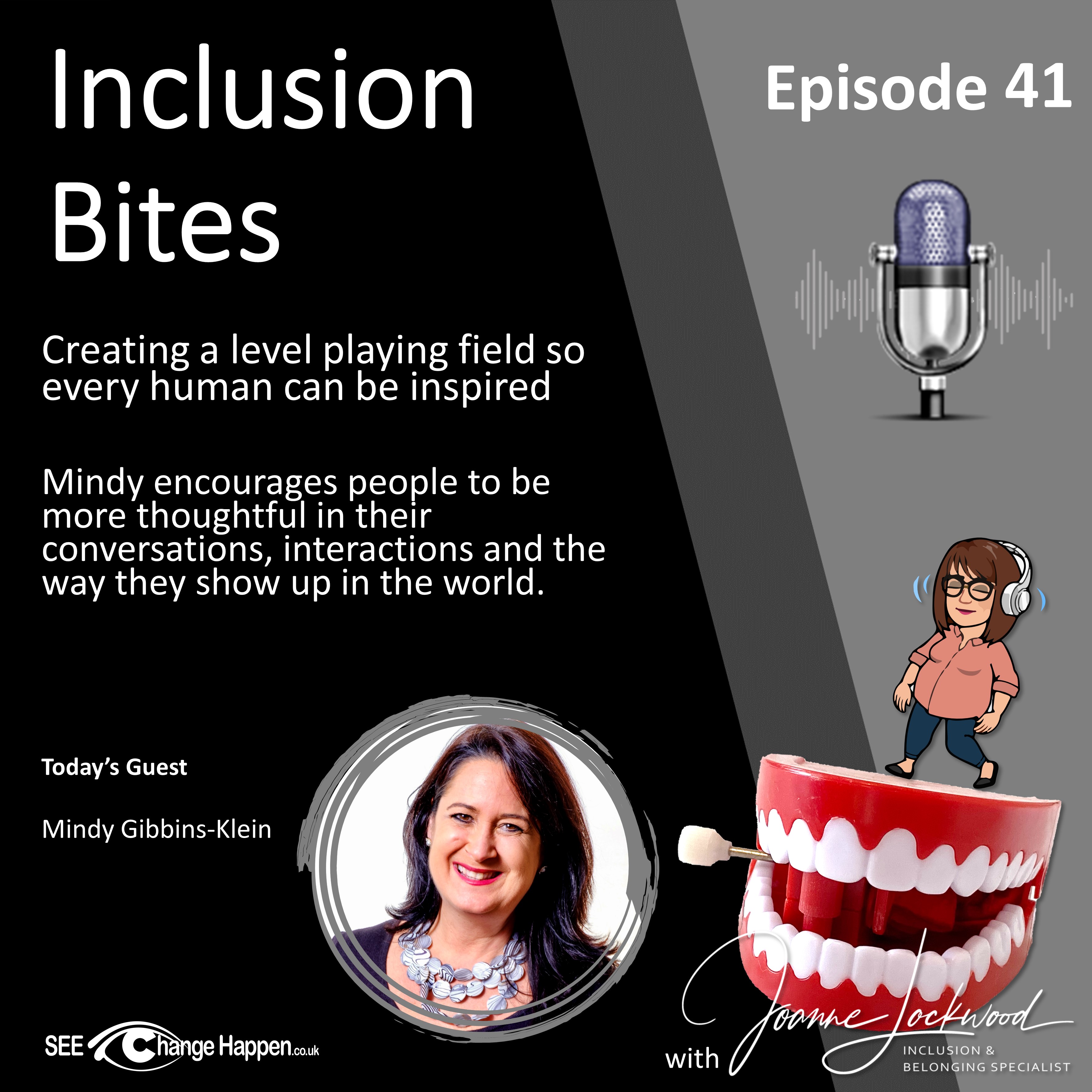
Creating A Level Playing Field So Every Human Can Be Inspired
with Mindy Gibbins-Klein · 19 August 2021
Workplace Culture Systems
Joanne Lockwood speaks with Mindy Gibbins-Klein about what it really takes to create a more level playing field so more people can be inspired and, crucially, feel able to speak up.
They explore how opportunity and access are often left to chance, and why intentional action matters in environments like conferences, publishing, recruitment, and media. Mindy and Joanne discuss allyship as a deliberate practice: noticing who is missing, creating space, amplifying voices, and taking responsibility for changing patterns that otherwise repeat by default.
The conversation also covers how people can become more thoughtful about language and impact, including acknowledging mistakes, apologising, and building psychological safety through everyday choices. Both share personal reflections on acceptance, belonging, and connection, including Mindy’s experience as the parent of a transgender son and Joanne’s experience of rebuilding relationships through openness and dialogue.
The episode ends with practical encouragement: focus on what you can influence, act with intention, and keep going even when traction feels slow—because small, consistent actions can compound into meaningful change.
About Mindy Gibbins-Klein
One-sentence summary
Mindy Gibbins-Klein believes that when even one person chooses to act with intention and courage, they can open the door so others finally feel seen, heard and worthy of being inspired.
---
Synopsis
Mindy is not driven by theory; she is driven by a deeply personal reckoning. When her son told her he was transgender, she admits, “I didn’t cope the way I would have liked to. I didn’t act like the person I thought I was.” That moment forced her to confront the gap between her values and her behaviour. She had to choose whether to cling to comfort or grow into unconditional love. It was painful. It was humbling. And it reshaped her.
What she is trying to change now is simple and radical at the same time: she wants fewer good people left unheard. She has seen how easily conferences, book lists and leadership circles default to the same voices. “Left to chance, most people are not given a fair chance,” she says. So she chooses not to leave it to chance. Whether it is reserving 80% of publishing places for underrepresented authors or challenging all-male panels, she is building spaces where inspiration does not depend on luck or privilege, but on thoughtful, deliberate inclusion.
---
10 Small, digestible concepts for easy learning
1. If you don’t see it, you can’t change it.
Awareness is not guilt; it’s the starting line.
2. Left to chance, most people are not given a fair chance.
Neutral systems often favour those already ahead.
3. Influence is a privilege.
Every word and choice shapes who feels welcome.
4. Intention is where inclusion begins.
What you mean to do changes what you actually do.
5. Calling out can be caring.
Naming imbalance is not attack; it’s invitation to do better.
6. Belonging feels different to fitting in.
Fitting in is effortful; belonging is exhale.
7. You can choose your response, even when surprised.
Growth starts the moment you notice your own resistance.
8. A single cracked door lets in light.
One honest conversation shifts a lifetime of silence.
9. Thoughtfulness beats perfection.
Getting it wrong is human; correcting it is leadership.
10. Change the organiser, change the line-up.
Diversity doesn’t happen by accident — it reflects who holds the power.
---
The “why” in the story
What they believe is true about people
Mindy believes most people genuinely want to “do the right thing”. They are not malicious; they are often unaware. When invited thoughtfully, they are willing.
What they cannot unsee
She cannot unsee how systems default to sameness — 38 men on a book list, 37 of them white — and how that sameness quietly tells others they do not belong.
What they are no longer willing to tolerate
She refuses to accept that opportunity should be accidental. She will not leave representation “to chance”.
What they are trying to build instead
Spaces where people feel inspired because they know their voice will land somewhere — publishing, platforms and leadership circles designed with equity, not afterthought tokenism.
---
Narrative structure
1. The trigger
Her son’s transition. The discomfort. The recognition that she was not reacting with the level of compassion she believed defined her. She had to face herself before she could face the world.
2. The tension
She still meets defensiveness: eye-rolls when she challenges event organisers, pushback when she prioritises underrepresented authors. Even being called “woke” as a slur.
3. The insight
“We don’t blame people for what they can’t see.” Awareness changes everything. But once you see inequity, not acting becomes a choice.
4. The pivot
She made structural commitments. An 80% allocation in her publishing house. Intentionally diverse conferences. Publicly naming imbalance instead of privately resenting it.
5. The destination
A world where inspiration is not restricted by identity. Where leadership looks ordinary in its diversity. Where belonging “just is”.
---
Five key takeaways and learning points
1. Your reaction is your responsibility.
You cannot control events, but you can choose whether you grow from them.
2. Inclusion requires deliberate design.
If you do nothing, the default will often repeat historic imbalance.
3. Self-awareness matters more than flawless language.
People feel your care more than your perfection.
4. Belonging reduces emotional strain.
When people no longer have to “fit in”, they have energy left to contribute.
5. Small actions compound.
One conference. One list. One published book. Landscapes shift over time.
---
Ten distinct ideas explained
1. The Cost of Silence
When someone decides not to speak because they feel unheard, the world loses more than their voice; it loses possibility.
2. Equity vs Chance
Chance ignores starting lines. Equity asks who began ten steps back and adjusts accordingly.
3. Intentional Influence
Every invitation list, hiring panel, or speaker roster reflects unseen priorities. Thoughtfulness makes those priorities visible.
4. The Emotional Weight of Exclusion
Seeing yourself absent again and again creates quiet resignation — the “why bother?” effect.
5. Allyship as Amplification
Privilege can become a microphone. It costs nothing to share it.
6. Woke as Awareness
To be “woke” is simply to be awake — conscious of impact, not asleep at the wheel.
7. Unconditional Acceptance in Practice
Accepting her son was not abstract. It required Mindy to reshape her own identity as a parent.
8. Belonging vs Performance
Fitting in feels like holding your breath. Belonging feels like breathing normally.
9. Psychological Safety as a Personal Boundary
You can be compassionate without absorbing harm. Step away if needed.
10. Leadership as Intention in Action
Leadership is not title-driven; it’s choosing to act thoughtfully when no one demands it.
---
How people should change as a result
1. Think
- Move from “It’s fine as it is” to “Who might I be missing?”
- Replace “It’s not my fault” with “It’s within my influence.”
- Shift from random fairness to deliberate equity.
- See inclusion not as charity, but as unlocking unseen talent.
2. Feel
- From defensiveness to curiosity.
- From guilt to responsibility.
- From fear of getting it wrong to willingness to learn.
- From fatigue to purposeful conviction.
3. Act
- Audit one space you influence — a meeting, an event, a list — and ask who is absent.
- Invite at least one new voice with genuine intention.
- If called out, pause and listen before justifying yourself.
- Build relationships beyond your usual social echo chambers.
- Make one structural commitment (a ratio, a policy, a rule) that reduces “chance”.
- Practise belonging: create environments where people need not edit themselves to stay.
---
One thing to remember
Left to chance, most people are not given a fair chance — so choose to make it deliberate.