Dance With Difference
with Khutso Madubanya · 12 March 2026
Lived Experience Identity
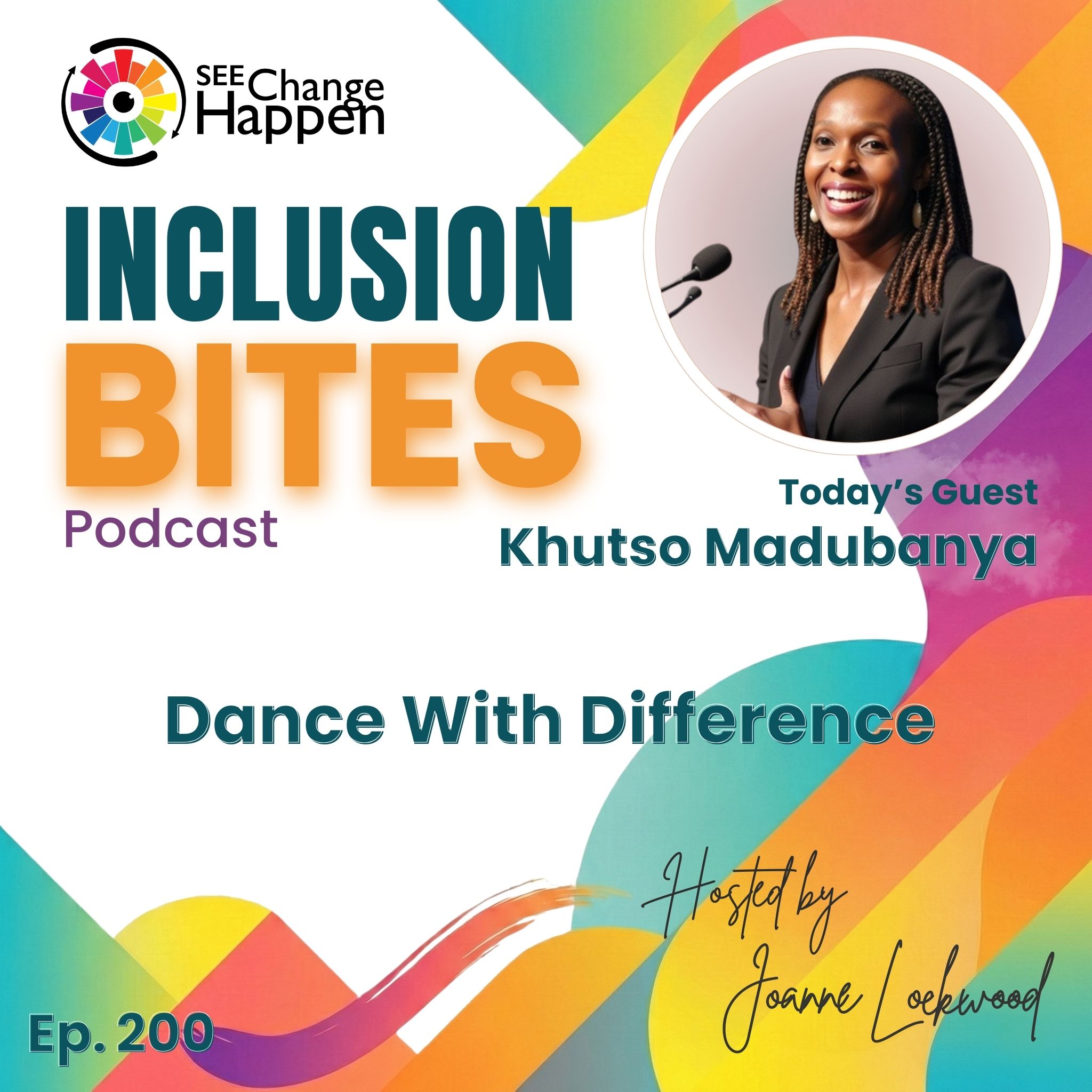
Joanne Lockwood is joined by Dr Khutso Madubanya for a wide-ranging conversation about difference, identity, and what it takes to reclaim self-worth when the world keeps trying to define you.
Khutso reflects on growing up in apartheid-era South Africa, the power and meaning of her name, and how patriarchal expectations around women, marriage, and motherhood shaped a fierce drive for independence. She shares how labels like marital status and assumptions about single mothers can become a constant form of social boxing-in, and how credentials and titles can feel like a shield even when they don’t address the deeper question of innate worth.
The discussion moves into the personal cost of hyper-independence, including fear of asking for help, perfectionism, and the burnout that can follow from proving yourself through performance. Khutso explains how a period of upheaval—relocation, job loss, legal stress, single parenting, and career change—pushed her to build a practical mindset framework she now teaches: PIVOT (Pause, Introspect, Vector, Overcome fear of mistakes, Travel forward). Together, they explore how letting go of identities that no longer serve you can create freedom, resilience, and momentum through change.
About Khutso Madubanya
One-sentence summary
Dr Khutso Madubanya’s life is a refusal to accept that a woman’s worth must be earned, proven or approved — and a determined return to the truth that we are valuable simply because we exist.
---
Synopsis
Khutso calls herself “peace”, and for most of her life she has carried that name like both a calling and a burden. Growing up in apartheid South Africa, she absorbed a message that many girls are taught quietly and repeatedly: that one day they will leave, change their name, belong elsewhere, and earn their keep through service. She remembers feeling disposable — as the only daughter, as someone who would eventually be “married off”, as someone whose value would be measured relationally. That early wound hardened into fierce independence. By 17 she had left the country on a scholarship, lived in eight nations, built careers, collected degrees, and eventually claimed the title “Doctor” — not for prestige, but as armour.
What she is trying to change is not just how society labels women, single mothers, or migrants. She is trying to interrupt the deeper belief that worth must be proven through performance. After heartbreak, job loss, legal battles, relocation and parenting three children alone in an unfamiliar country, she reached a 3am realisation: “There is absolutely no glory whatsoever in doing it all.” From that reckoning came a gentler strength — one that asks for support, questions perfectionism, challenges double standards, and insists that no one has to earn their right to exist with dignity.
---
10 Small, digestible concepts for easy learning
1. Independence can be a trauma response.
Sometimes “I can do it alone” is survival, not strength.
2. A name holds a storey.
When you insist on being called by your true name, you reclaim identity.
3. Hyper-achievement can mask self-doubt.
Degrees and titles don’t silence insecurity; they sometimes hide it.
4. Worth is innate, not awarded.
You don’t become valuable — you already are.
5. Burnout isn’t bravery.
Glorifying exhaustion keeps harmful systems intact.
6. Pause before you react.
Stepping back creates clarity that panic never will.
7. Old identities can trap you.
Who you were doesn’t always help you become who you need to be now.
8. Mistakes are not moral failings.
Getting it wrong is part of growth, not proof of inadequacy.
9. Asking for help is courage.
Vulnerability breaks cycles of silent suffering.
10. Travel forward.
Progress demands that we stop living in comparison with our former selves.
---
The “why” in the story
What she believes is true about people
That every person is born with “innate worth” — and that most of us forget this because the world teaches us to perform for acceptance.
What she cannot unsee
The double standards. Single fathers praised as heroes; single mothers quietly judged. Men never required to declare marital status; women constantly labelled. High achievers celebrated while quietly burning out.
What she is no longer willing to tolerate
The glorification of overwork. The assumption that women must prove themselves. The idea that independence is the only respectable form of strength.
What she is trying to build instead
A movement — and a mindset — where strong people no longer chase validation, where asking for help is normal, and where dignity is not conditional.
---
Narrative structure
1. The trigger:
A childhood shaped by the expectation of disposability, followed decades later by a cascade of upheaval — heartbreak, relocation, unemployment, legal battles, and motherhood without a support system.
2. The tension:
The internal conflict between the accomplished, hyper-capable woman and the exhausted human being who was afraid to ask for help. The pressure to prove herself versus the longing to rest.
3. The insight:
At 3am, overwhelmed and burnt out, she realised that “there is no glory in doing it all.” Performance was not virtue. Exhaustion was not evidence of worth.
4. The pivot:
She stopped chasing old identities. She created a mindset tool to navigate change. She began practising self-compassion daily — post-it notes on the walls: “I am enough.”
5. The destination:
A world where strength is not measured by self-sacrifice, where women are not reduced to marital status, and where children grow up knowing they never have to earn their place.
---
Five key takeaways and learning points
1. You may be strong because you had to be, not because you wanted to be.
So what: Strength deserves support, not endless demand.
2. Titles can protect you — but they can’t heal you.
So what: True confidence grows internally, not from credentials.
3. Burnout is often a signal, not a badge.
So what: If you are exhausted, it may be time to question the system — and yourself — not just work harder.
4. Identity shapes response.
So what: When change comes, ask which version of you is reacting — the past or the present.
5. Perfection is a moving target.
So what: Progress begins the moment you accept you will sometimes “get it wrong”.
---
Ten distinct ideas explained
1. Disposability leaves marks.
When a girl grows up expecting to leave her name behind, she may learn early that belonging is conditional.
2. Marital status as identity marker.
Systems that require women to signal “Miss” or “Mrs” subtly reinforce that relationship status defines worth.
3. Hyper-independence as armour.
Doing everything alone can feel powerful — and deeply isolating.
4. Migration magnifies identity.
Moving across countries strips away familiarity; what remains is who you believe yourself to be.
5. Achievement as shield.
Degrees can become protection against prejudice — a way to pre-empt dismissal.
6. Single motherhood stigma.
When society questions a mother’s credibility while ignoring absent fathers, dignity erodes quietly.
7. The cost of silent resilience.
Children may see strength, but not the private exhaustion behind it.
8. Pause as resistance.
Refusing to react impulsively interrupts cycles of shame and fear.
9. Letting go of former selves.
Clinging to past prestige can block present growth.
10. Innate worth as foundation.
When people internalise that they are inherently valuable, systems of comparison lose power.
---
How people should change as a result
1. Think
- Stop equating productivity with value.
- Question where your drive originates — ambition or fear.
- Notice how language (titles, labels, forms) shapes inclusion.
- Recognise that independence is not morally superior to interdependence.
2. Feel
- Move from defensiveness to reflection.
- Shift from guilt to shared responsibility for change.
- Replace quiet judgement with empathy.
- Allow compassion for your own exhaustion.
3. Act
- Ask someone what name they prefer — and use it.
- Remove unnecessary marital status questions from forms or conversations.
- Offer practical support to single parents rather than admiration from afar.
- Celebrate effort and learning, not just outcomes.
- Practise pausing before responding in moments of conflict.
- Tell yourself, daily if needed: “I am enough.”
- Ask for help at least once this week — and mean it.
---
One thing to remember
You do not need to earn your worth — you were born with it.