Embracing Diversity And Inclusion As A Small Business Owner
with Katie Neeves · 13 June 2020
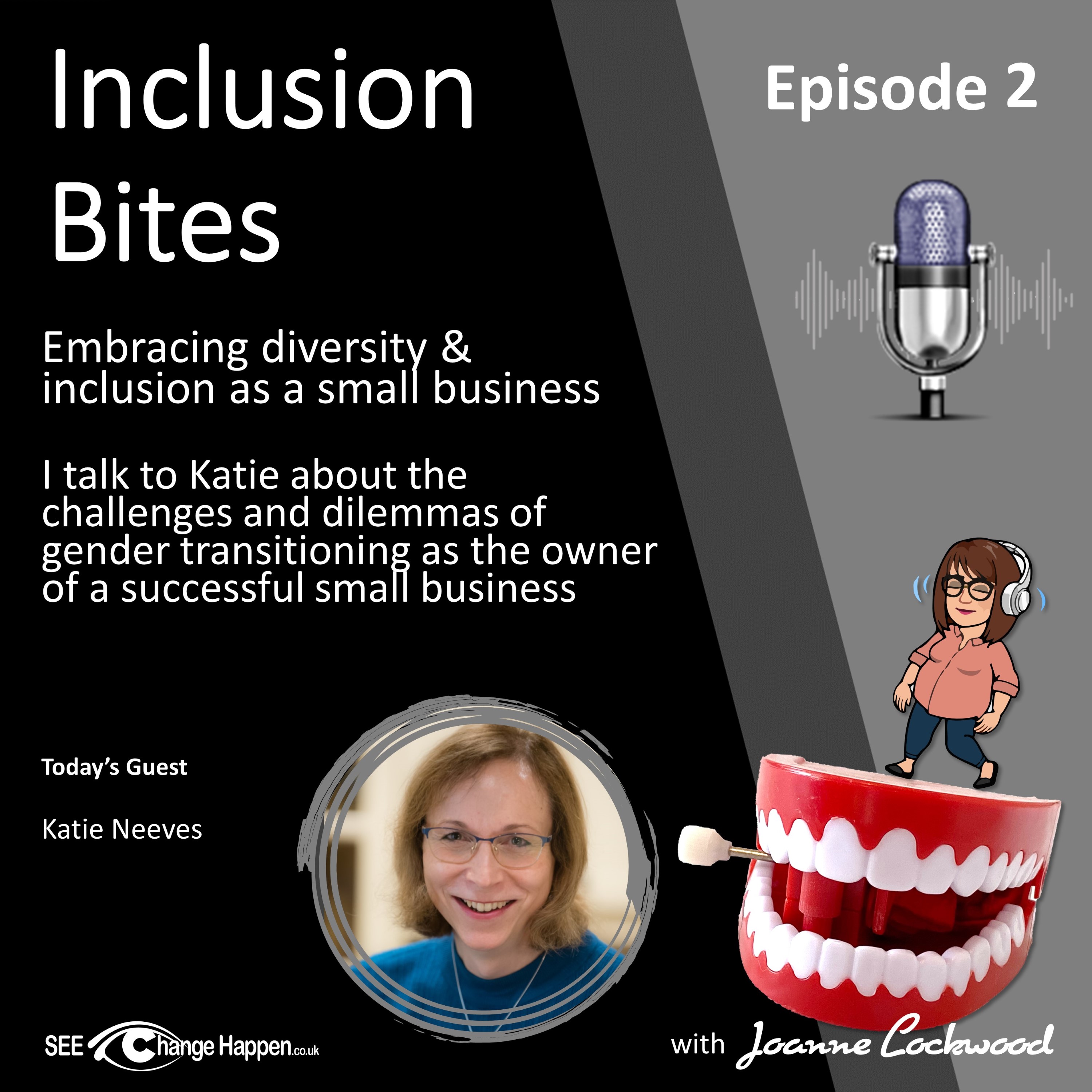
Lived Experience Identity
Katie Neeves joins Joanne Lockwood to talk about coming out publicly as transgender while running an established photography and filmmaking business, and the risks and uncertainties that came with that decision.
Katie describes the practical and emotional lead-up to “pressing send” on her announcement to clients, the support she received, and the clients and connections she lost along the way. She and Joanne discuss everyday challenges such as misgendering, voice anxiety, and navigating public spaces, alongside strategies that can reduce pressure in real-world interactions.
The conversation also explores how confidence and openness can shape how others respond, and why allyship matters—especially when it shows up in moments where trans people are not present to advocate for themselves.
Finally, Katie shares advice for small businesses and employers on creating an inclusive environment, including proactive training and thoughtful steps that make it easier for people to bring their whole selves to work.
About Katie Neeves
One-sentence summary
Katie Neeves chose truth over safety, risking her livelihood to live openly as herself — and now works to make it easier for others to do the same without fear.
---
Synopsis
Katie Neeves is a photographer of more than three decades who rebuilt her life in mid-flow. After living 48 years as a man, she publicly came out as transgender, knowing that her name, her brand and her income were all on the line. She describes hovering over the mouse before posting her coming‑out video — “as soon as I make that click, my life will never be the same again” — absolutely bricking it, wondering whether the phone would stop ringing. What came back was hundreds of messages of support and a wave of relief she calls “one of the most uplifting experiences of my life”. Yet the risk was real: freelance work offers no protection, and she quietly lost clients and relationships along the way.
What drives her now is simple and fierce. She wants people — especially trans people — to know “it really is okay to be trans”. She leads by example, not with anger, but with open honesty. She refuses deliberate disrespect, but she “cuts people slack” when they are learning. She has navigated weddings where free alcohol and prejudice might mix badly, building sites where a pronoun hangs heavy in the air, and toilets that feel like undiscovered terrain. Through it all she insists, “I’m happier now than I’ve ever been.” The change she seeks isn’t abstract; it’s the quiet dignity of being treated as who you are, without fear.
---
10 Small, digestible concepts for easy learning
1. Courage is often one click away.
Sometimes the bravest act is pressing ‘publish’ when everything feels at stake.
2. Visibility carries risk — and relief.
Being seen can cost you clients, but hiding yourself costs you more.
3. Most people rise to the moment.
Fear shouts loudest before you test reality.
4. Intent matters.
A slip from someone trying is different from harm done on purpose.
5. Confidence shapes response.
“What you project comes back at you.”
6. You can’t build belonging while half-hiding.
Living a double life drains more energy than honesty ever will.
7. Anxiety often lives in small details.
A toilet door, a voice on the phone, a pronoun in public — they carry weight.
8. True allies speak when you’re not in the room.
Support is proven in absence, not applause.
9. Losing people reveals people.
Transition clarified who her real friends were.
10. Happiness is persuasive.
“Be happy for me, because I’m happy.”
---
The “why” in the story
What they believe is true about people
Katie believes most people are decent and capable of understanding, especially when approached with openness rather than accusation.
What they cannot unsee
She cannot unsee how much lighter life feels when you stop pretending — and how many others are suffering in silence because they think being trans is something to hide.
What they are no longer willing to tolerate
Deliberate misgendering. Weaponised religion. Smiling compliance with prejudice. Shrinking herself to make others comfortable.
What they are trying to build instead
A world — especially in small businesses and everyday workplaces — where someone can walk in as themselves without rehearsing every scenario in their head first.
---
Narrative structure
1. The trigger
Years of gender dysphoria surfacing fully in 2017. “My gender dysphoria just went through the roof.” On 11 January 2018, she admitted to herself she was trans — and from then on it was “full steam ahead.”
2. The tension
Livelihood versus authenticity. An established brand under her former name. Weddings full of unknown guests. A voice that might “out” her. The fear that “free booze and bigots” could collide. The question: will the phone stop ringing?
3. The insight
“I needn’t have worried.” People were more generous than her fears predicted. And when she entered spaces confident and open, she was treated “with the utmost respect”.
4. The pivot
She chose radical honesty: sending her coming-out video to every client. Living full‑time as Katie. Stopping wedding fairs that felt unsafe. Challenging misgendering calmly. Building a second business as a trans ambassador.
5. The destination
A life where she walks onto a job, “just go in and do my stuff”, without rehearsing shame. A world where others do not have to hover over that mouse in terror.
---
Five key takeaways and learning points
1. Authenticity may cost you — but inauthenticity costs you more.
So what: living truthfully can stabilise your confidence and relationships, even if some work falls away.
2. Fear exaggerates rejection.
So what: test your assumptions before shrinking your life around them.
3. Small acts of understanding reduce enormous anxiety.
So what: employers who think ahead about everyday barriers can change someone’s entire experience at work.
4. Grace and boundaries can coexist.
So what: you can forgive mistakes without tolerating abuse.
5. Happiness is a form of advocacy.
So what: visibly thriving can quietly challenge stereotypes more powerfully than argument.
---
Ten distinct ideas explained
1. Freelance vulnerability
Without contracts or protection, discrimination simply looks like silence — the phone not ringing.
2. The double-life burden
Living publicly in one identity and privately in another fractures confidence and drains energy.
3. Voice as exposure
A voice can feel like an unwanted spotlight — especially in unseen spaces like toilets or on the phone.
4. Environmental anxiety
Ordinary places — motorway services, wedding receptions — can become psychological obstacle courses.
5. Generational context
Beliefs are shaped by the world people grew up in; understanding this doesn’t excuse harm, but it explains resistance.
6. Relief in honesty
Coming out turned dread into an “uplifting” wave of affirmation — visibility unlocked connection.
7. Selective boundaries
Katie differentiates between mistakes and malice, protecting her dignity without escalating unnecessarily.
8. Allyship in action
An ally correcting misinformation in a private conversation shifts culture more than performative gestures.
9. Loss clarifies loyalty
Transition filtered relationships, revealing depth and shallowness alike.
10. Belonging increases performance
When someone brings their whole self to work, they are more present, more creative, and more committed.
---
How people should change as a result
1. Think
- Stop assuming silence equals acceptance; someone may be scanning the room for threat.
- Recognise that what feels ordinary to you may feel risky to someone else.
- Separate confusion from hostility — they require different responses.
- Understand that courage looks quiet sometimes: it’s someone walking into work as themselves.
2. Feel
- Move from scepticism to curiosity.
- From awkwardness to empathy.
- From defensiveness to humility.
- From pity to respect.
3. Act
- Use someone’s correct name and pronouns — consistently.
- If you get it wrong, apologise briefly and move on.
- Challenge disparaging comments when the person concerned isn’t present.
- Create opportunities for private rehearsal of new environments if someone is transitioning.
- Invite open conversations about identity without prying.
- Smile. Simple warmth reduces anxiety more than policies ever will.
- Educate yourself rather than expecting others to carry that labour alone.
---
One thing to remember
It really is okay to be trans — and the more we prove that in how we treat people, the less courage it will take to live openly.