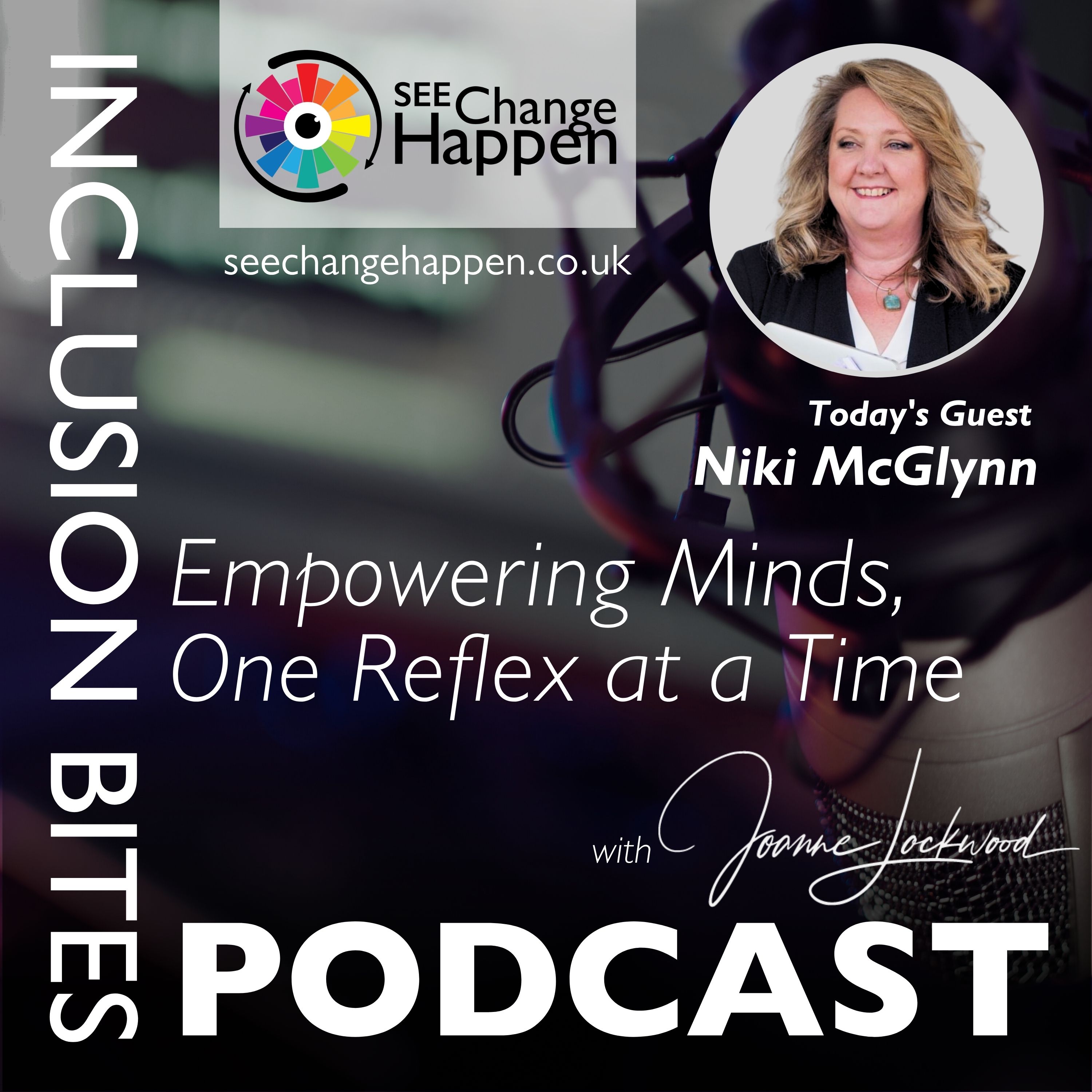
Empowering Minds, One Reflex At A Time
with Nicola McGlynn · 10 July 2025
Mental Health Wellbeing Trauma
Joanne Lockwood is joined by neurodevelopment therapist and ADHD coach Niki McGlynn for a practical, science-led conversation about primitive reflexes and why they matter far beyond infancy. Together they unpack how early movement patterns help the brain wire up for attention, coordination, sensory processing and the felt sense of safety—and what can happen when those reflexes remain active into later life.
Drawing on personal experience of dyslexia and ADHD in their families, they connect reflex patterns to real-world challenges many people recognise: fidgeting, difficulty sitting still, trouble tracking text, overwhelm from noise or sensory input, social anxiety, and the way shame can build when these differences are misunderstood as “bad behaviour” or a moral failing. They also discuss the lingering impact of the pandemic on felt safety, risk aversion and social habits.
The episode offers listeners accessible ways to think about “recalibrating” through movement, from targeted reflex-integration approaches to supportive activities like yoga, tai chi, climbing and balance work. The overarching message is that better understanding of neurodevelopment can reduce blame, increase inclusion and help people of all ages find practical routes to thriving.
About Nicola McGlynn
One-sentence summary
A woman once labelled “stupid” now devotes her life to helping children and adults feel safe in their own bodies, so difference is no longer mistaken for failure.
---
Synopsis
Niki McGlynn’s work began at her kitchen table, not in a clinic. At 40, when her daughter was diagnosed with dyslexia — and later ADHD — Niki recognised her own story in her child’s struggle. As a girl, she had sat through Sunday maths lessons with her grandfather, trying to grasp numbers that slipped through her fingers, hearing the word “stupid” often enough that it began to feel true. No one followed through when her mother suspected dyslexia. Instead, she grew up carrying the quiet weight of disorganisation, rejection sensitivity, and the sense that everyone else had been given a manual she’d somehow missed.
Watching her daughter face similar challenges hardened something in her. She refused to let the story repeat. In discovering neurodevelopmental therapy and primitive reflex integration, she found language — and movement — for experiences that had once felt like personal failings. Now she helps people understand that what looks like defiance, laziness or weakness is often a nervous system trying to feel safe. Her work is not about fixing people; it is about restoring safety, dignity and the chance to thrive in a world that too often shames difference.
---
10 Small, digestible concepts for easy learning
1. We are wired for survival, not happiness.
If your brain senses danger, it will block joy — even when you consciously want it.
2. Safety is the foundation of connection.
If you don’t feel safe in your body, it is hard to feel safe with other people.
3. Movement builds the brain.
The more we move — especially in early life — the more our neural connections strengthen.
4. What looks like misbehaviour may be a reflex.
Some reactions happen faster than choice; they are protective patterns, not character flaws.
5. “Good” children can be struggling children.
Compliance can be a freeze response, not calm confidence.
6. Fidgeting can be focus.
For some nervous systems, movement makes concentration possible.
7. Masking hides need.
Especially in girls, difficulty is often concealed until the pressure becomes unbearable.
8. Executive dysfunction is not laziness.
Organisation, planning and follow-through are neurological processes, not moral virtues.
9. Risk builds resilience.
Safe, manageable risks teach the brain confidence and capability.
10. It is never too late to recalibrate.
With awareness and movement, adults can still reshape patterns laid down in infancy.
---
The “why” in the story
What they believe is true about people
Niki believes people are not broken — their nervous systems are responding as best they can to what they have experienced.
What they cannot unsee
She cannot unsee how often children are shamed for neurological patterns beyond their control — being told off tens of thousands more times than their peers.
What they are no longer willing to tolerate
She is no longer willing to accept that disorganisation, emotional intensity or inattention are treated as moral failures rather than processing differences.
What they are trying to build instead
She is building a world where safety comes first — where children and adults are supported to integrate their reflexes, trust their bodies and access their full creativity and intelligence.
---
Narrative structure
1. The trigger
Her daughter’s diagnosis illuminated her own childhood. The memory of being called “stupid” met the realisation: this was never about intelligence. It was about wiring.
2. The tension
She continually encounters a world that prefers blame to biology. Teachers want stillness. Workplaces want conformity. Society wants convenience. Nervous systems want safety.
3. The insight
Primitive reflexes — fear, startle, freeze — can remain active, shaping behaviour invisibly. When people feel unsafe in their bodies, everything else becomes harder.
4. The pivot
Instead of internalising shame, she trained in neurodevelopmental therapy. She moved from coping to teaching. From hiding to translating science into practical movement.
5. The destination
A future where difference is understood early, where children are not shamed for fidgeting or daydreaming, and where adults can say, without embarrassment, “My brain works differently — and that’s fine.”
---
Five key takeaways and learning points
1. Your struggles may have a neurological root.
So what: Self-blame may soften when you see your behaviour as biology, not failure.
2. Feeling unsafe reshapes behaviour.
So what: Instead of correcting behaviour, ask what safety might look like.
3. Movement is not optional for thriving.
So what: Small physical practices can sharpen thinking and emotional regulation.
4. Shame is more damaging than difference.
So what: Constant correction erodes self-worth far more than the trait itself.
5. Late understanding is still powerful.
So what: Diagnosis or awareness in adulthood can rewrite self-narratives built on misunderstanding.
---
Ten distinct ideas explained
1. Primitive reflexes linger.
Early survival patterns can remain active, influencing how we respond to stress, criticism or noise long after infancy.
2. Freeze is often mistaken for compliance.
The “perfect” student may be operating from fear, not ease.
3. Fight responses mask vulnerability.
Aggression can be protection — an attempt to regain control in a world that feels unsafe.
4. Sensory overload is exhausting.
When your system processes too much sound or light, ordinary environments become battlegrounds.
5. Masking costs energy.
Pretending to be fine drains cognitive and emotional reserves, often leaving collapse at home.
6. Executive challenges affect dignity.
Struggling to pay bills or keep organised is not trivial — it shapes identity and self-esteem.
7. Risk deprivation weakens resilience.
Over-sanitised childhoods may unintentionally restrict neurological development.
8. Diagnosis reframes identity.
Understanding ADHD or dyslexia can replace “I’m useless” with “My brain works differently”.
9. Movement integrates mind and body.
Climbing, spinning, crawling — these are not childish; they are neurological nourishment.
10. Creativity thrives in difference.
Entrepreneurs and comedians often see patterns others miss — divergence fuels innovation.
---
How people should change as a result
1. Think
- Shift from “What’s wrong with them?” to “What is their nervous system protecting them from?”
- See fidgeting or distraction as information, not defiance.
- Question whether compliance always equals wellbeing.
- Understand organisation as a skill supported by wiring, not willpower alone.
2. Feel
- Move from frustration to curiosity.
- From shame to self-compassion.
- From judgement to empathy.
- From fear of difference to appreciation of it.
3. Act
- Allow movement breaks — at work and at home.
- Offer practical supports for organisation without ridicule.
- Validate children’s experiences rather than dismissing them.
- Encourage safe risk-taking — climbing, balancing, exploring.
- Seek professional guidance when patterns feel deeply rooted.
- Stand on one leg while brushing your teeth — and mean it.
---
One thing to remember
Difference is not a moral failure — it is a nervous system asking to feel safe.