Lived Experience Identity
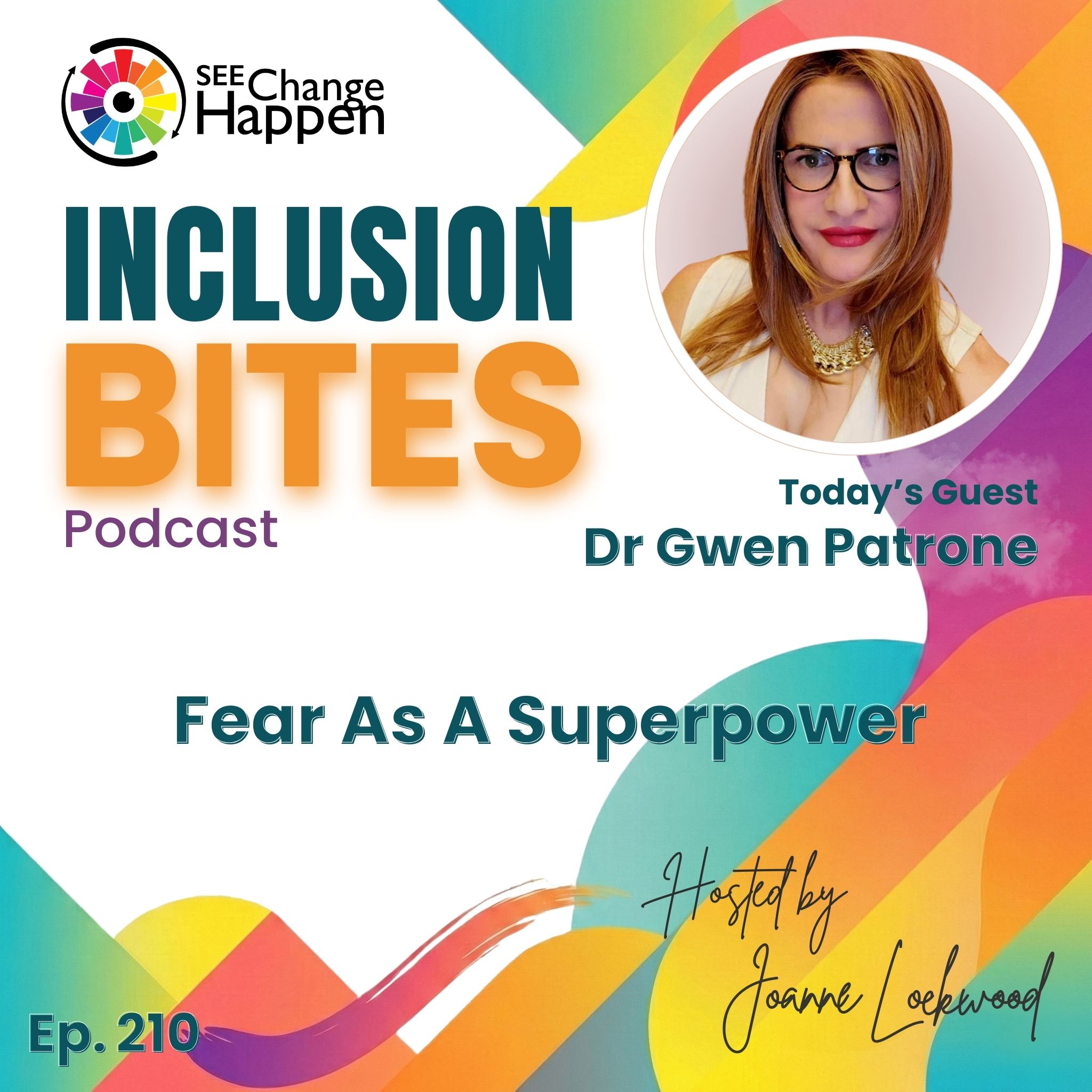
In this episode of Inclusion Bites, Joanne Lockwood speaks with Dr. Gwen Patrone about fear, resilience and the process of living more authentically. Gwen describes how military training, professional experience and personal reflection helped her learn to slow fear down, analyse it and repurpose it into strength rather than letting it control her.
The conversation also explores Gwen’s lived experience as a trans woman, including dysphoria, identity alignment, family support, social acceptance and the challenges of navigating legal and medical systems in Florida. Joanne and Gwen discuss the importance of authenticity, self-acceptance and refusing to live split lives, alongside the loneliness and social pressures that can affect trans people.
A major thread throughout the discussion is the value of small acts of kindness, micro-validations and human connection. The episode closes with practical encouragement for people questioning their gender, and for those supporting them, to show tolerance, compassion and respect rather than judgement.
About Gwen Patrone
One-sentence summary
Gwen Petrone’s story is about learning to stop fearing herself, and choosing to turn fear, dysphoria and loneliness into a steadier, kinder way of living.
Synopsis
Gwen Petrone comes across as someone shaped by discipline, secrecy, and long stretches of self-containment: a former US Marine sergeant, technically minded, commercially capable, and used to staying composed when others are fraying. She speaks like someone who has spent years observing herself closely, learning when to hold steady and when to let the pressure out. Her language is practical, but beneath it sits a tender truth: she has known what it feels like to carry something important alone, to be “searching for that feeling” long before she had the words or the safety to name it.
What Gwen is trying to change is not only how people understand gender, but how they respond to human difference when it is not neatly packaged. She wants people to see that fear need not be shameful or final; it can be worked with, softened, and redirected. Behind that is a deeper concern for people who are isolated, misunderstood, or in crisis. When she talks about suicide, loneliness, or young people crushed by ordinary slights, she is really talking about dignity: the right to breathe, to belong, to be seen without having to perform for safety. Her conviction is calm rather than grand: a good life is one where people can be themselves without constantly bracing for harm.
10 Small, digestible concepts for easy learning
1. Fear does not always mean stop; sometimes it means slow down.
Gwen’s gift is noticing fear early enough to work with it, rather than being ruled by it.
2. Pressure left unspoken does not disappear.
She describes dysphoria like a valve: if it has nowhere to go, it builds.
3. Authenticity is easier than maintaining a mask.
Gwen makes the case that one honest self is less exhausting than many edited versions.
4. Resilience can be practised.
Her calm did not just happen; it was trained, tested and strengthened over time.
5. Being seen can be lifesaving.
A small act of recognition can interrupt shame and loneliness.
6. People often fear what they have never met.
Gwen shows how quickly misconceptions soften once there is real contact.
7. Not every slight deserves a battle.
Part of strength is knowing which hurts to carry, and which to let pass.
8. Belonging is not the same as fitting a stereotype.
Gwen rejects the idea that womanhood, manhood, or trans identity must look one way.
9. Connection matters more than labels.
She wants ordinary human life: conversation, friendship, laughter, shared space.
10. Kindness is not small when someone is barely coping.
A compliment, a smile, or a bit of patience can change the emotional weather of a day.
The “why” in the story
What they believe is true about people
Gwen believes people are more layered, more adaptable, and more worthy of grace than they are often given credit for. She clearly believes that “the vast majority of people… just want to live and let live.”
What they cannot unsee
She cannot unsee the cost of isolation, the damage of shame, and the way young or vulnerable people can be crushed by misrecognition, fear, and relentless pressure.
What they are no longer willing to tolerate
She is no longer willing to tolerate pretending, needless cruelty, or systems that force people to prove their humanity before they are treated with respect.
What they are trying to build instead
She is trying to build a life, and help others build one too, where fear is managed rather than obeyed, where identity can settle, and where people are met with enough kindness to keep going.
Narrative structure
1. The trigger:
Gwen’s commitment seems to have been forged through a mix of military discipline, early private questioning, and later the shock of remembering and rediscovering herself. A key turning point was when dressing female brought a rush of recognition and relief: “I forgot. I forgot. I used to do that.”
2. The tension:
She keeps meeting the tension between resilience and fragility, between wanting to live openly and fearing the cost of being seen, between being understood as a person and being reduced to a category.
3. The insight:
Her central insight is that fear can be domesticated. It can be slowed down, examined, and repurposed. The same is true of identity: what once felt dangerous or impossible may simply have needed time, safety and language.
4. The pivot:
Gwen stopped treating fear as an enemy and started treating it as information. She began leaning into authenticity, writing about her experience, helping others name their own pressure, and choosing where to place her energy.
5. The destination:
She is aiming for a future that feels calm, ordinary, and humane: a world where people can go shopping, work, travel, love, and age without constant self-protection; where they are known first as neighbours.
Five key takeaways and learning points
1. Fear is not always the problem; silence around it is.
So what: when fear is named early, it can be managed before it turns into panic, shame, or withdrawal.
2. Small acts of recognition can restore dignity.
So what: a kind word or gentle acknowledgement can help someone feel human again.
3. Resilience grows through contact with reality, not endless avoidance.
So what: confidence is built by surviving manageable discomfort, not by never being challenged.
4. Identity becomes lighter when it is lived honestly.
So what: people often stop suffering once they no longer have to split themselves in two.
5. Most people are more open than the loudest commentary suggests.
So what: chosen respect, not fear, is often the better starting point in everyday life.
Ten distinct ideas explained
1. The body keeps count of unexpressed pressure.
Gwen’s talk of dysphoria as a building force captures how emotional strain becomes physical and urgent when it has no outlet.
2. Safety and suppression are not the same thing.
A person can appear composed while carrying a great deal internally. Gwen’s story shows the cost of that split.
3. Authenticity reduces internal noise.
Both Gwen and Joanne describe the relief of no longer having to manage competing selves. That quiet is part of belonging to oneself.
4. Misunderstanding often comes from distance, not hatred.
Gwen says people’s assumptions are shaped by media and lack of contact. Meeting a real person changes the story.
5. Resilience is not hardness for its own sake.
Gwen is not celebrating pain; she is arguing for enough strength to navigate it without falling apart.
6. Community can be medicine.
She describes trans gatherings as a way of physically feeling less alone. Human contact is not optional when isolation is heavy.
7. Being “normal” can mean being unremarkable.
Gwen’s wish is not for special treatment but peace: to be seen as Gwen, simply living her life.
8. Stereotypes make people smaller than they are.
She pushes back against reduced, sensational images of trans people and asks for the wider middle of ordinary lives to be seen.
9. Not every battle is worth the energy.
Gwen distinguishes between harmless mistakes and true disrespect, showing that wisdom includes choosing your fights.
10. Kindness is practical, not sentimental.
Her examples of compliments, smiles, and paying for someone’s food show that care can be simple and still deeply meaningful.
How people should change as a result
1. Think
- Move from seeing gender and difference as abstract debates to seeing them as lived, emotional realities.
- See fear as a signal that can be worked with, not always a command to retreat.
- Recognise that most people are not trying to be exceptional; they are trying to be safe and accepted.
- Understand that small daily interactions can either deepen shame or ease it.
2. Feel
- Shift from judgement towards curiosity.
- Move from defensiveness to empathy when someone’s experience differs from your own.
- Feel less urgency to categorise, and more willingness to listen.
- Replace performance-driven “acceptance” with genuine respect.
3. Act
- Greet people with ordinary warmth: smile, say hello, use their name if you know it.
- Offer small, specific affirmations when they fit naturally: “You look great today” or “I love your hair.”
- If someone seems prickly or abrupt, pause before assuming hostility.
- Make space for people to tell their own story instead of speaking over them.
- Notice where a mistake is harmless and where it is harmful; respond proportionately.
- Support spaces where people can meet as human beings, not just as labels.
- Choose kindness in public moments: in queues, shops, workplaces, transport, and social settings.
One thing to remember
Fear becomes powerful when it is hidden; it becomes wisdom when it is understood.