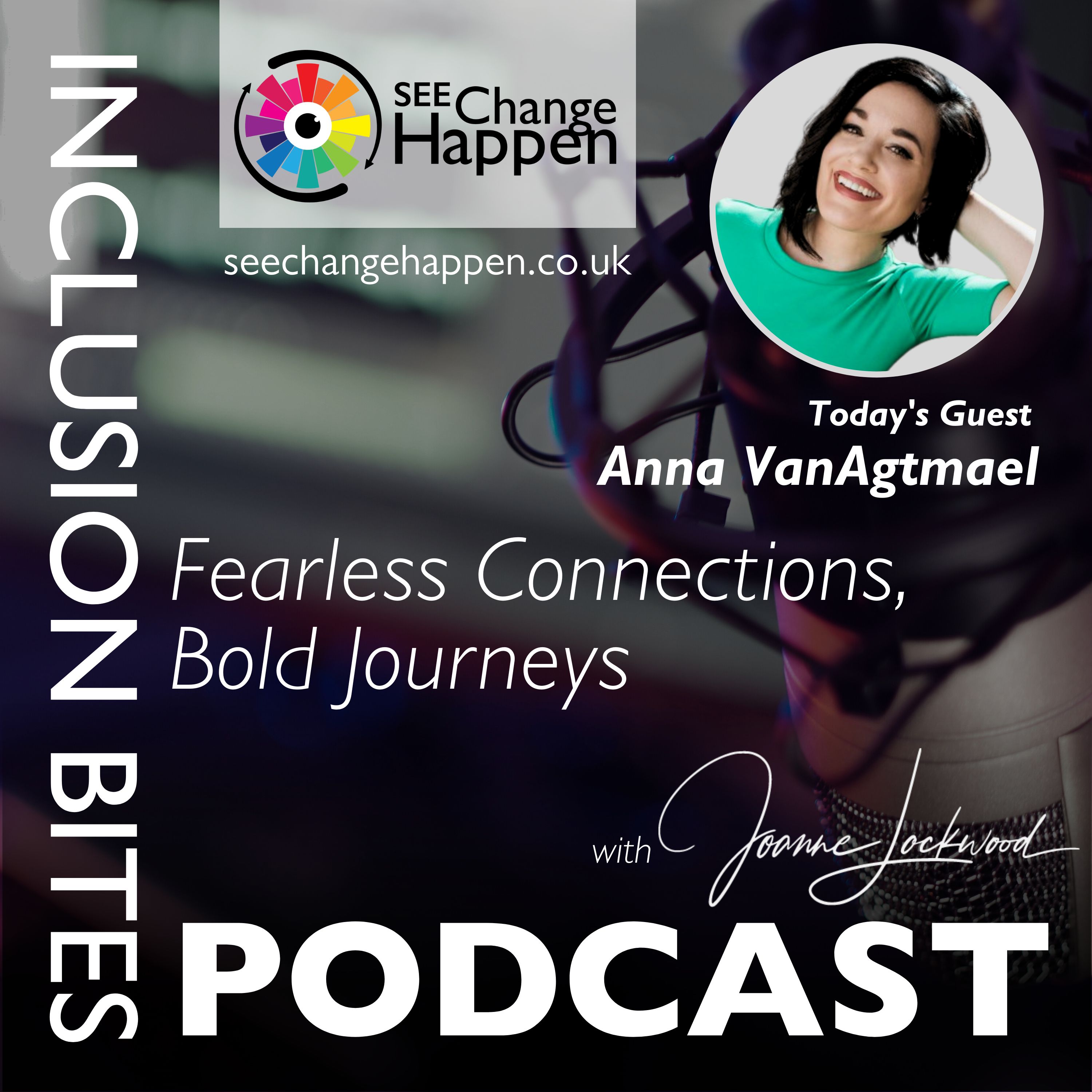
Fearless Connections, Bold Journeys
with Anna VanAgtmael · 27 March 2025
Careers Growth Confidence
Joanne Lockwood is joined by Anna VanAgtmael, founder of Wandering Roots, to explore what it looks like to step off the career conveyor belt and build a life around purpose, connection, and managed risk.
Anna shares how building a laboratory from the ground up gave her early entrepreneurial confidence, but it was an unexpected neck surgery and months of enforced pause that crystallised a deeper truth: outward success didn’t equal fulfilment. From yoga teacher training and a powerful experience of supportive community, she began experimenting with retreats—starting locally, then expanding internationally.
Together they unpack what makes retreats meaningful beyond the buzzwords: creating space away from daily responsibilities, building trust with strangers, and encouraging small, supported steps outside comfort zones. The conversation also moves into the practical realities of entrepreneurship—risk management, learning through trial and error, scaling in a way that suits your life, and using contractors and tools to stay sustainable.
The episode leaves listeners with an invitation to try what keeps calling them—without needing a perfect plan—and to build confidence through action, connection, and deliberate pauses that help clarify what matters next.
About Anna VanAgtmael
One-sentence summary
Anna VanAgtmael believes life is too precious to live half-awake, and she is building spaces where women feel brave enough to choose themselves before regret chooses for them.
---
Synopsis
Anna VanAgtmael did everything “right”. She built a successful career in laboratory medicine, climbed fast, earned well, and proved she could handle responsibility. But at 28, immobilised in a neck brace after surgery, she experienced something she had never allowed before: stillness. In that forced pause, she realised she had achieved security without joy. “I had achieved more financial and career success than I ever thought possible, but I still wasn’t jazzed about it.” Beneath the success was a quiet unhappiness — and the terrifying truth that she had never once asked herself what she actually wanted.
That reckoning changed her. She began following the things that both interested and scared her — yoga training, travel, hosting strangers — and eventually built Wandering Roots, creating retreats where women could step out of routine and step into honesty. What she is trying to change is not simply how people holiday or network, but how they live. She wants women to experience what it feels like to be supported, cared for, and brave in equal measure — to rediscover desire, direction, and self-trust before life hardens around them.
---
10 Small, digestible concepts for easy learning
1. Success without joy is still failure.
External achievement means little if you feel empty inside it.
2. Stillness tells the truth.
When everything stops, what surfaces is usually what matters.
3. Fear of regret is stronger than fear of risk.
Regret lasts longer than courage feels uncomfortable.
4. You don’t need a full plan — just the next brave step.
Clarity often comes after action, not before it.
5. Strangers can feel safer than family.
Without history or expectation, vulnerability becomes easier.
6. You are allowed to quit what no longer fits.
Life is not a contract you signed at 22.
7. If you’re not making new mistakes, you’re not growing.
Repeating errors is stagnation; new ones are expansion.
8. Being taken care of is not indulgent — it’s restorative.
Many women don’t realise how exhausted they are until they stop.
9. Environment shapes bravery.
A supportive room can unlock truths years of solitude never could.
10. You can be afraid and still move forward.
Courage is not the absence of fear — it’s choosing differently.
---
The “why” in the story
What she believes is true about people
People are capable of far more than they allow themselves — but comfort and expectation quietly keep them asleep.
What she cannot unsee
How many women are living competently but not alive. How many have never asked, “What do I want?”
What she is no longer willing to tolerate
A life dictated by practicality alone. Playing small because it looks sensible. Staying stuck because it looks safe.
What she is trying to build instead
Spaces where women feel brave, held, and seen — where they reconnect to desire, possibility, and choice.
---
Narrative structure
1. The trigger:
Neck surgery at 28 forced Anna into four months of stillness. Immobilised and unable to distract herself, she realised she was deeply unhappy despite outward success. It was the first time mortality felt real.
2. The tension:
Security versus fulfilment. Practicality versus passion. Gratitude versus truth. She felt shame for wanting more when she already had “enough”.
3. The insight:
Nobody had ever asked her what she wanted — including herself. Life wasn’t about climbing the safest ladder; it was about building one she actually wanted to climb.
4. The pivot:
She began trying things that interested and frightened her. Yoga teacher training. Hosting small retreats. Saving money to manage risk. Gradually leaving her secure career.
5. The destination:
A life where work feels alive, where fear signals possibility, and where women return home changed — more confident, more certain, more themselves.
---
Five key takeaways and learning points
1. You don’t have to earn exhaustion to justify rest.
Taking space to reflect may change the direction of your entire life.
2. Trying is the difference between dreamers and doers.
The only structural distinction she sees? “They tried and they kept going.”
3. Vulnerability accelerates connection.
When women sit together without roles or labels, confidence grows.
4. Entrepreneurship is emotional resilience training.
The lesson isn’t that you won’t fail — it’s that you’ll survive it.
5. You get one life.
The stakes aren’t financial. The stakes are regret.
---
Ten distinct ideas explained
1. The conveyor belt life
Many people follow predictable paths without pausing to question them. The emotional cost is quiet dissatisfaction that becomes normal.
2. Graceful risk
Risk doesn’t have to be reckless. She prepared financially before stepping away — courage with scaffolding.
3. The power of the container
A retreat isn’t magic; it’s a deliberate environment where people feel safe enough to drop performance.
4. Strangers without labels
Without history, you’re not someone’s partner, colleague, or daughter. You are simply you. That freedom shifts identity.
5. Being cared for as a reset
For many women, having meals prepared and logistics handled is unfamiliar. It reminds them they are worthy of effort.
6. Mistakes as movement
New mistakes signal expansion. Emotional stagnation comes from fear of error.
7. Trial before clarity
She didn’t know she wanted retreats. She discovered it by experimenting.
8. Connection starvation after isolation
After global lockdowns, people craved belonging more than ever. Connection is not optional — it is psychological nourishment.
9. Sobriety as self-trust
Experiencing life without numbing agents sharpened her sense of responsibility and emotional honesty.
10. Choosing a small, intentional business
Growth is not always about scale. Sometimes it is about sustainability, freedom, and alignment.
---
How people should change as a result
1. Think
- Stop assuming contentment equals fulfilment.
- See fear as information, not an instruction to retreat.
- Understand that strangers can sometimes see you more clearly than those who’ve known you longest.
- Recognise that preparation and boldness are not opposites.
2. Feel
- From guilt about wanting more → to permission to desire.
- From defensiveness about risk → to curiosity about possibility.
- From isolation → to openness.
- From resignation → to agency.
3. Act
- Take one small action that both excites and unnerves you.
- Spend time alone without distraction and write down what you actually want.
- Say yes to one experience without bringing your usual “security blanket”.
- Practise answering: “Three things I love about myself.”
- Create space — even a few hours — where you are not responsible for anyone else.
- Surround yourself with people who are building, not just commenting.
- When you make a mistake, extract the lesson within 24 hours and move forward.
---
One thing to remember
You only get one life — don’t wait for a crisis to start living it fully.