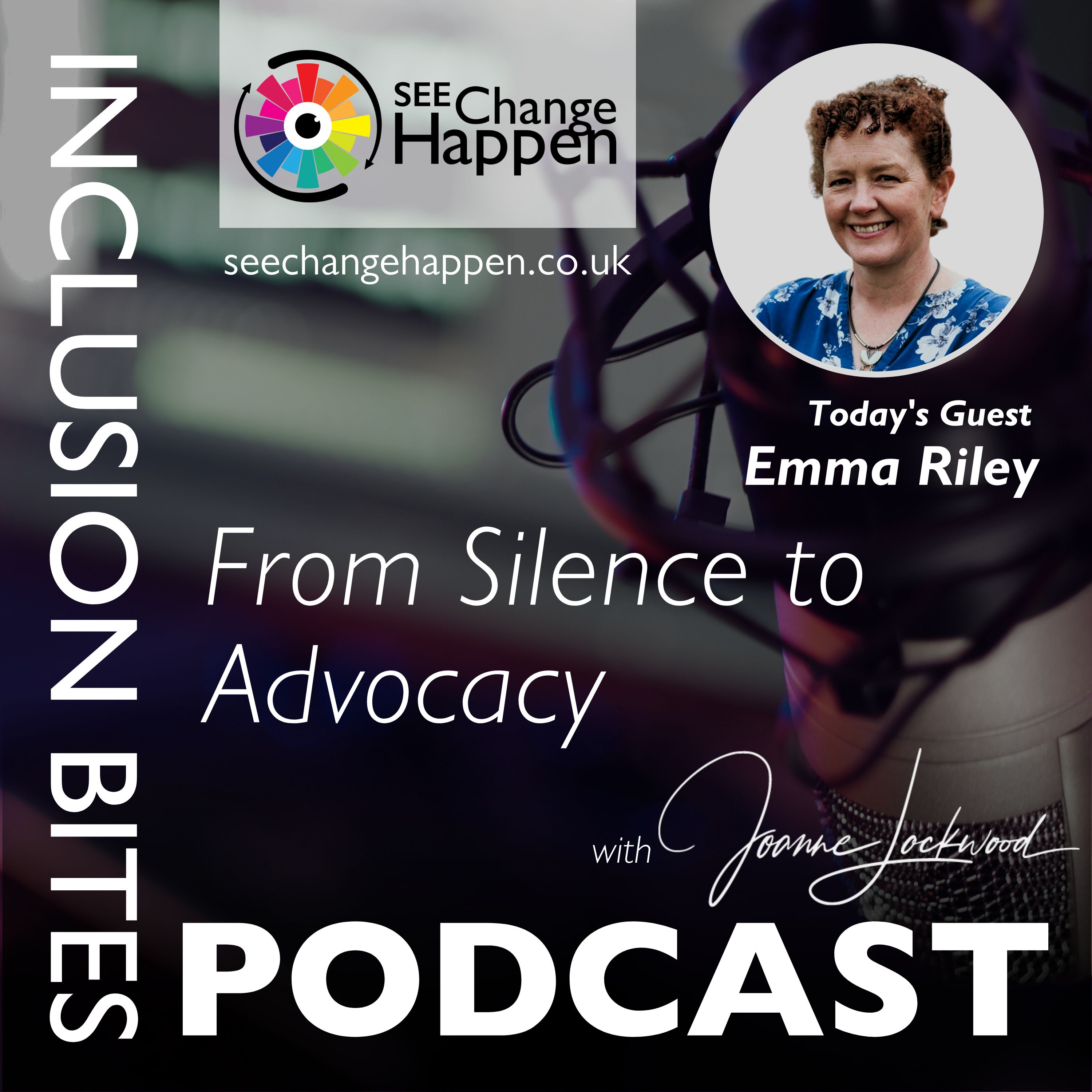
From Silence To Advocacy
with Emma Riley · 15 August 2024
Lived Experience Identity
Emma Riley joins Joanne Lockwood to recount her experience of serving in the Royal Navy at a time when being gay in the military was illegal, and how that forced silence shaped her sense of belonging and safety.
Emma describes the bullying, the pressure of hiding her identity, and the invasive investigation that followed after she confided in a colleague. She explains the humiliation of being searched and interrogated, the forced process of coming out to her family, and the impact of being discharged on her confidence, trust, and long-term wellbeing.
The conversation follows Emma’s path from rebuilding her working life after leaving the Navy to taking action. She shares how she pursued legal challenge, ultimately contributing to the European Court of Human Rights ruling that led to the ban on homosexual people serving in the UK military being lifted in 2000.
They also discuss why visibility matters, how Pride functions as both celebration and protest, and Emma’s ongoing advocacy through speaking, supporting LGBT veterans, and volunteering in schools to help prevent bullying and expand understanding.
About Emma Riley
One-sentence summary
Emma Riley’s life is a quiet refusal to let humiliation have the last word — turning the shame forced upon her into courage that protects others from the same silence.
---
Synopsis
Emma Riley is someone who longed to belong. Bullied at school and unsure of her identity, she joined the Royal Navy at 18 searching for camaraderie and purpose. Instead, she entered an institution that made her existence illegal. When she whispered, “I think I might be gay,” to someone she believed was a friend, she was arrested the next morning. Interrogated, searched for “evidence”, forced to come out to her terrified parents while her father was gravely ill — she lost not just her career, but her sense of safety in the world. “You are completely alone in this,” she realised when the person meant to support her in interview informed on her instead.
What Emma is trying to change is not just a law — that battle she helped win. She is trying to change what happens inside people when systems decide they are unacceptable. She is working against the quiet corrosion of shame, the long aftershock of humiliation, the way a person begins to monitor their gaze, their body, their touch, fearing they are a threat simply for existing. She wants veterans to reclaim dignity. She wants young people to see a future version of themselves. She wants workplaces to be places where no one has to shrink to survive.
---
10 Small, digestible concepts for easy learning
1. Belonging is powerful enough to make you silence yourself.
At 18, Emma chose service over self because she wanted to belong.
2. When identity is criminalised, honesty becomes terrifying.
Admitting “I might be gay” cost her everything.
3. Bullying doesn’t have to be loud to wound deeply.
A wiped-out letter on a name board can say, “You don’t belong here.”
4. Institutional shame seeps into the body.
Years later, she still avoided looking at women in a changing room.
5. Resilience is not immunity.
Surviving harm doesn’t mean you weren’t damaged by it.
6. Silence protects systems, not people.
When no one challenges the rule, the rule survives.
7. One person can pressure a nation.
Emma self-funded a legal case that helped overturn a national ban.
8. Visibility is oxygen.
“You can’t be what you can’t see.”
9. Apologies matter — but accountability matters more.
Words without repair do not restore dignity.
10. Healing often begins with being able to tell the whole story.
Speaking it aloud changed her relationship with it.
---
The “why” in the story
What they believe is true about people
Emma believes we are “all skin bags of blood and bones” — fundamentally the same beneath whatever label society attaches to us.
What they cannot unsee
She cannot unsee the mental cruelty of being hunted for who you are, nor the lifelong scars carried by veterans discarded by the state they served.
What they are no longer willing to tolerate
She will no longer tolerate silence that protects institutions at the expense of people — or the narrative that discrimination was just “of its time”.
What they are trying to build instead
A world where no one has to trade belonging for authenticity, and where veterans and young people alike feel safe to exist openly.
---
Narrative structure
1. The trigger:
An 18-year-old recruit signs a contract stating homosexuality is illegal. Years later, saying “I think I might be gay” leads to arrest, interrogation and discharge.
2. The tension:
Wanting to serve, to belong, to be loyal — while knowing the rule targets who you are. Later, wanting to move on — while knowing silence protects injustice.
3. The insight:
The ban was never about safety; it was about control and fear. The only reason she could be “blackmailed” was because the state created the stigma.
4. The pivot:
Five years after discharge, Emma called a solicitor. She self-funded a case that contributed to the European Court of Human Rights ruling the ban unlawful.
5. The destination:
A life where a teenager in a school hall can hear her story and think, “It’s going to be okay.” A society where service, love and dignity do not cancel each other out.
---
Five key takeaways and learning points
1. Silence has a cost.
Not talking about trauma can protect you short term, but it builds walls that isolate you long term.
2. Institutional discrimination leaves private scars.
The damage doesn’t stop at dismissal; it lives in relationships, confidence and trust.
3. Courage is often administrative.
Change didn’t begin with a speech — it began with a phone call to a solicitor.
4. Visibility saves unseen lives.
You may never know who gains hope simply by seeing you stand comfortably in yourself.
5. Accountability must reach beyond apology.
Repair includes compensation, restoration of records, and reconnection for those pushed out.
---
Ten distinct ideas explained
1. Belonging as survival
Emma joined the Navy seeking tribe and structure. When belonging is scarce, we will mould ourselves to fit.
2. The terror of forced outing
Being sent home to tell her parents while under investigation stripped her of control at the most vulnerable moment.
3. Microaggressions as erosion
Small daily acts — crossed-out letters, mocking songs — accumulate into a steady message: you are lesser.
4. State-sanctioned humiliation
Searching someone’s room for proof of sexuality transforms identity into contraband.
5. The long shadow of stigma
Years later, she policed her own body language, afraid of being seen as predatory.
6. Resilience through adversity
“Worst things happen at sea” became shorthand for perspective — complex crises feel survivable after institutional betrayal.
7. Legal redress as moral resistance
Taking the case to Europe reframed her story from personal shame to human rights violation.
8. Visibility as permission
A young singer saw Emma on stage and decided her own future could include dignity.
9. Community as repair
Veterans telling veterans their stories creates validation no outsider can replicate.
10. Apology with humility
Personal acknowledgement from someone who admits past complicity carries deeper healing power than polished political speech.
---
How people should change as a result
1. Think
- Move from “that was the past” to “people are still living with the consequences”.
- Shift from seeing discrimination as abstract policy to seeing it as intimate harm.
- Understand that resilience does not cancel trauma.
- Recognise that visibility is not vanity — it is lifeline.
- Question rules that require people to shrink to belong.
2. Feel
- From defensiveness to empathy.
- From indifference to moral discomfort.
- From pity to respect.
- From cynicism about change to belief in individual impact.
- From passive agreement to active care.
3. Act
- Listen fully when someone shares a difficult history — do not rush to tidy it.
- Challenge “jokes” that rely on exclusion or stereotype.
- Support restitution efforts for groups harmed by past policies.
- Make workplaces explicitly safe through policy and everyday behaviour.
- Be visible in your support — small signals of acceptance matter.
- Connect people with communities that understand their lived experience.
- When you see injustice, take the first step — even if it is just a phone call.
---
One thing to remember
No institution has the right to make a human being feel illegal for existing.