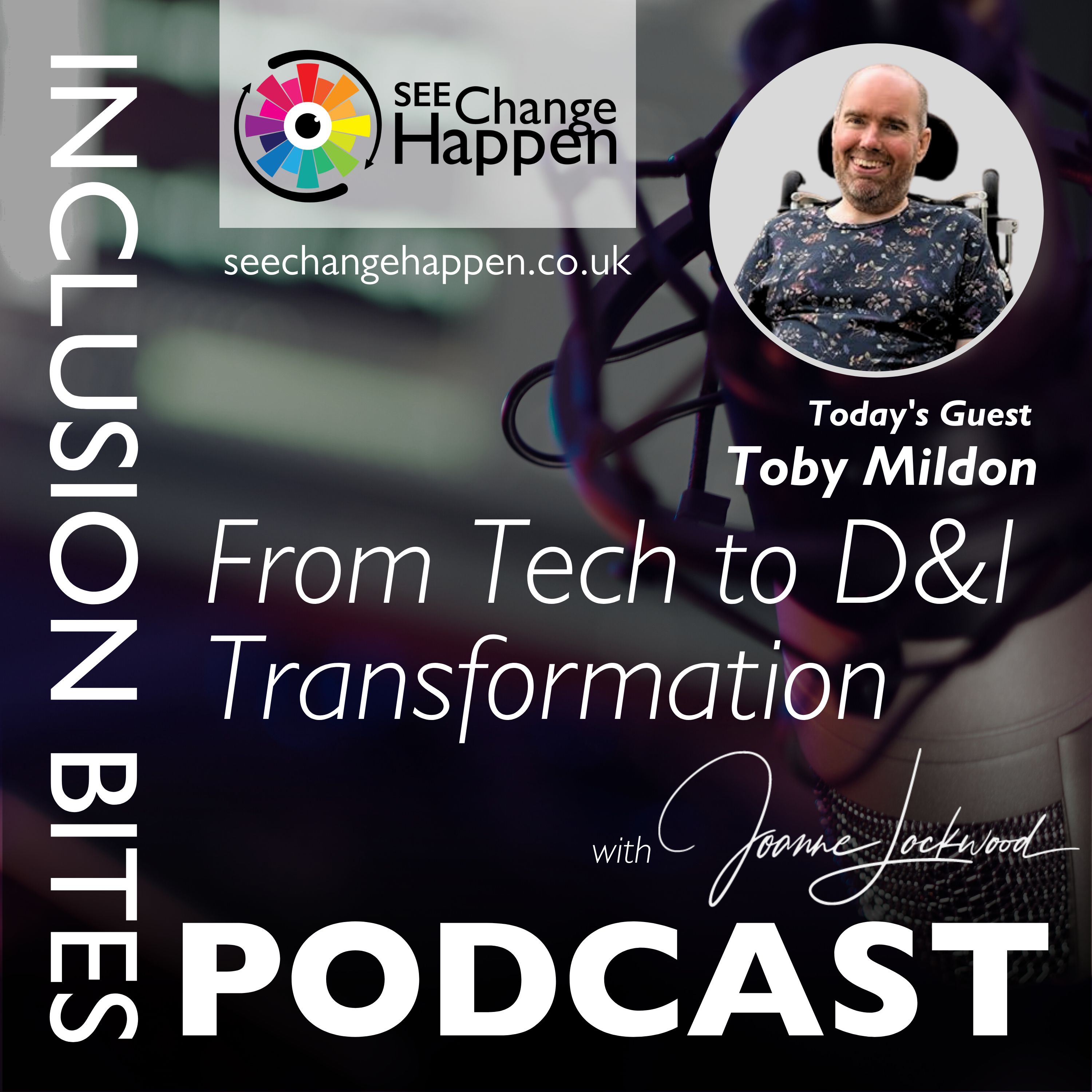
From Tech To D&I Transformation
with Toby Mildon · 17 October 2024
Workplace Culture Systems
Joanne Lockwood is joined by workplace inclusion specialist Toby Mildon to explore his path from technology transformation into equality, diversity and inclusion work, and what it takes to make EDI feel practical rather than intimidating.
They unpack why so many leaders feel anxious about “getting it wrong”, how that fear can create inaction, and what helps: clearer organisational purpose, emotional connection to the “why”, and a focus on behaviour change over simply knowing the right facts. Along the way they challenge siloed approaches to diversity, discuss bias and representation, and reflect on how privilege and the myth of meritocracy show up in workplaces and wider society.
The conversation moves into what effective, measurable inclusion looks like in practice. Toby shares how organisations can connect inclusion to commercial outcomes such as retention and attrition costs, and why culture, psychological safety and a credible employee value proposition matter more than surface-level perks. They close by looking at shifting expectations of work and values alignment, and what inclusive culture needs to deliver for people to feel safe, respected and able to belong.
About Toby Mildon
One-sentence summary
Toby Mildon’s story is about turning personal experience into quiet conviction — a determination to make workplaces safer so that nobody has to shrink, armour up, or question whether they belong.
---
Synopsis
Toby Mildon began his career in technology — building systems, managing projects, improving digital platforms at organisations like the BBC. He was good at it. But somewhere between delivering apps and overseeing engineering culture, something stirred. What started as a practical response to gender imbalance in tech became a deeper awakening. Toby, who lives with a physical disability, began to see how much of the world — from media portrayals to workplace benefits — had been designed with someone else in mind. He describes discovering his own internalised bias as “shocking”, realising he had absorbed society’s silent scripts about disability without even noticing.
What Toby is trying to change is not simply hiring metrics or representation charts. He is trying to change how it feels to walk into work each day. He wants senior leaders to move from fear to honesty, from paralysis to responsibility. He wants inclusion to mean something human: that you can wake up, go to work, and not feel like an outsider. That dignity is not conditional. That belonging is not a bonus feature. For Toby, this work is about closing the gap between who organisations say they are and how people actually experience them.
---
10 Small, digestible concepts for easy learning
1. Bias is the story we invent before we listen.
“Our biases are the stories that we make up about people before we get to know them.”
2. Not all privilege feels like advantage — but it still opens doors.
You may have worked hard, and still benefited from things you didn’t choose.
3. Representation shapes self-belief.
If you can’t see someone like you succeeding, your imagination narrows.
4. Belonging is preventative care.
When people don’t feel respected, they leave — emotionally first, physically next.
5. Fear of getting it wrong stalls progress more than ignorance.
Many leaders are not hostile; they’re anxious.
6. Inclusion is not charity — it’s fairness.
Equity is about closing gaps that already exist.
7. Benefits can exclude too.
Even something generous, like private healthcare, can quietly lock people out.
8. Equality can feel like loss to those used to preference.
When you’ve always stood at the top of the hill, level ground feels strange.
9. Belonging is measurable — and costly when absent.
When people consider leaving because they don’t feel respected, organisations pay.
10. Change starts with emotion, not statistics.
Facts inform, but feelings move people.
---
The “why” in the story
What they believe is true about people
Toby believes most people want to do the right thing — but fear, defensiveness and misunderstanding hold them back. He believes dignity should not depend on fitting a mould.
What they cannot unsee
He cannot unsee the media narratives that cast disabled people as villains, victims or heroes — rarely as ordinary leaders. He cannot unsee how systems quietly privilege some and disadvantage others.
What they are no longer willing to tolerate
He is no longer willing to accept workplaces that claim fairness while ignoring lived inequity. Nor the idea that inclusion is “fluffy”, optional or political.
What they are trying to build instead
Workplaces where leaders understand their role in creating culture. Where belonging is intentional. Where people are given what they need to thrive, not told to cope.
---
Narrative structure
1. The trigger
Volunteering to address gender imbalance in tech at the BBC. What began as a one‑day‑a‑week task expanded into a realisation: diversity was far bigger than one strand. Then came his own bias test result — discovering a mild bias against disabled people. “I was shocked,” he admits. That shock became a turning point.
2. The tension
Leaders paralysed by fear. Pushback against “wokeness”. Defensive reactions to conversations about privilege. Being told inclusion has “gone too far”. Watching benefits exclude people like him without anyone noticing.
3. The insight
Bias operates in how we think, feel and act — and while thoughts are hard to change, behaviour is not. Inclusion becomes real when it shifts from abstract virtue to conscious action.
4. The pivot
Toby moved from building technology systems to redesigning workplace systems. He stopped focusing purely on representation targets and started translating belonging into business language leaders could grasp.
5. The destination
A culture where waking up and going to work does not require vigilance. Where safety — physical and psychological — is normal. Where difference is neither spotlighted nor erased, just integrated.
---
Five key takeaways and learning points
1. Belonging is not soft — it’s structural.
When people feel respected, they stay, grow and contribute fully.
2. Privilege is cumulative.
The earlier life supports you, the easier later transitions feel.
3. Fear is often the real barrier.
Leaders need reassurance as much as education.
4. Data matters when it tells a human story.
Connecting lived experience to financial impact drives change.
5. You don’t need personal crisis to care.
Waiting until your own privilege is dented delays justice for others.
---
Ten distinct ideas explained
1. The Diversity Iceberg
Most of who we are is invisible. When systems only recognise visible difference, they miss the deeper currents shaping experience.
2. Internalised Bias
We absorb societal messages, even about our own identities. Unlearning begins when we notice the silent scripts.
3. Meritocracy Myth
Fairness feels obvious to those benefitting from it. To others, the climb is steeper and less visible.
4. Privilege as Accumulation
Being born into certain contexts provides early deposits that compound over time.
5. Psychological Safety
Without it, creativity shrinks. People conserve energy for self-protection rather than contribution.
6. Allyship from the Inside
Change requires those with influence to advocate from within.
7. Intent vs Impact
Good intentions do not erase harm — accountability builds trust.
8. Inclusion Beyond Events
Hosting awareness days is easy; redesigning culture is harder.
9. Retention as Respect
When someone stays because they feel valued, that is inclusion working.
10. Emotional Why
Sustainable change happens when leaders connect inclusion to something personal and deeply held.
---
How people should change as a result
1. Think
- Move from “Is this political?” to “Who is affected?”
- Shift from fairness as sameness to fairness as responsiveness.
- Recognise that hard work and privilege can coexist.
- See belonging as a leadership responsibility, not an HR task.
2. Feel
- From defensiveness to curiosity.
- From guilt to responsibility.
- From fear of mistakes to willingness to learn.
- From indifference to empathy.
3. Act
- Ask one colleague: “What helps you feel that you belong here?”
- Review benefits and policies for hidden exclusions.
- Speak up in support when someone is targeted or diminished.
- Track whether people are leaving because they feel disrespected.
- Reflect on one privilege you hold — and how you can use it to open a door.
- Replace one performative action with one structural change.
---
One thing to remember
Inclusion begins when we care enough about someone else’s safety to examine our own comfort.