Mental Health Wellbeing Trauma
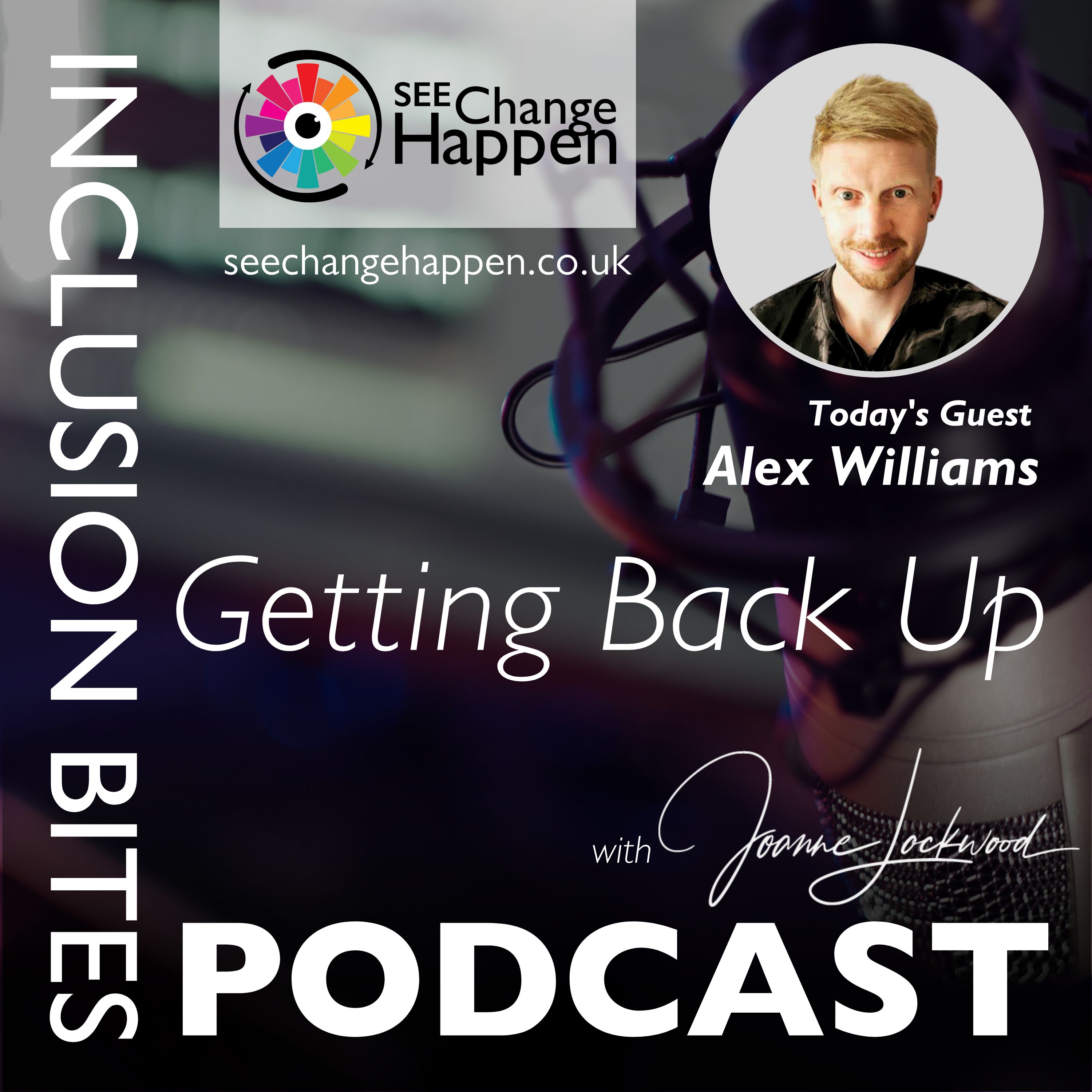
Joanne Lockwood speaks with mental health practitioner Alex Williams about what it really takes to recover after life’s setbacks, and why “getting back up” is less about quick fixes and more about foundations.
Alex shares his own story of profound childhood trauma and the long tail it had on his self-worth, relationships and sense of agency. Despite building a career in mental health, he describes reaching a breaking point in adulthood, including suicidal ideation, and how re-framing his ability to choose his response became a turning point.
Together they explore how modern life and social media can amplify comparison, shame and unrealistic expectations, and why authenticity matters when seeking support. They emphasise the role of community, human connection and realistic, repeatable actions—small daily commitments that rebuild trust in yourself over time.
The episode closes with practical guidance: separate yourself from the problem you’re experiencing, take responsibility for what you can control, seek supportive people and environments, and be patient with the non-linear nature of recovery.
About Alex Williams
One-sentence summary
Alex Williams’s story is about reclaiming the power to choose love and presence after a childhood marked by violence, loss and emotional neglect — and refusing to let pain define his worth or his daughter’s future.
---
Synopsis
Alex Williams grew up in a home split by betrayal, fear and violence. At eight years old, he was woken in the middle of the night and told his stepfather had killed his mother. In the years that followed, he learned to survive by shape-shifting — becoming who he thought he needed to be for approval. “I believed that how I felt… wasn’t important,” he says. Surrounded by material comfort but starved of emotional reassurance, he carried a quiet conviction that something was wrong with him. For decades, he functioned, succeeded and helped others — while never fully looking at his own grief.
In his mid-thirties, after another major loss, everything collapsed. Standing on the edge of ending his life, he stumbled across a line that changed him: everything can be taken except your ability to choose how you respond. It was the first time he realised he had agency. Now, his work centres on a simple but radical truth: “You’re not the problem — the problem’s the problem.” He is trying to change the way we talk about struggle, so people no longer collapse their identity into their pain. For Alex, this matters because he knows what happens when a child grows up believing they are the damage. His life’s focus now is to create environments — especially for his daughter — where love is steady, emotions are allowed, and no one has to disappear to stay safe.
---
10 Small, digestible concepts for easy learning
1. You are not the event that happened to you.
Trauma may shape you, but it is not your identity.
2. Protection without connection becomes isolation.
Shielding yourself from hurt can quietly cut you off from love.
3. Material comfort is not the same as emotional safety.
Security without tenderness still leaves a gap.
4. Children internalise chaos as personal failure.
When something catastrophic happens, a child often thinks, It must be me.
5. Emotions follow action more often than the other way round.
Waiting to feel better can keep you stuck; small actions can shift the tide.
6. Hope needs topping up.
Micro-wins — even tiny ones — sustain belief in change.
7. Community regulates the nervous system.
Being seen and accepted calms what threat alone inflames.
8. Validation can heal — or it can keep you stuck.
Feeling understood must be paired with gentle movement forward.
9. Independence can be a trauma response.
“I’ll do it alone” often hides fear of future rejection.
10. Presence is the greatest inheritance.
A parent who shows up emotionally gives a child stability money cannot buy.
---
The “why” in the story
What they believe is true about people
People are wired for protection and connection. When connection fails, we distort ourselves to stay safe. But we all retain the ability — however buried — to choose our response.
What they cannot unsee
He cannot unsee how quickly a child concludes, I am the problem. Nor can he ignore how often society tells people to “get over it” instead of helping them make sense of pain.
What they are no longer willing to tolerate
Silencing feelings. Treating struggle as weakness. Selling quick fixes to people desperate for relief. And allowing fear of rejection to dictate his life.
What they are trying to build instead
Spaces where people feel seen without being defined by their wounds. A family culture where his daughter never doubts she is loved. A language around mental struggle that separates identity from hardship.
---
Narrative structure
1. The trigger
At eight, Alex was told his mother was dead — killed by the man who was meant to protect the household. The ground disappeared beneath him. The message he absorbed was immediate: Something is wrong with me.
2. The tension
He spent decades appearing capable while quietly believing he was defective. Even as a practitioner supporting others, he avoided his own grief. “I’m not as bad as them,” he told himself — until his engagement ended and the life he’d pieced together fell apart.
3. The insight
Reading that he always had the freedom to choose his response cracked something open. He realised he had been choosing compliance, approval, invisibility — not desire, truth or agency.
4. The pivot
He began examining his story rather than outrunning it. He started speaking about failure, heartbreak and loneliness as universal human experiences rather than diagnoses. He stopped positioning himself as the expert with answers and instead showed up as someone who has “also been victimised” but refuses to stay defined by it.
5. The destination
A life where his daughter greets him with trust. Where people feel safe enough to stay in the room with their pain. Where no one leaves believing they themselves are the flaw.
---
Five key takeaways and learning points
1. Separating identity from struggle changes everything.
When you stop saying I am broken and start saying I am hurting, self-compassion becomes possible.
2. You don’t heal alone — but you do heal personally.
Support matters, yet your daily choices still shape your recovery.
3. Small, repeated actions rebuild self-belief.
Keeping one promise to yourself each day quietly restores dignity.
4. Independence isn’t always strength.
Refusing help can be protection dressed up as pride.
5. Being present beats being impressive.
Children — and adults — remember who showed up emotionally, not who looked successful.
---
Ten distinct ideas explained
1. Early trauma rewrites identity.
A child lacks the cognitive capacity to blame circumstances; they blame themselves. That distortion can follow them into adulthood unless gently challenged.
2. Conditional love creates hyper-vigilance.
When affection must be earned, you learn to scan the room constantly, adjusting yourself to stay accepted.
3. Grief without space becomes shame.
When told to “be grateful” instead of allowed to mourn, sadness turns inward.
4. Success can mask suffering.
A large house, a good job, even professional competence can co-exist with a fractured inner narrative.
5. Community buffers despair.
The difference between spiralling and surviving is often one person who says, I’m here.
6. Suicidal thoughts often reflect exhaustion, not failure.
They can arise when maintaining the mask becomes unbearable.
7. Agency is a muscle.
Choosing one small healthy act daily strengthens a sense of control.
8. Validation without direction breeds stagnation.
Feeling seen is essential — but growth begins when you pair empathy with accountability.
9. Parenthood can reopen and repair wounds.
Caring for a child exposes unmet needs while offering a chance to respond differently.
10. Gentleness is strength.
Harsh self-talk prolongs pain; self-compassion makes change sustainable.
---
How people should change as a result
1. Think
- Shift from What’s wrong with me? to What happened to me — and how did I respond?
- Recognise that independence may have been survival, not preference.
- Understand that stability is built through repetition, not breakthrough moments.
- See community as a necessity, not a luxury.
- Accept that healing is uneven — progress includes dips.
2. Feel
- Move from shame to compassion.
- Move from isolation to cautious openness.
- Move from urgency to patience.
- Move from comparison to realism.
- Move from helplessness to agency.
3. Act
- Each evening, set one small promise to yourself for the next day — and keep it.
- Reframe one struggle in writing as “The problem is…” rather than “I am…”
- Reach out to one safe person and share something real.
- Audit your online inputs — unfollow accounts that amplify outrage without growth.
- Build one ritual of presence with someone you love (a daily check-in, a hug, a shared walk).
- Ask a child in your life, “What do you need from me right now?” — and listen.
- If you feel overwhelmed, seek professional help without waiting for crisis.
---
One thing to remember
You are not the problem — the problem is the problem, and you still get to choose how you respond.