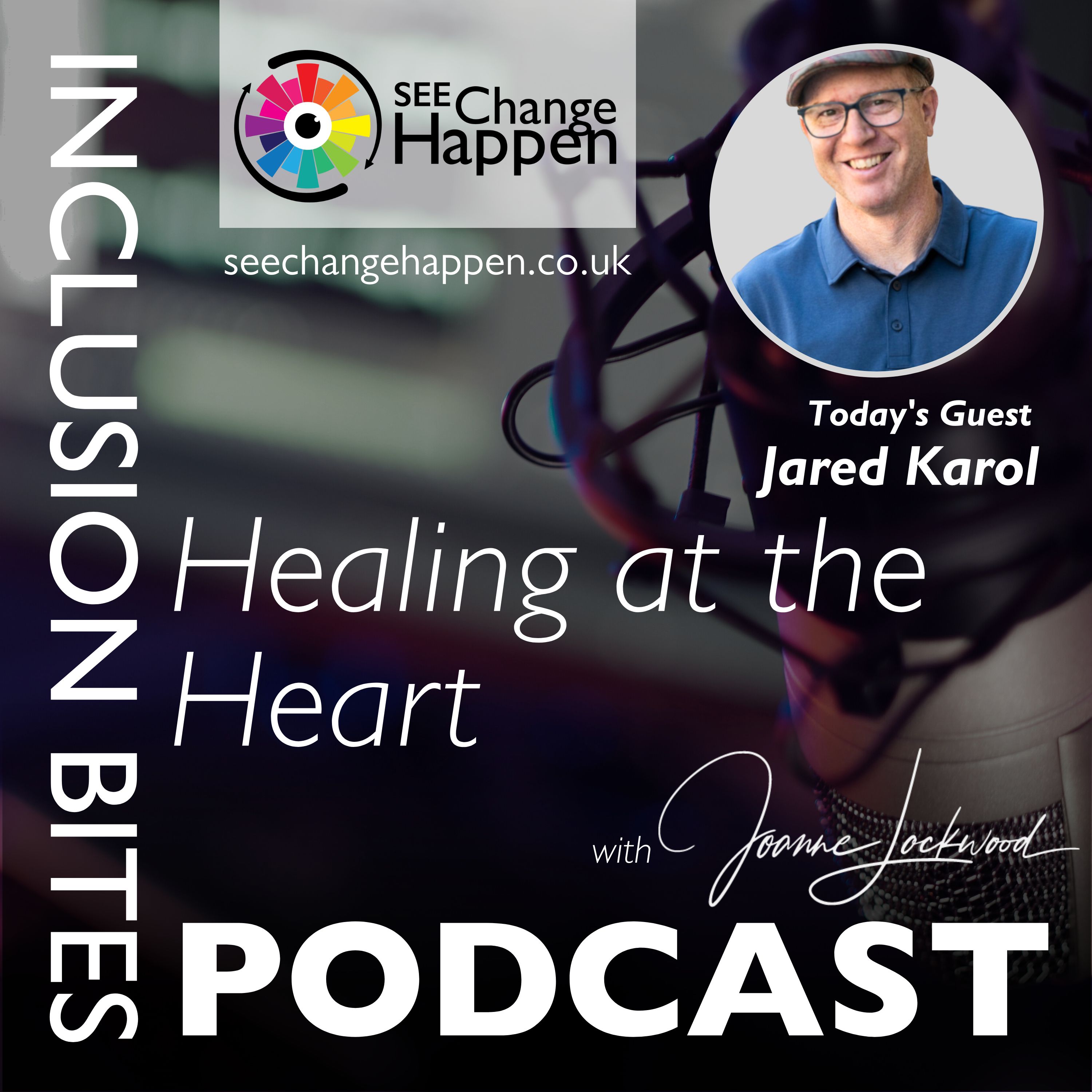
Healing At The Heart
with Jared Karol · 11 December 2025
Mental Health Wellbeing Trauma
Joanne Lockwood is joined by personal development coach Jared Karol to explore what it means to bring equanimity to difficult conversations—and why inner healing matters for sustainable social change. Together they unpack how people often respond to pressure and marginalisation by either shutting down or fighting back, and what it can look like to stay present, open, and grounded instead.
Jared shares the origins of his approach, including the impact of his father being a gay man who later died of AIDS, and how that experience shaped his commitment to social justice work. He reflects on his early years of activism, when certainty and snark felt effective, and the gradual shift toward a more mature, healing-centred “how” that prioritises emotional regulation, connection, and long-term impact.
Across the discussion they consider the difference between passion and purpose, the risks of performative outrage, and the way online interactions can accelerate polarisation. The episode closes with practical invitations—such as mindfulness and centring connection—to help listeners show up consciously and compassionately in the work of inclusion and change.
About Jared Karol
One-sentence summary
Jared Karol’s message is that if we don’t heal our own hearts first, our pursuit of justice risks becoming another form of harm instead of the dignity‑restoring change we long to see.
---
Synopsis
Jared Karol is a cis, straight white man who grew up carrying a secret: his father was gay, and in the climate of the late 1980s, that felt unbearable to admit. He was 14 when his father came out to him, and for six years Jared told no one. Shame, confusion and fear shaped his youth. Later, watching his father seek solace in meditation circles as he was dying from AIDS, Jared encountered stillness for the first time — not as an abstract idea, but as something that could steady a life in crisis. Those quiet evenings in a simple studio in San Francisco planted seeds he didn’t yet understand.
For years after his father’s death, Jared threw himself into social justice work with urgency and fire. He describes himself then as “snarky”, “acerbic”, certain he was right and frustrated that others weren’t. Over time — through Buddhist practice, painful self-reflection and a pivotal moment when his mother gently challenged the parts of the story he wasn’t telling — he began to see that outrage alone wasn’t sustainable. What he is trying to change now is not people’s belief in justice, but the way they carry it. He wants activism that does not self-destruct, conversations that do not dehumanise, and a version of courage that allows people to stay present rather than shut down or attack. For Jared, healing is not retreat from change — it is the foundation of change that lasts.
---
10 Small, digestible concepts for easy learning
1. Equanimity is strength, not passivity.
It’s the ability to stay steady in difficulty without collapsing or lashing out.
2. Passion without reflection can derail purpose.
When emotion runs the show, the impact we want often gets lost.
3. Doing “the work” must include inner work.
Awareness of injustice matters, but so does healing your own reactivity.
4. Nothing anyone does is because of you.
Most attacks are projections of someone else’s pain.
5. Connection interrupts dehumanisation.
The moment someone becomes an “unreal other”, harm is easier to justify.
6. Letting go isn’t giving up.
It’s releasing the charge while keeping your convictions.
7. Comparative suffering helps no one.
Trading stories of who had it worse only deepens isolation.
8. Emotional sobriety is possible.
You can feel deeply without being consumed.
9. You can disagree without degrading.
Clarity and kindness are not opposites.
10. Build what you want to see — don’t only tear down what you oppose.
Sustainable change creates, not just critiques.
---
The “why” in the story
What they believe is true about people
People act from pain, conditioning and fear more than malice. When someone attacks, it says more about their inner world than yours. Healing is possible — and necessary — for everyone, not just the oppressed.
What they cannot unsee
He cannot unsee how easily righteous anger becomes cruelty. He cannot unsee how dehumanising language mirrors the very systems it claims to oppose.
What they are no longer willing to tolerate
He is no longer willing to tolerate activism that burns people out, shames them into silence, or confuses hostility with moral courage. He refuses to weaponise conviction.
What they are trying to build instead
He is trying to build a form of social change rooted in steadiness — where people cultivate connection, release ego-driven charge, and speak with integrity rather than spite.
---
Narrative structure
1. The trigger:
At 14, his father tells him, “I’m gay.” Jared carries the shame in silence for six years. Later, watching his father — dying of AIDS — sit quietly in meditation, searching for grounding, exposes him to another way of being.
2. The tension:
Years later, as a teacher immersed in justice work, he becomes the “newly woke white guy” — certain, sharp, reactive. The more injustice he sees, the more urgent he feels — and the more frustrated he becomes with those who don’t move at his speed.
3. The insight:
A comment from his mother lands unexpectedly: he speaks about his father’s sexuality shaping him, but not about the pain of his father’s absence. He realises he has been analysing systems without fully tending to his own wounds. Healing isn’t separate from justice — it is part of it.
4. The pivot:
He commits not just to understanding injustice, but to cultivating equanimity. Meditation becomes practice, not theory. He shifts from trying to be right to trying to remain present. From calling people out to calling them in.
5. The destination:
A future where conversations about hard truths don’t end in ridicule or shutdown. Where people can hold conviction without contempt. Where justice work feels sustainable because it begins with a healed heart.
---
Five key takeaways and learning points
1. Outrage alone cannot sustain change.
So what: If you rely solely on anger, you’ll eventually burn out or burn others.
2. Inner work is not self-indulgent — it’s strategic.
So what: Understanding your triggers makes your activism more effective, not less.
3. Dehumanising your opponent makes you resemble them.
So what: The tactics you use shape the world you are building.
4. You can hold firm beliefs without hostility.
So what: Steady conviction invites dialogue where aggression shuts it down.
5. Healing is a collective responsibility.
So what: Systems won’t shift if the people inside them remain emotionally reactive.
---
Ten distinct ideas explained
1. Equanimity as composure under pressure
When criticised or attacked, steadiness prevents further harm. Calm creates space for dignity on both sides.
2. Shame shapes identity silently
Jared’s teenage secrecy about his father affected how he saw himself — hidden wounds influence public convictions.
3. Activism can mask unprocessed pain
Sometimes intensity is fuelled not just by injustice, but by unresolved personal hurt.
4. The ‘unreal other’ is the seed of oppression
Once someone is seen as less than fully human, mockery and dismissal come easily.
5. Comparative suffering fractures solidarity
Competing over whose pain is worse erases nuance and prevents shared understanding.
6. Letting go reduces emotional charge
You can remain committed to justice while releasing hostility — courage does not require fury.
7. Meditation as preparation, not escape
Practising stillness equips you to handle conflict when it arrives.
8. Connection as a deliberate act
Choosing curiosity over ridicule keeps the door open to learning.
9. Emotional regulation preserves credibility
When you speak with composure, your message travels further.
10. Building is harder than criticising
Sustainable change requires constructing new norms, not just dismantling old ones.
---
How people should change as a result
1. Think
- Shift from “How do I win this argument?” to “How do I stay present in it?”
- See personal healing as part of social responsibility.
- Recognise that disagreement does not equal dehumanisation.
- Question whether your passion is serving your deeper purpose.
- Understand that systems are made of people — including you.
---
2. Feel
- Move from defensiveness to curiosity.
- Shift from righteous anger to grounded conviction.
- Trade shame for self-compassion.
- Replace contempt with steadiness.
- Swap urgency-fuelled panic for patient persistence.
---
3. Act
- Establish a daily reflective practice (meditation, journalling, mindful walking).
- Notice when you are about to mock, dismiss or “other” someone — pause.
- Before posting online, ask: does this build what I want to see?
- Invite one difficult conversation with the intention to listen deeply.
- Speak with clarity — and remove unnecessary charge from your words.
- Block harm when needed, but without bitterness.
- Invest in support (coaching, therapy, trusted community) to do your inner work.
---
One thing to remember
If your heart is at war, your justice will be too.