Healing Through Human Connection
with Silvia Causo · 19 March 2026
Mental Health Wellbeing Trauma
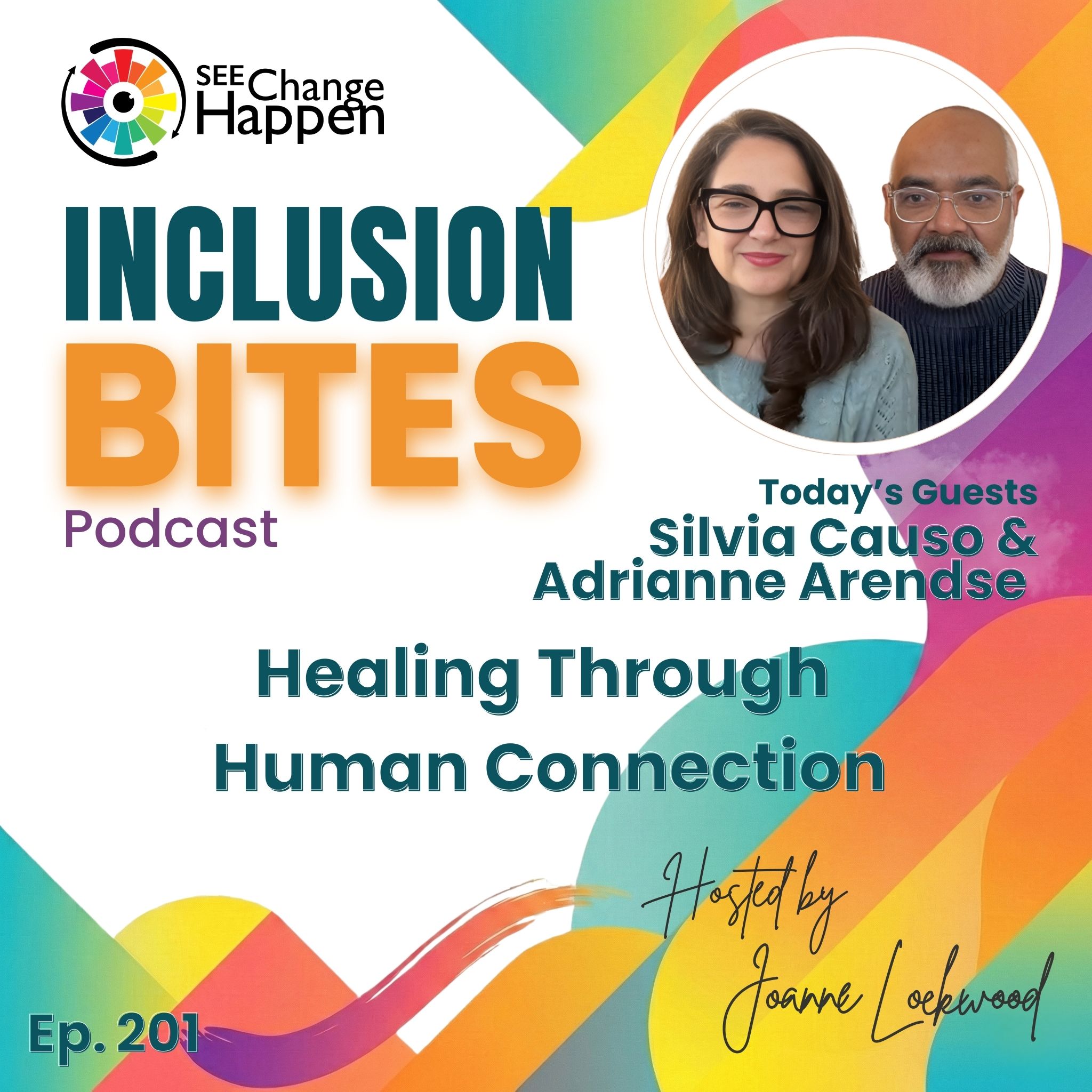
Joanne Lockwood is joined by Silvia Causo and Adrianne Arendse, co-founders of Lead and Belong, to explore how healing happens through human connection—and what that means for workplaces.
They share the personal roots of their work: Silvia’s experience supporting a mentally ill family member and her path into trauma-aware coaching, and Adrianne’s lived experience of mixed heritage and growing up in South Africa under apartheid’s legacy. From these stories, the conversation moves into how trauma shows up in everyday work life: disconnection, fear responses, and the ways people “leave parts of themselves at the door” to get through the day.
Together they unpack the difference between inclusion and belonging, and why belonging can’t be prescribed, performed, or forced—it emerges as a felt, embodied state. They discuss empathy as more than information, the importance of nervous-system awareness, and how leaders can create space without acting as therapists. The episode also challenges compliance-first organisational approaches and makes the case for rehumanising work so people can contribute with greater safety, connection, and creativity.
About Silvia Causo
One-sentence summary
Healing begins, they believe, when we are brave enough to face our own wounds so that we can meet one another without armour.
---
Synopsis
Silvia Causo and Adrianne Arendse did not arrive at this work through theory; they arrived through lived fracture. Adrianne grew up in Cape Town, “very mixed race” as she describes it — her lineage stretching across Mozambique, India, Malaysia and Holland — shaped by apartheid and by her family’s eviction from District Six. She learned early how to scan a room, how to live inside contradiction, how to hold paradoxes because survival required it. Silvia’s turning point came through a family member’s severe eating disorder. In trying to help, she realised: “I was not helping anymore, I was injuring the recovery.” That moment forced her inward. She saw how she was repeating inherited patterns, modelling what had once hurt her. Both women have had to confront their own inherited trauma — not as a concept, but as something that lived in their bodies.
Together, they are trying to change how we show up to one another — especially at work. They believe people cannot belong if they are braced for threat, cannot feel empathy if they are still defending their own unhealed pain. Silvia says, “We can’t heal in isolation. We heal as we co‑regulate with each other.” Adrianne speaks of “rehumanizing the workplace” — shifting from performance and policy towards presence. What matters to them is dignity: that no one should have to park their identity at the door, or numb themselves to survive eight hours of the day. They are protecting something simple and radical: the possibility that work can feel human again.
---
10 Small, digestible concepts for easy learning
1. Belonging is a state of being, not a policy.
You don’t manufacture it — you notice when it’s real.
2. Trauma is the echo, not the event.
It’s what stays in your body long after the thing has passed.
3. You can’t take someone deeper than you’ve been yourself.
Healing others requires tending your own wounds first.
4. Empathy has edges.
Knowing where your experience ends helps you care more honestly.
5. Belonging is a daily choice.
It’s something we opt into, again and again.
6. What you protect can also isolate you.
Armour keeps pain out — and connection too.
7. You can’t perform vulnerability.
It’s either embodied or it isn’t.
8. The body keeps score in the workplace.
Numbness is often protection, not indifference.
9. Curiosity needs courage.
Feeling your feelings requires bravery.
10. Work is part of life — not separate from it.
If we spend most of our waking hours there, it should not cost us our humanity.
---
The “why” in the story
What they believe is true about people
People want to belong — first to themselves, then to each other. And when they feel safe, they become more creative, generous and open.
What they cannot unsee
They have seen how unexamined trauma shapes behaviour — from family dynamics to racism to quiet, corporate numbness. They have seen how people disconnect from themselves to survive.
What they are no longer willing to tolerate
Workplaces that require people to shrink, mask or park parts of who they are. Leaders who operate only from fear and productivity while ignoring the emotional cost.
What they are trying to build instead
Spaces — gentle but courageous — where people can notice their own patterns, feel without being overwhelmed, and choose connection over protection.
---
Narrative structure
1. The trigger
For Silvia, it was the painful realisation that her attempts to help a mentally ill family member were repeating harm. For Adrianne, it was years of navigating race, eviction, and cultural fracture — alongside seeing students limited by narrow worldviews.
2. The tension
They meet resistance: leaders afraid of opening emotional boxes they cannot control; individuals who mistake numbness for strength; cultures that privilege logic over felt experience.
3. The insight
“You can’t heal in isolation.” Belonging is relational. Empathy cannot grow while we are still in fight or flight. Healing requires safety — and safety requires awareness.
4. The pivot
They chose not to “convert” anyone. Instead, they work with the curious. They stopped trying to fix people and started holding space. They model what they invite others into.
5. The destination
A future where work feels like a garden tended with care — where people can bring chosen parts of themselves without fear, where creativity flows because the nervous system is not braced for harm.
---
Five key takeaways and learning points
1. You can be included and still feel alone.
So what: Invite people into meaning, not just meetings.
2. Self-awareness is a leadership skill, not a luxury.
So what: Learn to observe your emotions without being driven by them.
3. Trauma shaped you — but it doesn’t have to define you.
So what: Reflect on what you protect and whether it still serves you.
4. Empathy begins with knowing your limits.
So what: Acknowledge when you don’t fully understand, and listen anyway.
5. Belonging cannot be forced.
So what: Create conditions of safety; don’t demand connection.
---
Ten distinct ideas explained
1. Belonging to yourself first
If you are disconnected from your own feelings, you will struggle to connect authentically with others.
2. The nervous system at work
Chronic stress and fear narrow creativity; safety widens perspective and collaboration.
3. The cost of parking your identity
Suppressing parts of yourself drains energy and breeds resentment over time.
4. Metacognition in practice
Observing your own thoughts and feelings allows choice instead of reaction.
5. The paradox of protection
Defensive behaviours once kept you safe — now they may be blocking intimacy.
6. Collective healing
Emotional regulation can happen together; we steady each other when we are present.
7. Experience over information
Reading about empathy is different from feeling it in your body.
8. Gentleness as strength
Slow, safe exploration often reaches deeper than force.
9. Leadership as space-holding
You don’t need all the answers — you need the courage to make room.
10. From scarcity to flow
Fear-based cultures breed competition; safety enables shared creativity.
---
How people should change as a result
1. Think
- From “How do I control this?” to “What is happening in this person right now?”
- From “Feelings are messy” to “Feelings carry information.”
- From “Belonging is a perk” to “Belonging is foundational.”
- From “I know” to “I’m curious.”
2. Feel
- From defensiveness to openness.
- From numbness to awareness.
- From shame to responsibility.
- From isolation to connection.
3. Act
- Pause before reacting; name what you’re feeling internally.
- Ask one genuine, curious question in your next difficult conversation.
- Notice when someone withdraws — gently check in.
- Reflect on one protective habit you carry into work; ask if it still serves you.
- Make meetings safer by inviting quieter voices without putting them on the spot.
- Model humanity: acknowledge when you don’t have the answer.
- Create small rituals of connection — a check-in round, a moment of shared reflection.
---
One thing to remember
Belonging isn’t something we demand — it’s something we choose, moment by moment, when we put down our armour.