Workplace Culture Systems
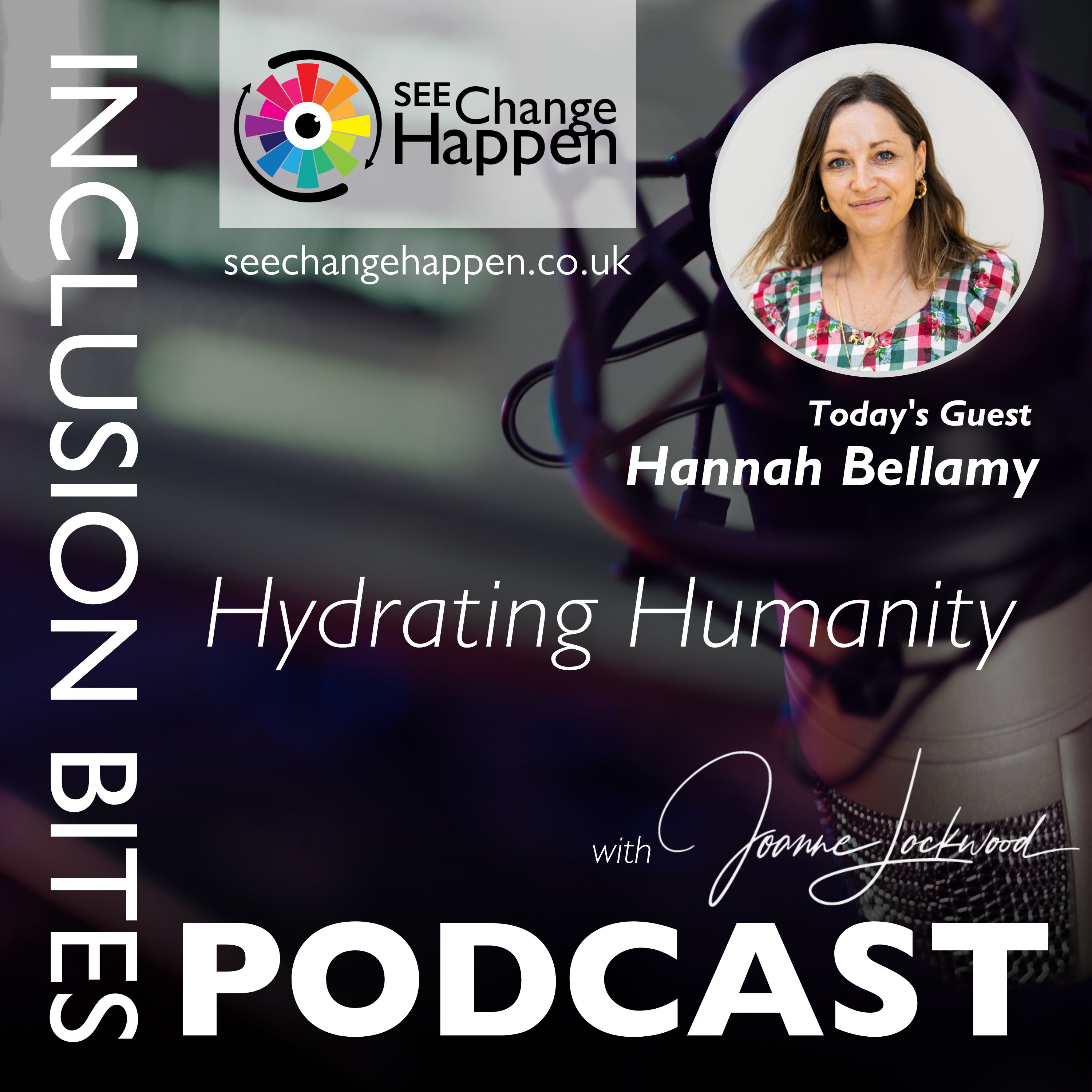
Joanne Lockwood speaks with Hannah Bellamy, Managing Director of Charity: Water UK, about what “clean water” really means and why lack of access remains a daily reality for hundreds of millions of people.
They explore how unsafe or distant water sources drive preventable illness and child deaths, and how the burden of collecting water and managing sanitation falls disproportionately on women and girls. Hannah shares what sustainable solutions look like in different contexts, from deep drilled wells and hand pumps to household filtration systems, and why long-term maintenance and local suitability matter.
Hannah also explains Charity: Water’s transparency model, separating project funds from overheads so public donations can be directed entirely to water projects, alongside the auditing and partner oversight that protects trust. The conversation widens to consider climate impacts on water security, the limits of individual consumption changes, and practical ways listeners can support progress through giving, fundraising, workplace influence, and awareness-building.
About Hannah Bellamy
One-sentence summary
Hannah Bellamy believes that something as ordinary as clean water carries the power to restore dignity, protect childhood, and unlock futures that poverty has kept waiting.
---
Synopsis
Hannah Bellamy does not speak about water as infrastructure; she speaks about it as life interrupted. As Managing Director of Charity Water UK, she has stood in communities where children’s faces were dulled by dust and illness, and then in neighbouring villages where clean water had brought brightness back — to clothes, to classrooms, to confidence. She has seen a woman like Malatani walk miles in flip flops down a ravine for filthy stream water shared with livestock, and she has seen what changes when that journey ends. Hannah cares deeply about helping people “see and care about ongoing issues in the world”, because she knows that indifference is what allows preventable suffering to persist.
What she is trying to change is not just access to water, but our distance from the reality of it. “It’s something we know how to fix,” she says — and in that sentence is both frustration and hope. She wants people to understand that dirty water is “the biggest killer of children under the age of five”, that women risk violence and exhaustion collecting it, and that dignity erodes slowly when the most basic need is unmet. For Hannah, this work matters because clean water does not just stop harm; it starts possibility. School attendance rises. Girls stay in class. Illness fades. Pride returns. A future becomes imaginable.
---
10 Small, digestible concepts for easy learning
1. Water is not just survival — it is dignity.
Being clean, washing your hands, wearing unstained clothes: these are quiet affirmations of worth.
2. Dirty water steals time before it steals health.
Hours spent walking for water are hours stolen from school, work, rest, and safety.
3. The crisis is solvable.
“It’s something we know how to fix” — the barrier is not knowledge, but collective will.
4. Women carry the weight first.
When water is scarce, it is women and girls who walk, wait, lift, and risk.
5. Children pay the highest price.
Preventable diarrhoeal disease should not be fatal — yet it is.
6. Community change multiplies quietly.
One water point can ripple out into education, income, health, and hope.
7. Local people are the experts.
Sustainable change happens when communities build, maintain, and own the solution.
8. Trust unlocks generosity.
Transparency about where money goes invites people to give freely.
9. Access shapes opportunity.
When clean water is present, other development becomes possible.
10. Indifference is the real danger.
Habituation — getting used to injustice — keeps solvable problems unsolved.
---
The “why” in the story
What Hannah believes is true about people
People are generous when they understand the reality. People want to protect children. People care about fairness when they can see it clearly.
What she cannot unsee
Children drinking water with “things moving” in it under a microscope. The contrast between dusty stillness and villages dancing around a new water source. A mother forced to give her sick child the only water available — knowing it may worsen their illness.
What she is no longer willing to tolerate
The normalisation of preventable death. The quiet acceptance that hundreds of millions live without what others waste daily. The scepticism that stalls giving.
What she is trying to build instead
A world where every community has clean water within reach — and where giving feels joyful, certain, and connected.
---
Narrative structure
1. The trigger:
Visiting Ethiopia early in her role and seeing two neighbouring communities — one with clean water, vibrant and hopeful; one without, dusty and subdued. The difference was visible, human, immediate.
2. The tension:
People feel horror at water being cut off in war — but not at 700 million living without it daily. She faces habituation, fatigue, and trust barriers around charities.
3. The insight:
Access to clean water is not complex science; it is sustained commitment. The solution exists. The crisis persists because attention drifts.
4. The pivot:
Championing radical transparency and working through local partners, ensuring 100% of public donations go directly to water projects — building trust as a foundation for impact.
5. The destination:
A lifetime in which the “water crisis” becomes history — and the normal state of the world is access, health, and dignity for all.
---
Five key takeaways and learning points
1. Basic needs decide who gets to thrive.
So what: If someone lacks water, everything else — education, safety, ambition — is fragile.
2. Girls’ education depends on infrastructure.
So what: Toilets, privacy, and water keep girls in school and future opportunities open.
3. Trust drives generosity.
So what: When people know their contribution makes a direct difference, they give more confidently.
4. Local leadership makes change durable.
So what: Change built by communities lasts longer than solutions delivered to them.
5. We can end this in our lifetime.
So what: The crisis is not inevitable; it is a question of priorities.
---
Ten distinct ideas explained
1. Water as safety
Without nearby clean water, women risk harassment and violence on long walks. Safety begins with proximity.
2. The emotional cost of dirtiness
Dust on clothes and skin is not just inconvenience; it signals exclusion and shame.
3. The hidden labour of girls
Time spent carrying water reshapes childhood. Education becomes optional; responsibility becomes compulsory.
4. Illness as inequality
A mild stomach bug in one country is fatal in another. Systems decide outcomes.
5. Infrastructure as hope
A hand pump is not just metal and mechanics — it is time returned and illness prevented.
6. Overconsumption and obliviousness
Power showers and washing machines create distance from understanding scarcity.
7. Habituation to injustice
When a crisis is constant, it fades from headlines — but not from people’s bodies.
8. Dignity through privacy
Gender-specific latrines and washing spaces protect not just health, but self-worth.
9. Economic ripple effects
Investing in water stimulates local trades, skills, and income — change multiplies.
10. Generosity as collective action
Global problems are not solved by guilt, but by coordinated, sustained contributions.
---
How people should change as a result
1. Think
- Move from seeing water as a utility to seeing it as a human right.
- Recognise that solvable problems persist because attention falters, not because solutions lack.
- See global neighbours as equally deserving of safety and dignity.
- Understand that small infrastructure changes can unlock lifelong opportunity.
2. Feel
- Shift from distant sympathy to connected responsibility.
- Move from overwhelm to focused hope.
- Replace scepticism about charities with informed trust.
- Exchange guilt about privilege for constructive generosity.
3. Act
- Commit to sustainable monthly giving where possible.
- Talk about global access to water within workplaces and networks.
- Support organisations that prioritise transparency and local partnership.
- Reflect on personal water habits — not out of guilt, but gratitude.
- Share stories that humanise rather than stereotype communities.
- Advocate for policies and corporate practices that protect water systems.
- Encourage young people to see generosity as normal, not exceptional.
---
One thing to remember
Clean water is not a luxury — it is the dividing line between surviving and belonging.