Igniting Change From The Top
with Mark Bateman · 20 June 2024
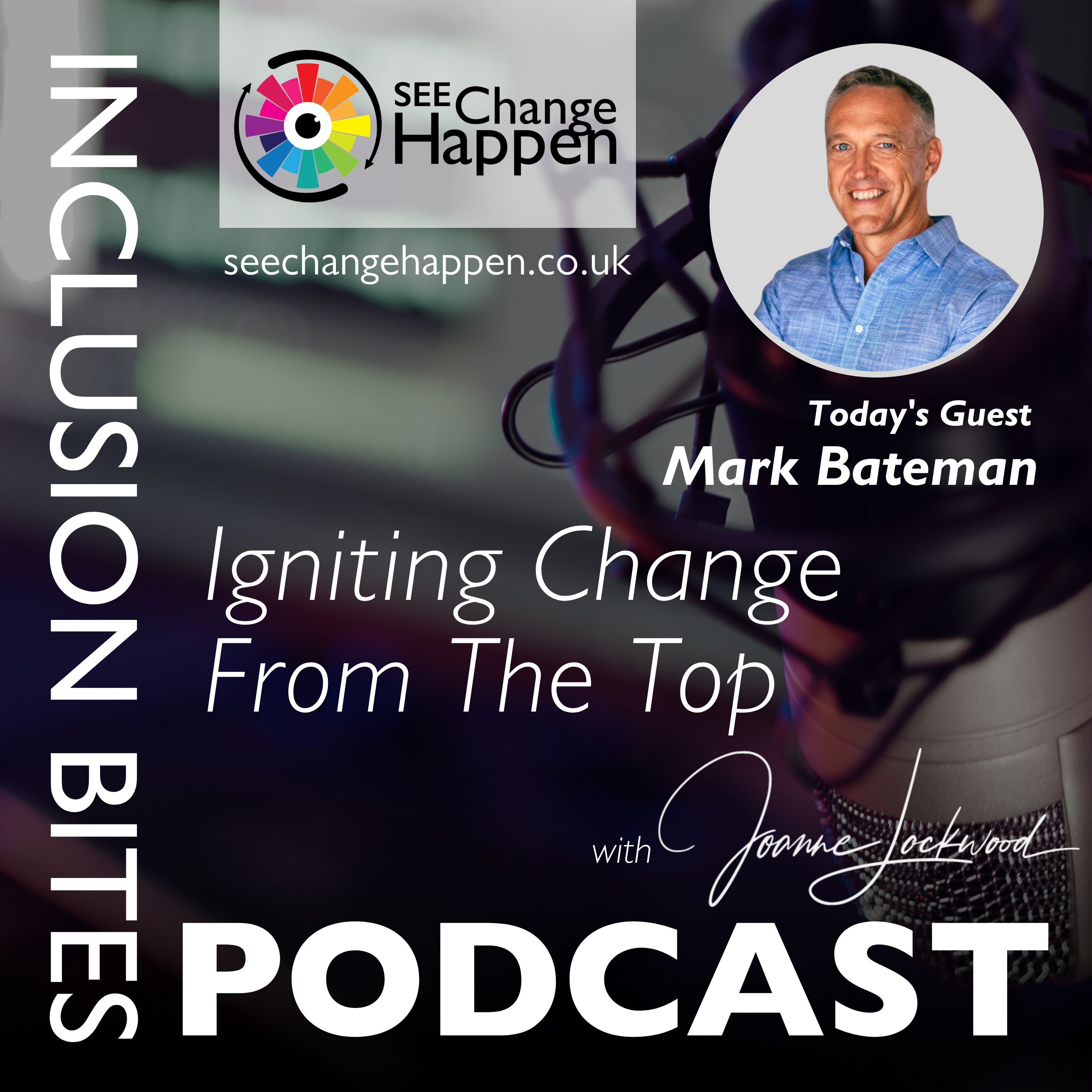
Inclusive Leadership Management
Joanne Lockwood is joined by Mark Bateman, CEO of WeQual and author of Disruptive Leadership, to explore how meaningful workplace change is led from the top. They discuss what leadership looks like in practice, how leaders shape culture, and why inclusive leadership requires deliberate decisions about who gets opportunities and who is heard.
The conversation focuses on gender equality in male-dominated environments, drawing on Mark’s experience coaching senior women in global organisations. Together they examine the double standards women face as they progress, including being shut down in meetings, judged more harshly, and pressured to adapt their style to fit existing expectations. They also discuss how confidence, imposter feelings, and the ability to be authentic at work can be affected by these dynamics.
Mark and Joanne dig into the organisational mechanics that sustain inequality, including biased definitions of “what success looks like,” investor expectations, and recruitment practices. They explore practical interventions such as sponsorship (advocacy when someone is not in the room), mentorship, clearer promotion pathways, and approaches like anonymised hiring to reduce bias.
They close by widening the lens to purpose and sustainability: aligning personal purpose with organisational purpose, building diverse teams for better decision-making, and creating cultures where success does not require personal sacrifice. The episode ends as a call for leaders and individuals alike to take responsibility for the change they want to see.
About Mark Bateman
One-sentence summary
Mark Bateman believes real change begins when leaders have the courage to question themselves, step beyond comfort and open doors they didn’t have to open.
---
Synopsis
Mark Bateman speaks as a man who has spent years sitting in rooms where power quietly shapes outcomes. As CEO of Wequal, and someone who has coached hundreds of senior women across global businesses, he has watched capable, driven women carry both achievement and exhaustion — delivering results while navigating the unspoken rules of male-dominated spaces. He sounds humbled by what he’s seen. “I found myself in a position where I’m meeting these incredible leaders… and yet they’re also having to overcome the fact that they’re in the minority as a woman.” His conviction feels less theoretical and more personal: he has witnessed how easily success becomes defined in one narrow image.
What he is trying to change is not just representation, but expectation. He questions why leadership still looks like “a very specific type” — historically masculine, familiar, comfortable to investors — and asks what we lose because of it. For Mark, this isn’t about token appointments or box-ticking; it’s about leaders taking responsibility for the worlds they shape. He believes that when those at the top choose equity deliberately, cultures shift, dignity expands and performance improves. But it requires discomfort. It requires fire. And, in his words, leaders who are willing to challenge the status quo rather than quietly inherit it.
---
10 Small, digestible concepts for easy learning
1. Leadership is influence, not title.
You can shape outcomes with or without a capital “L”; what matters is the direction you push things in.
2. Managers protect what is; leaders build what could be.
One maintains the present, the other stretches towards possibility.
3. Success has been historically coded.
We often picture leadership through a narrow, masculine lens without realising it.
4. When you change the face of power, you change the culture beneath it.
Representation at the top signals what is valued everywhere else.
5. Bias often hides in familiarity.
Hiring “another Michael” feels safe — even when it limits the organisation.
6. Resilience is often forged in the minority.
Those who face more barriers frequently develop deeper adaptability and awareness.
7. Sponsorship opens doors that talent alone cannot.
Advocacy in rooms you are not in changes trajectories.
8. Diversity can slow decisions — and strengthen them.
Different voices may create friction, but they produce wiser outcomes.
9. Purpose clarifies courage.
When you know your impact, difficult choices become necessary rather than optional.
10. Change begins with self-examining leaders.
Systems shift only when individuals ask themselves hard questions.
---
The “why” in the story
What they believe is true about people
Mark believes people want to make a difference. Beneath ambition, status or salary, most of us are looking for meaning — for impact beyond ourselves.
What they cannot unsee
He cannot unsee the pattern: rooms where women fall silent after being shut down; executive teams that say they “tried” to hire differently but didn’t; cultures where confidence is read differently depending on gender.
What they are no longer willing to tolerate
He is no longer willing to accept that lack of diversity is accidental. When he hears leaders say they want change while maintaining the same patterns, he gently challenges them: wanting inclusion and building inclusion are not the same.
What they are trying to build instead
He is trying to build leadership that is purposeful, self-aware and accountable — where power is used to widen opportunity, not preserve comfort.
---
Narrative structure
1. The trigger:
Coaching senior women who were delivering extraordinary results while navigating bias — women told they were “too ambitious” or expected not to speak despite being invited into the room.
2. The tension:
Leaders who express good intentions yet default to familiarity; organisations that want equality but fear risk; women who aspire to more yet feel they must adapt themselves to survive.
3. The insight:
Culture flows from the top. If 95% of CEOs are men, the system will naturally reproduce male-coded leadership norms unless someone interrupts the pattern.
4. The pivot:
Mark chose not just to coach individuals but to challenge executive teams. To ask harder questions. To build structures — awards, development programmes, sponsorship — that make talent visible and advocate for it.
5. The destination:
A future where leadership is defined by impact and character rather than stereotype — where diverse teams sit at the top, and where success is measured not just by profit, but by what is good for people and planet.
---
Five key takeaways and learning points
1. If you hold power, you hold responsibility.
So what: Neutrality maintains the status quo; deliberate action changes it.
2. Talent exists beyond familiar faces.
So what: Expanding who you see as “ready” transforms your organisation’s future.
3. Representation changes aspiration.
So what: When women see leaders who look like them, the ceiling feels less fixed.
4. Sponsorship is an act of courage.
So what: Advocating for someone different from you can disrupt inherited patterns.
5. Your career should align with your conscience.
So what: Personal clarity reduces burnout and builds integrity-led leadership.
---
Ten distinct ideas explained
1. The invisible script of leadership
Many of us carry an unconscious image of what “successful” looks like. When that image excludes certain identities, we restrict who feels they belong.
2. The minority tax
Being the only woman in the room often means extra emotional labour — monitoring tone, reception, behaviour — on top of doing the job itself.
3. Silencing by atmosphere
Sometimes exclusion isn’t loud; it’s the quiet after someone speaks, signalling they have overstepped.
4. The comfort of replication
Hiring in our own image reduces anxiety but erodes innovation.
5. Constructive friction
Diverse teams may debate more, but disagreement often protects organisations from blind spots.
6. The leapfrog burden
Women are often required to be more qualified, more experienced, more prepared before being deemed ready.
7. Impostor syndrome as survival response
When systems favour others, self-doubt can be a rational reaction, not a personal flaw.
8. Purpose as anchor
Clarity about personal impact stabilises leaders amid pushback.
9. Family as equal stakeholder
Caregiving expectations disproportionately affect women’s careers; equitable policies help redistribute that weight.
10. Disruption as duty
Avoiding hard conversations keeps everyone comfortable — and keeps inequality intact.
---
How people should change as a result
1. Think
- Shift from “Is she ready?” to “What assumptions am I making?”
- See diversity not as risk, but as strategic depth.
- Recognise that fairness requires intervention, not passivity.
- Understand that culture mirrors leadership behaviour.
- Reframe ambition in women as strength, not threat.
2. Feel
- Move from defensiveness to curiosity about bias.
- Replace guilt with responsibility.
- Shift from fear of getting it wrong to willingness to learn.
- Trade comfort for courage.
- Feel pride in creating space for others.
3. Act
- Audit who sits at your decision-making table — and who never does.
- Sponsor at least one person whose background differs from yours.
- Challenge homogenous shortlists rather than accepting them.
- Normalise flexible working for all genders, not just mothers.
- Ask for feedback about how inclusive your leadership feels — and listen without rebuttal.
- Publicly recognise contributions so women are not overlooked in silence.
- Align your professional path with values you can live with long term.
---
One thing to remember
If you are at the top of the table, you are responsible for who else gets a seat.