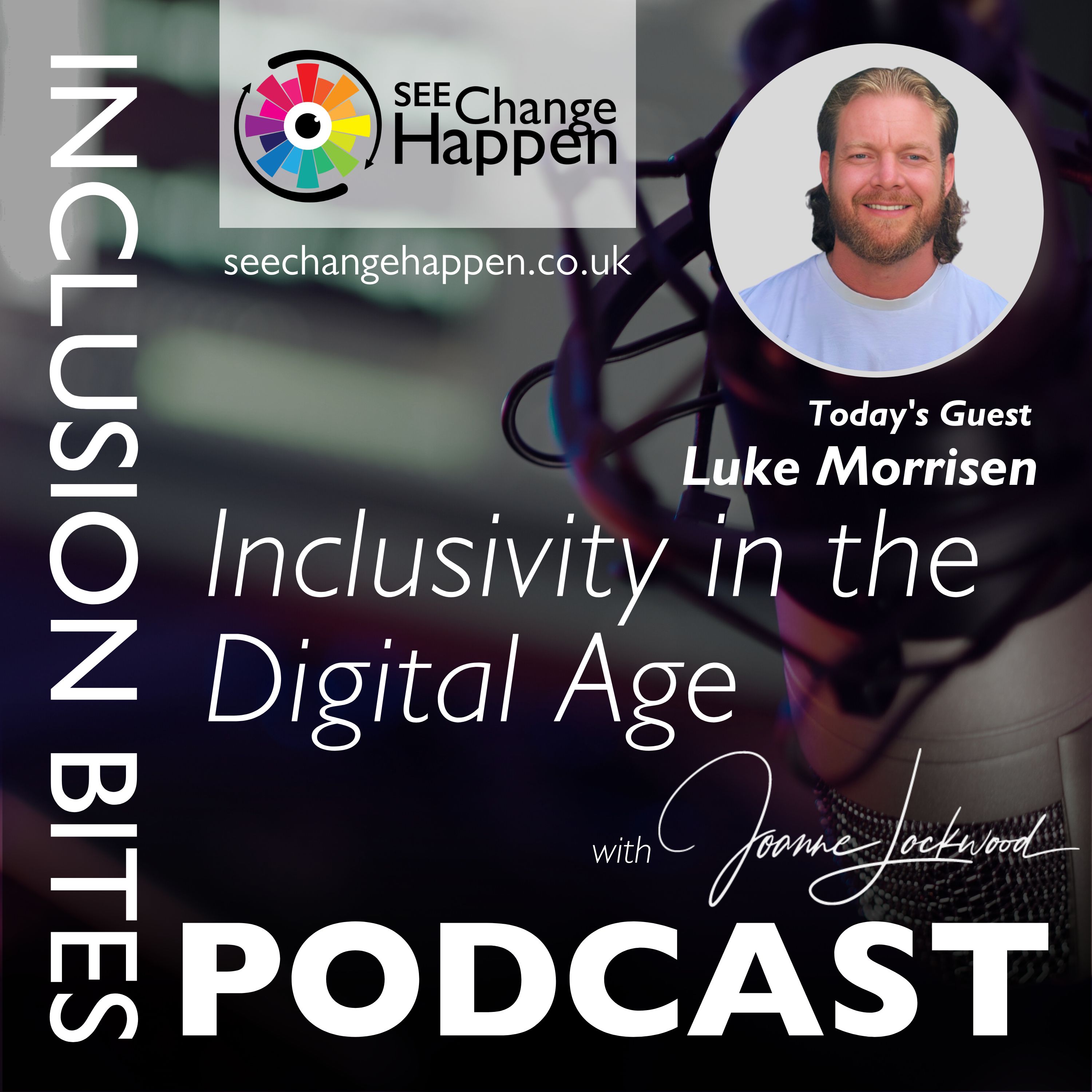
Inclusivity In The Digital Age
with Luke Morrisen · 31 October 2024
Mental Health Wellbeing Trauma
Joanne Lockwood is joined by technology and digital recruitment specialist Luke Morrisen to explore what inclusivity can look like in today’s digital working world, grounded in Luke’s personal journey and his experience placing people into tech and recruitment environments.
Luke describes struggling in traditional education, leaving home young, and later discovering that he learns differently. Becoming a parent, particularly to a neurodiverse son, prompts deeper self-understanding and a commitment to helping others move beyond limiting beliefs. He shares how structure and clear goals helped him thrive in recruitment, build confidence, and ultimately set up his own business.
A major thread of the conversation focuses on alcohol-centred workplace culture and how it can exclude people and undermine wellbeing. Joanne and Luke discuss sobriety, addictive tendencies, and how ADHD-style “all or nothing” patterns can amplify reliance on alcohol or caffeine. They reflect on the real-life consequences of alcohol on judgement, safety, and participation at work, and argue for workplaces to design social and expense policies that don’t default to drinking.
They also examine what it takes to build inclusive teams in tech: being honest about culture, avoiding tokenistic hiring, and ensuring people are supported once they join. The episode closes with practical reflections on culture change, understanding individual needs, and creating environments where more people can belong and perform at their best.
About Luke Morrisen
One-sentence summary
Luke Morrison’s story is about refusing to let labels, addiction, or rigid systems define his worth — and choosing instead to build a life, a family, and a business where people can thrive without pretending to be someone they’re not.
---
Synopsis
Luke Morrison grew up feeling “really stupid, really dumb” because school never made space for the way he learns. He left home at fifteen, sofa‑surfed, briefly lived on the streets, worked manual jobs, DJ’d at night, and carried a quiet belief that he probably wouldn’t amount to much. It wasn’t until his late twenties — long after others had decided who he was — that he realised, “I learn in a different way… but it doesn’t mean that I’m stupid.” Becoming a father sharpened everything. Watching his neurodiverse son struggle in the same classroom structure he’d once endured, Luke couldn’t ignore it any longer. His resilience — the superpower he names himself — became less about surviving and more about building something better.
Now a digital recruitment specialist and business owner, Luke is trying to change the way talent is seen and placed in the tech world. He wants culture to mean something real — not Friday drinks and empty slogans, but environments where difference isn’t just tolerated, it’s understood. His work is deeply personal. It’s about ensuring his children won’t inherit the same limiting beliefs. It’s about employers being brave enough to say, “We need to change.” And it’s about protecting the dignity of people — especially those who don’t fit the traditional mould — so they never again mistake difference for deficiency.
---
10 Small, digestible concepts for easy learning
1. Different doesn’t mean deficient.
Learning differently isn’t a weakness — it’s a variation that needs the right environment.
2. Resilience is built, not born.
Hard beginnings can harden or strengthen you — Luke chose strengthening.
3. Children mirror what we never healed.
Sometimes we understand ourselves only when we see our stories replayed in our kids.
4. Labels stick longer than grades.
Being branded “bottom set” can shape a self-image for years.
5. Provision isn’t just financial — it’s emotional safety.
Luke wants his family to feel secure enough to choose their own paths.
6. Addiction thrives in all-or-nothing minds.
“I am all or nothing,” he admits — which means self-awareness becomes protection.
7. Culture is how work feels, not how it sounds in a brochure.
You can’t claim inclusion if people feel they must change who they are.
8. Belonging isn’t found in the pub.
Social norms can quietly exclude those who opt out.
9. One hire doesn’t change a culture.
Real change requires intention, support, and honesty.
10. Freedom is the ability to choose.
The life Luke is building is about options — not image or excess.
---
The “why” in the story
What they believe is true about people
Luke believes people want to do well. Given the right environment, “they can achieve pretty much what they put their mind to.”
What they cannot unsee
He cannot unsee the damage of being labelled slow, disruptive, or incapable — nor the administrative battles parents face when trying to access support for a child who simply learns differently.
What they are no longer willing to tolerate
He’s no longer willing to tolerate cultures — whether in schools or workplaces — that treat uniformity as success and difference as inconvenience.
What they are trying to build instead
He is building workplaces where culture is honest, flexibility is normal, and no one feels they must drink, mask, or mould themselves to fit.
---
Narrative structure
1. The trigger
Leaving home at fifteen. Living without security. Walking through adulthood believing he was “really stupid.” Then watching his son struggle in the same system — and recognising himself.
2. The tension
Balancing ambition with family. Navigating addictive tendencies while trying to be present. Working in sales cultures built around drinking while feeling increasingly misaligned.
3. The insight
“I learn in a different way… but it doesn’t mean that I’m stupid.”
The problem wasn’t intelligence — it was environment.
4. The pivot
He stopped chasing validation through excess — alcohol, overwork, image — and began focusing on family, health, and building a business aligned with his values.
5. The destination
A future where his wife has options, his children carry confidence instead of doubt, and his candidates enter workplaces that support who they are.
---
Five key takeaways and learning points
1. If someone struggles, look at the environment before the person.
So what: You may unlock potential simply by changing conditions.
2. Self-awareness is a turning point, not a weakness.
So what: Knowing “I am all or nothing” allows healthier boundaries.
3. Culture shows up in small habits.
So what: If every social event centres on alcohol, someone is quietly excluded.
4. Inclusion without preparation can cause harm.
So what: Hiring one “diverse” person into an unchanged culture sets them up to carry the burden alone.
5. Success is sufficiency, not spectacle.
So what: Real freedom is financial and emotional stability — not status symbols.
---
Ten distinct ideas explained
1. The long shadow of school labels
Being placed in the “no hope” class can shape self-belief far beyond childhood. It embeds doubt that takes years to undo.
2. Neurodiversity as difference, not deficit
Luke sees ADHD traits as patterns — intense focus, intensity, drive — that need direction, not suppression.
3. Parental advocacy as emotional labour
Fighting for school support drains families, yet it’s fuelled by love and refusal to accept neglect.
4. Addiction and identity
For someone with an all-or-nothing mindset, substances can become substitutes for stability or relief.
5. Sobriety as presence
Stopping drinking wasn’t about morality; it was about being available for his children.
6. Masculinity and workplace drinking culture
Sales environments often equate bonding with alcohol — sidelining those who opt out.
7. Recruitment as cultural stewardship
Placing someone in a company isn’t transactional; it shapes their daily experience of dignity.
8. Vulnerability in leadership
Admitting, “We need help to change,” is stronger than pretending culture is fine.
9. Collective change over tokenism
True inclusion means shifting the group dynamic, not spotlighting a single difference.
10. Freedom as security
Freedom isn’t flashy; it’s knowing your pension is funded and your family feels safe.
---
How people should change as a result
1. Think
- Stop assuming performance issues are personal failings — consider environmental fit.
- See sobriety, difference, or quietness not as absence, but as alternative strengths.
- Treat “culture fit” with caution — ask whose comfort it protects.
- Understand that resilience often hides untold cost.
2. Feel
- Move from judgement to curiosity.
- Shift from defensiveness to humility.
- Replace guilt with responsibility.
- Feel compassion for the younger self in others.
3. Act
- Ask employees how they prefer to work and be communicated with.
- Review whether your social events assume alcohol; offer genuinely equal alternatives.
- When hiring for change, bring in more than one person — create community, not isolation.
- Have one honest conversation this month about what your culture actually feels like.
- Support someone seeking assessment or workplace adjustments without scepticism.
- Notice a child or colleague struggling — and ask what environment would help them thrive.
---
One thing to remember
Difference is not a defect — it’s a signal that the environment needs to change.