Insights From The Science Of Happiness And Positive Emotions
with Nic Marks · 13 June 2020
Mental Health Wellbeing Trauma
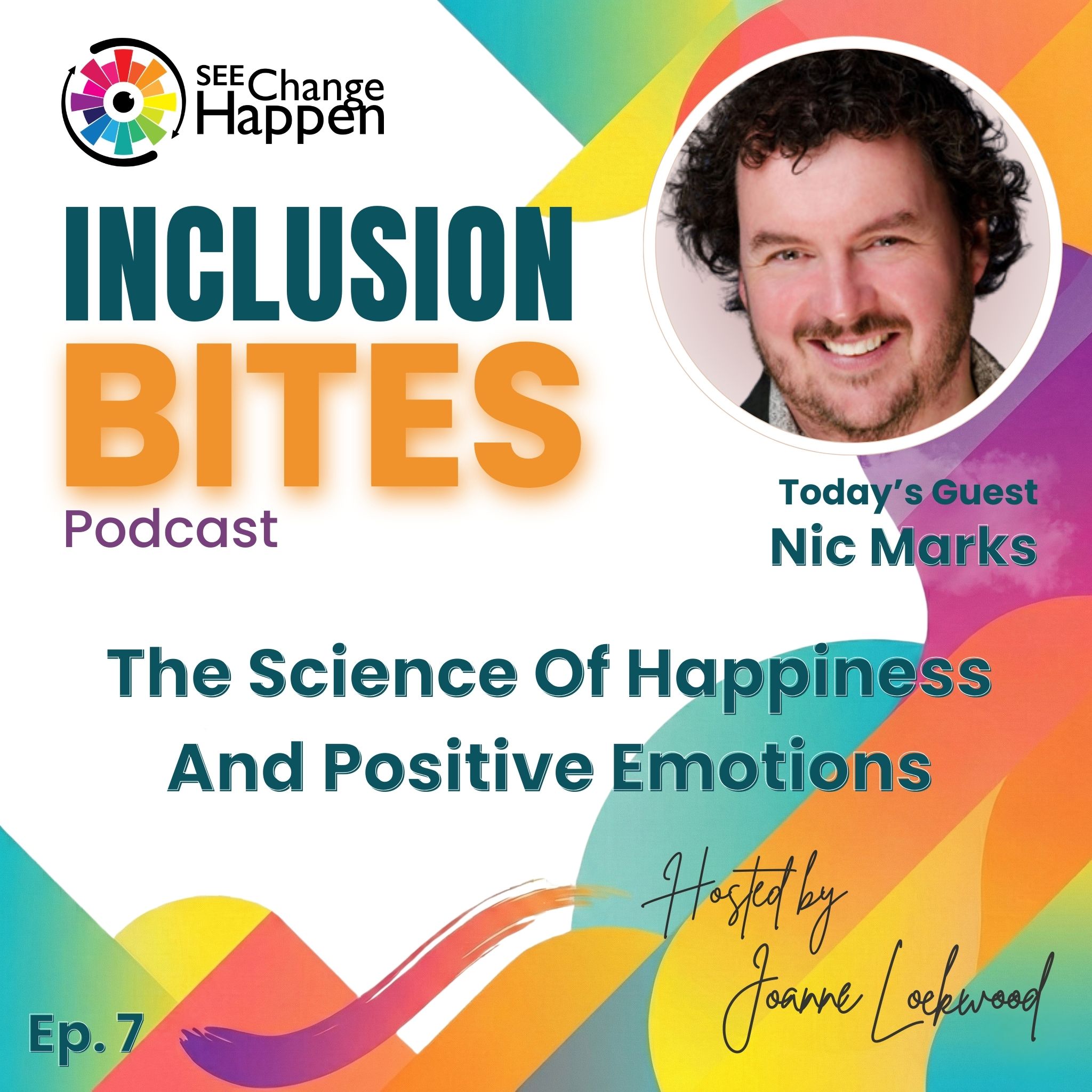
Joanne Lockwood speaks with statistician and trained therapist Nic Marks about what the science of happiness can tell us, and how positive emotions and wellbeing can be understood and measured.
They discuss how happiness can mean different things (contentment versus joy), how population statistics can hide individual stories, and how biases and fast/slow thinking shape our judgments of other people. The conversation also reflects on the mental strain created by sustained negative news, COVID-era uncertainty, and how resilience shows up as people absorb setbacks and partially recover over time.
Nic shares insights from Friday Pulse data on shifts in employee morale during lockdown, why experiences differ across groups, and what leaders can do in practice when teams are remote—especially checking in with people, creating space for human connection, and recognising that different life circumstances affect wellbeing at work.
About Nic Marks
One-sentence summary
Nic Marks believes that when everything feels uncertain, the most radical act is to protect our shared humanity — by understanding how our minds work, choosing perspective over panic, and giving our time to one another.
---
Synopsis
Nic Marks is a statistician who grew up around therapy — numbers and nuance living side by side. With a mother who was a family therapist, he learned early that human stories sit beneath every pattern. Over time, he built a career exploring wellbeing, not as a fluffy idea but as something measurable and meaningful. He speaks about happiness in a dual way — “I feel happy now” and “I am happy with my life” — holding both emotion and reflection at once. What shapes him most is this belief that data should never flatten people; it should reveal something about how we live, connect and cope.
What Nic is trying to change is how we respond to threat — personally and collectively. He sees how quickly our brains default to fear, division and negativity, particularly in a crisis. He also sees the cost: anxiety amplified by relentless bad news, younger people cut off from their lifelines, inequality widening along familiar fault lines. For Nic, happiness is not about forced optimism; it is about perspective, belonging, autonomy and time. He wants leaders to ask twice when they say “How are you?”, to understand that resilience is absorption as much as strength, and to remember that dignity and connection are protective forces in hard times.
---
10 Small, digestible concepts for easy learning
1. Happiness is both a feeling and a judgement.
It is the emotion of the moment and the quieter assessment of your life as a whole.
2. Averages hide real lives.
The mean might say 42 is the unhappiest age, but it never tells you about you.
3. Your brain is plastic — in hope as well as harm.
Just as trauma reshapes us, so can long practice of calm, reflection and intention.
4. Bias begins as protection.
Our fast brain sorts friend from foe before we’ve had time to think.
5. Negativity spreads because threat once kept us alive.
We pay more attention to danger than to weddings.
6. Money protects against misery more than it buys joy.
Security steadies us, but meaning still matters.
7. Belonging is a happiness multiplier.
The people born and rooted in a place are often happier than the ambitious newcomers.
8. Resilience is absorption, not just resistance.
Sometimes you stay rigid; often you bend and recover.
9. Time is the currency of wellbeing.
Offering your time is one of the most powerful gifts you can give.
10. Ask twice.
“How are you?” once gets politeness. Asked again, it gets truth.
---
The “why” in the story
What they believe is true about people
People are wired for connection and safety. We seek belonging, autonomy and meaning. When we have them, we flourish.
What they cannot unsee
That crises magnify inequality. That loneliness erodes us quietly. That constant negative information distorts our sense of risk and self.
What they are no longer willing to tolerate
Leaders ignoring emotional reality. Data being used to flatten nuance. People pretending they are “fine” when they are not.
What they are trying to build instead
Workplaces and communities where emotional signals are noticed early, where leaders check in properly, and where happiness is treated as a serious, measurable human outcome rather than a luxury.
---
Narrative structure
1. The trigger:
Years of observing patterns in wellbeing — and then seeing a unified drop across every organisation he measured during the pandemic — made the emotional shock visible. For the first time, every line on the graph fell at once. Humanity was sharing a setback.
2. The tension:
How do you acknowledge real risk without fuelling fear? How do you lead when your own certainties are shaken? How do you measure populations without losing sight of individuals?
3. The insight:
Resilience is visible in recovery curves. We absorb shock. We partially bounce back. But we need connection and perspective to complete that return.
4. The pivot:
Nic leant further into the human element of leadership: daily informal check-ins, real conversations, offering tools freely during crisis. He focused not just on measuring morale but nurturing it.
5. The destination:
A world of work where people feel seen each week, where leaders understand emotional data, and where belonging is not accidental but cultivated.
---
Five key takeaways and learning points
1. Your brain is built to overreact to threat.
So manage your news intake — your nervous system was not designed for 24-hour alerts.
2. Belonging protects mental health.
Strong communities buffer stress in ways income alone cannot.
3. Leadership is emotional labour.
Checking in properly can steady a team more than strategic plans.
4. Inequality shows up in wellbeing data.
The secure often cope better; the insecure pay the heavier emotional cost.
5. Offering time is a powerful act of care.
A conversation on a doorstep can be a lifeline.
---
Ten distinct ideas explained
1. The fast brain sorts before it thinks.
We instinctively assess friend or foe, often based on accent, appearance or familiarity — shaping who feels welcomed and who feels othered.
2. Negativity bias distorts perception.
Continuous exposure to threat amplifies anxiety, especially when we have no control over outcomes.
3. Population data cannot replace personal story.
Statistics show trends, but lived experience varies wildly within them.
4. Belonging reduces psychological strain.
When you are rooted in a community, you feel less isolated during disruption.
5. Autonomy increases workplace happiness.
Smaller organisations often feel warmer because people can see the impact of their effort.
6. Inequality magnifies comparison.
In dense cities, visible wealth can deepen feelings of lack.
7. Resilience is unevenly distributed.
Financial security, emotional history and age all shape how we experience crisis.
8. Silence breeds loneliness.
A simple “How are you, really?” can interrupt emotional isolation.
9. Young people lose more than lectures in disruption.
They lose peer identity, sport, daily structure — the scaffolding of belonging.
10. Perspective calms panic.
Understanding statistical risk does not erase tragedy, but it can steady unnecessary fear.
---
How people should change as a result
1. Think
- Move from “the average person” to remembering there is no average lived experience.
- Recognise that fear responses are biological, not moral failures.
- See belonging as a protective factor, not a soft extra.
- Understand that measuring wellbeing is a form of listening.
2. Feel
- Shift from panic to perspective.
- From defensiveness to curiosity about your own biases.
- From isolation to shared vulnerability.
- From guilt about privilege to responsibility in using it well.
3. Act
- Limit daily exposure to negative news.
- Ask “How are you?” and mean it — then ask again.
- Offer time intentionally to someone isolated.
- Create regular informal check-ins within teams.
- Notice who is struggling silently — particularly younger colleagues or those living alone.
- Foster autonomy where possible; give people room to shape their work.
- Share information calmly and transparently when leading others.
---
One thing to remember
Happiness is not naïve optimism — it is the steady practice of choosing connection, perspective and care in the face of uncertainty.