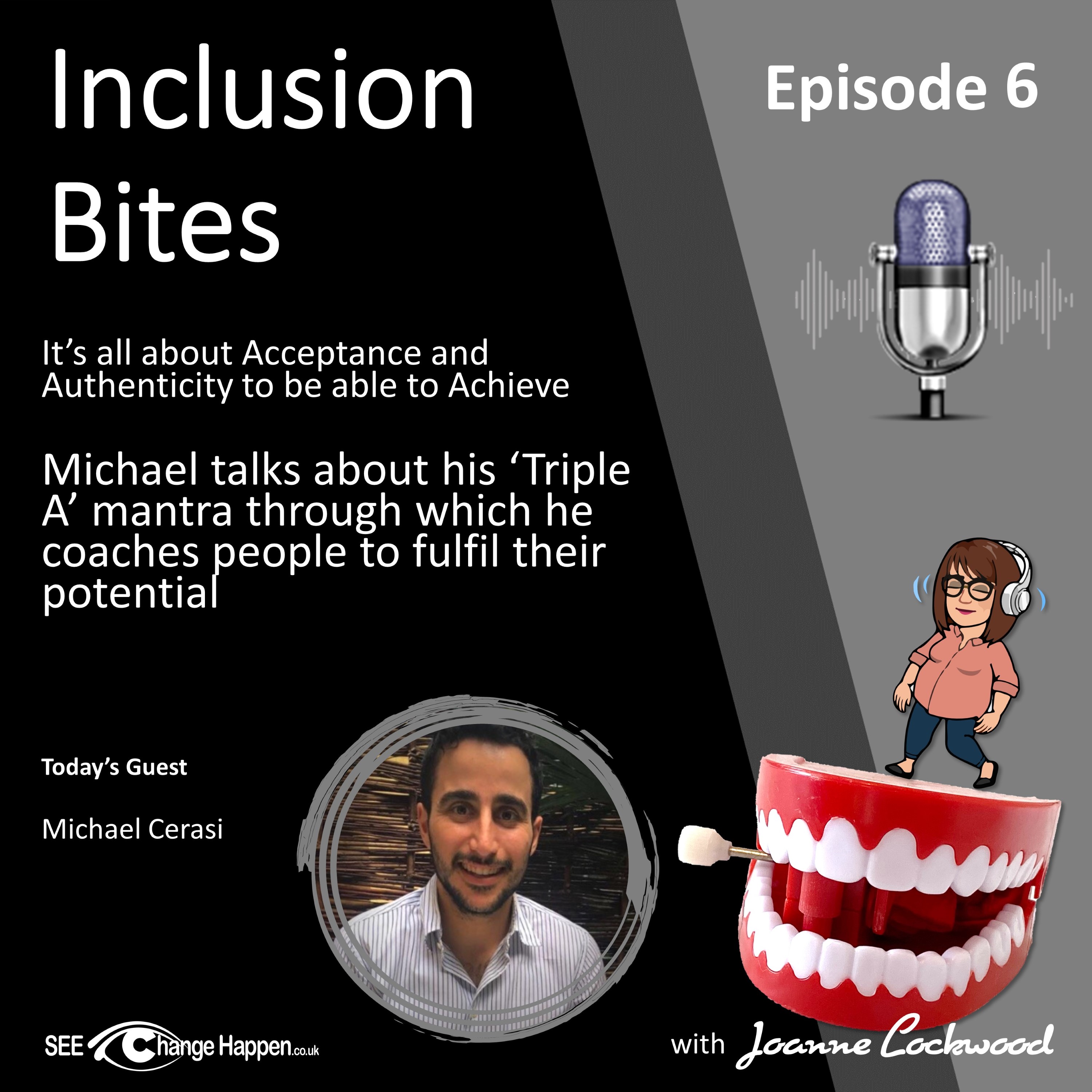
It’s All About Acceptance And Authenticity To Be Able To Achieve
with Michael Cerasi · 13 June 2020
Lived Experience Identity
Joanne Lockwood is joined by transformational life coach Michael Cerasi to explore his AAA philosophy: acceptance and authenticity as foundations for achievement. They unpack what active listening really means, why compassion matters, and how coaching differs from counselling and mentoring.
The conversation looks at common barriers such as limiting beliefs, imposter feelings, and the challenge of making time to invest in yourself, especially during the uncertainty of the COVID period. Joanne shares practical reflections on benchmarking progress and learning to accept positive feedback.
Michael also talks about giving back to the LGBTQ+ community through projects including Bi Pride and an online magazine, and shares parts of his own journey of coming out as bisexual and choosing to live authentically despite stigma and misconceptions.
About Michael Cerasi
One-sentence summary
Michael Cerasi believes that when people feel truly accepted – especially by themselves – they gain the courage to live authentically, and from that place, real achievement becomes possible.
---
Synopsis
Michael Cerasi is someone who chose to slow down and listen when the world rushes to advise. Shaped by his time volunteering in a hospice, where people at the end of their lives spoke about their stories with surprising zest, he learned that what most of us crave isn’t fixing – it’s being heard. Growing up without language for his bisexual identity, and facing stigma that told him he wasn’t real or was “just on the way” to something else, he wrestled quietly with acceptance. Not just of his sexuality, but of his softer edges, his femininity, and the parts of himself that didn’t fit traditional expectations of masculinity. Today, he names listening and compassion as his “superpowers”.
What he is trying to change is simple and radical at the same time: he wants people to grant themselves the same acceptance they long for from others. He works with those who feel stuck, who are living in the grip of limiting beliefs, who are frightened to move beyond the safe version of themselves. Through his “AAA” philosophy – Acceptance, Authenticity, Achievement – he argues that success without self-acceptance is hollow. When people are heard without judgement and allowed to define themselves on their own terms, they stop shrinking. And when they stop shrinking, they begin to build lives that actually fit.
---
10 Small, digestible concepts for easy learning
1. Listening is an act of respect.
To truly listen is to put distractions down and let someone exist fully in your presence.
2. Advice isn’t always help.
People often don’t need solutions; they need space to think out loud without being steered.
3. Acceptance fuels courage.
When you accept yourself, you take braver steps towards what you want.
4. Limiting beliefs are human, not flaws.
They’re common, but they don’t have to dictate your direction.
5. Authenticity is alignment.
It’s living in a way that matches who you know yourself to be.
6. You can’t achieve what you don’t believe you deserve.
Self-doubt quietly caps ambition.
7. Identity isn’t up for debate.
When Michael says, “I do exist,” it’s both a statement and a boundary.
8. Growth needs protected time.
Investing an hour in yourself can be transformative if it’s undivided.
9. Stigma delays self-discovery.
When there’s no language for who you are, understanding yourself takes longer.
10. Celebration builds belonging.
Creating spaces like Bi Pride or Queer Community says: you are not alone here.
---
The “why” in the story
What they believe is true about people
Michael believes people already carry their own answers. Given the right space and the right questions, they can unlock clarity from within.
What they cannot unsee
He cannot unsee the damage caused by stigma – being told bisexuality “doesn’t exist”, being labelled greedy or unfaithful, watching people hide parts of themselves just to be accepted.
What they are no longer willing to tolerate
He is no longer willing to tolerate shrinking himself to appear more masculine, more palatable, or more easily understood. And he challenges the casual dismissal of bi identities.
What they are trying to build instead
He is building spaces – in coaching sessions, on stages, in digital communities – where people are heard, affirmed, and encouraged to define themselves without apology.
---
Narrative structure
1. The trigger:
Volunteering in a hospice and meeting people with a fierce love for life in their final days showed him how rare it is for people to feel fully seen and heard. At the same time, grappling with his bisexual identity without clear representation forced him to confront acceptance head on.
2. The tension:
Stigma from both within and outside LGBTQ+ spaces; the assumption that bisexual men are confused or untrustworthy; the pressure to present as more “masculine”; the subtle expectation to simplify his identity for other people’s comfort.
3. The insight:
Achievement means little if you’re not living as yourself. Acceptance of who you are is the foundation. Without it, success feels like performance.
4. The pivot:
He chose to live openly as bi, to embrace both his masculinity and femininity, and to make listening – not telling – his professional path.
5. The destination:
A future where people invest in themselves, understand their own values, and live in ways that feel aligned – where identity is met with curiosity, not denial.
---
Five key takeaways and learning points
1. Being heard can be life-changing.
When someone listens without judgement, clarity often follows naturally.
2. Self-acceptance is a practice, not a switch.
Choosing authenticity is ongoing, especially when stigma exists.
3. Not everyone has the language for who they are.
Representation and education shorten the distance between confusion and clarity.
4. Leadership starts with inner work.
You cannot guide others confidently if you’re disconnected from yourself.
5. Belonging reduces shame.
Creating visible, inclusive spaces gives people permission to stop hiding.
---
Ten distinct ideas explained
1. The magic of undivided attention
In a distracted world, full presence tells someone they matter. That alone can soften years of self-doubt.
2. Coaching as empowerment
Rather than curing the past, coaching looks forward – helping people notice their own patterns and move differently.
3. Limiting beliefs as quiet barriers
These beliefs often sound like practicality but feel like fear. When unseen, they keep lives small.
4. Zest at the end of life
Hospice patients sharing stories with excitement revealed how deeply human it is to want to be known.
5. The cost of invisibility
Being told your identity doesn’t exist erodes confidence and belonging.
6. Masculinity as a constraint
Hiding femininity to meet expectations disconnects a person from parts of themselves.
7. Authenticity beyond performance
Authenticity isn’t bluntness or cruelty; it’s living in alignment without harming others in the process.
8. Community as affirmation
Events like Bi Pride create collective visibility, countering isolation.
9. Investing in yourself as resistance
Setting aside time for growth challenges the belief that your needs come last.
10. Following your own “pot of gold”
Achievement isn’t one universal definition; it’s determined by your own values and goals.
---
How people should change as a result
1. Think
- See listening as a skill, not a default.
- Understand that identity is self-defined, not externally assigned.
- Recognise that discomfort often signals growth, not danger.
- Accept that achievement without alignment feels empty.
- Notice how stigma shapes your assumptions.
2. Feel
- Move from scepticism to curiosity about identities you don’t fully understand.
- Shift from impatience to compassion when someone is finding their way.
- Replace embarrassment about vulnerability with respect for it.
- Trade defensiveness for reflection when challenged.
3. Act
- Put your phone away during serious conversations.
- Ask open questions and resist the urge to fix.
- Affirm someone’s identity without debate.
- Set aside one protected hour a week to reflect on your own values and direction.
- Challenge dismissive jokes or myths about bisexuality when you hear them.
- Create small spaces in your team or circle where people can speak openly.
- Celebrate people’s milestones without minimising them.
---
One thing to remember
You cannot truly achieve until you accept who you are and allow yourself to live it.