Workplace Culture Systems
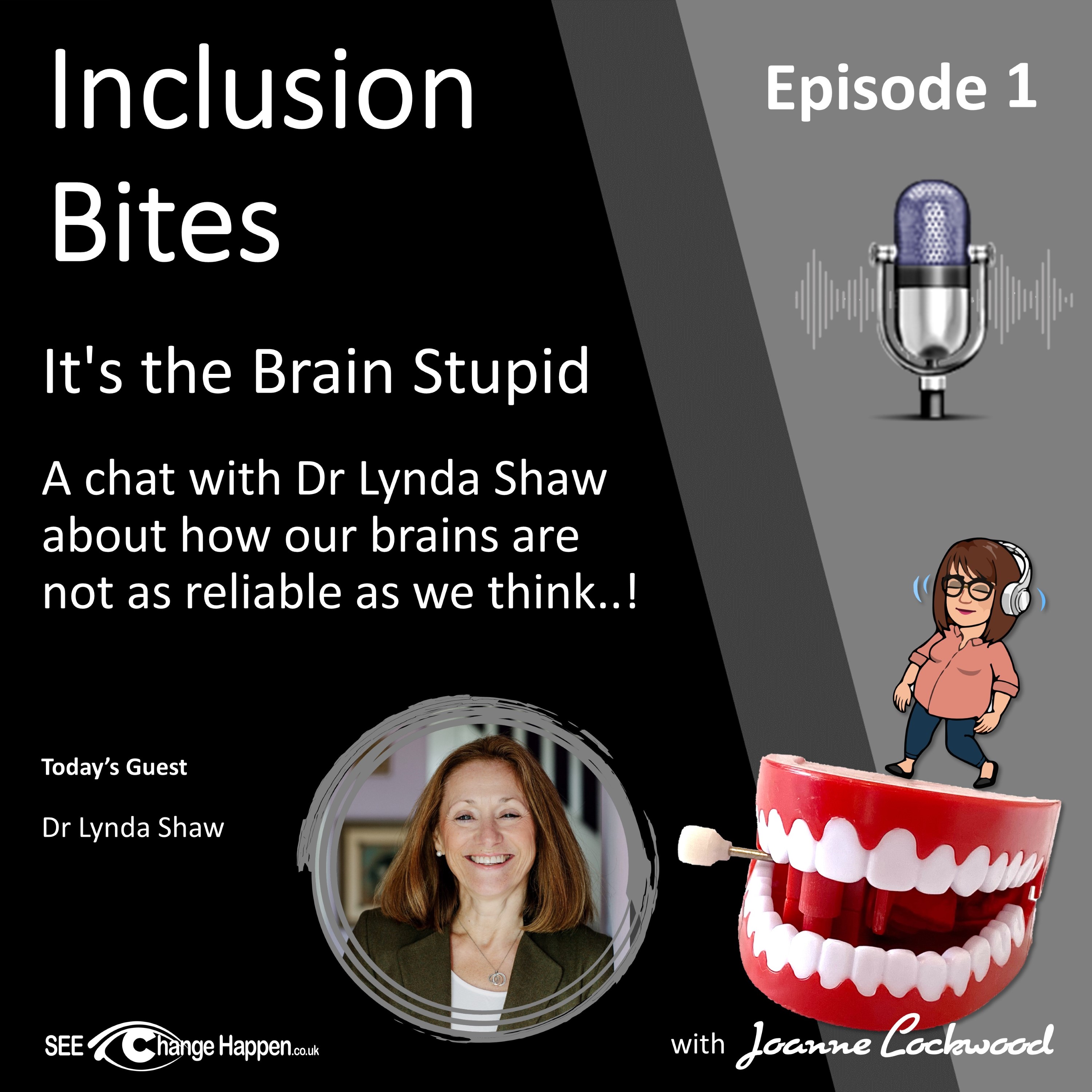
Joanne Lockwood is joined by Dr Lynda Shaw, a cognitive neuroscientist specialising in unconscious emotional processing and behavioural change, to explore how the brain forms shortcuts and why those shortcuts can become bias.
They discuss heuristics, the dominance of unconscious processing, and how deliberate reframing can build new neural pathways. The conversation also challenges popularised neuroscience and over-simplified models, including the risks of turning complex research into neat soundbites.
From there, they connect brain science to real-world inclusion: stereotyping, in-groups and out-groups, recruitment bias, and how organisations can redesign interviewing and assessment to reduce subjectivity. They explore the role of curiosity and dialogue in reducing polarisation, including in debates amplified by social media.
The episode also touches on gender identity and misgendering, focusing on how default patterns and limited exposure can shape behaviour, and how learning, empathy, and thoughtful conversations can help people navigate change more respectfully over time.
About Lynda Shaw
One-sentence summary
Dr Lynda Shaw believes that if we understand how our brains shape our reactions, we can choose curiosity over fear — and build a world where difference feels less like a threat and more like possibility.
---
Synopsis
Dr Lynda Shaw is a neuroscientist who didn’t begin in academia but in business — running companies, managing people, feeling the everyday pressures of leadership before turning to the science of how the brain works. What drives her is not abstract theory but lived reality: how people judge, react, defend, and sometimes hurt without meaning to. Her work sits at the intersection of behaviour and biology — the quiet mechanics of how we form habits, assumptions, loyalties and biases. She speaks with both conviction and humility, often reminding us that neuroscience is still young, still learning, still evolving.
What she wants to change is not policy first, but perception. She sees how quickly we default — to stereotypes, to group identity, to “us and them”. She has watched trained professionals unknowingly replicate bias, and she has seen how people cling to labels because they feel safe. For Lynda, the stakes are deeply human: misunderstanding leads to exclusion; certainty breeds division. Her conviction is simple but demanding — if we can slow down, step outside ourselves, and choose curiosity, we can rewire not only our thoughts but the kind of society we build together.
---
10 Small, digestible concepts for easy learning
1. You are not your first thought.
Your brain defaults quickly — but you can choose what to strengthen.
2. Bias is a shortcut, not a destiny.
Heuristics help us cope with overload, but they can also mislead.
3. The unconscious is powerful — but not untouchable.
What runs automatically can still be retrained deliberately.
4. Group identity feels like safety.
We fight hardest for the groups we believe protect us.
5. Curiosity dissolves threat.
When we become genuinely interested, defensiveness softens.
6. Labels shrink people.
The minute we reduce someone to a box, we lose their complexity.
7. Strong opinions should be held lightly.
Certainty without openness closes learning down.
8. Standing outside yourself is a skill.
Watching your reactions in real time gives you back control.
9. Language shapes belonging.
Words like “tolerate” carry power — and sometimes quiet arrogance.
10. Change is uncomfortable because the brain loves predictability.
But new neural pathways only form when we try something different.
---
The “why” in the story
What she believes is true about people
People are shaped by biology and environment — but they are not trapped by either. Most are trying their best. Most don’t realise how much is happening beneath awareness.
What she cannot unsee
She cannot unsee how often bias operates silently — even among professionals trained to avoid it. She cannot ignore how easily “merit” and “logic” get bent by unconscious defaults.
What she is no longer willing to tolerate
She refuses to accept lazy simplifications about brains — male versus female, left versus right — and she pushes back against the misuse of neuroscience to justify inequality or sell certainty.
What she is trying to build instead
A culture where people understand how their minds work, call out bias collectively and gently, and approach difference with curiosity rather than fear.
---
Narrative structure
1. The trigger:
Years of watching decision-making in business — and later seeing how even recruitment professionals unknowingly favoured men for technical roles — confirmed for her that bias isn’t malicious, it’s automatic.
2. The tension:
She constantly meets resistance: people deeply attached to their identities, their groups, their “right” answers. In a world of polarised debate, curiosity is fragile.
3. The insight:
The brain is largely unconscious. What feels like absolute truth is often fast processing born of habit and exposure.
4. The pivot:
Instead of condemning bias as moral failure, she reframes it as neural default — then teaches people to intervene deliberately: “Who says?” Pause. Reconsider. Rewire.
5. The destination:
A society where people debate intelligently, appreciate differences without condescension, and stop mistaking familiarity for merit.
---
Five key takeaways and learning points
1. Your brain is fast — but you can slow it down.
So what: pausing before reacting can prevent harm and deepen understanding.
2. Bias does not make you evil — it makes you human.
So what: shame blocks growth; awareness opens it.
3. Group loyalty can shrink your world.
So what: multiple identities make you more flexible and less threatened.
4. Curiosity is learned, not lost.
So what: asking better questions reduces conflict and anxiety.
5. Language builds hierarchy — often invisibly.
So what: choosing appreciation over “tolerance” reshapes power dynamics.
---
Ten distinct ideas explained
1. Heuristics protect us from overload.
Our brains sort information quickly to survive. But those shortcuts can stereotype and oversimplify, which affects who gets opportunities and who feels excluded.
2. Unconscious processing dominates.
Most decisions are made beneath awareness. When we believe we’re being objective, we’re often defending habit.
3. Exposure influences expectation.
Limited contact with difference makes the unfamiliar feel threatening. Familiarity reduces bias.
4. Group membership meets emotional needs.
Belonging feels safe. Threats to your group can feel like threats to your survival.
5. Meritocracy can carry hidden bias.
Criteria are often shaped by those already in power, unintentionally reinforcing sameness.
6. Rewiring is repetition.
New thoughts must be practised to become defaults. Inclusion is cognitive training.
7. Standing outside yourself reduces reactivity.
Observing your behaviour creates space between stimulus and response.
8. Certainty feels good — but learning feels better.
Emotional certainty shuts doors; curiosity opens them.
9. Debate is a lost art.
Arguing calmly and logically builds mutual respect, even when disagreement remains.
10. Bullying exploits vulnerability.
Social exclusion, especially amplified online, attacks identity at its core and can be psychologically devastating.
---
How people should change as a result
1. Think
- Move from “They’re wrong” to “How did they arrive there?”
- Replace “That’s just how I am” with “That’s how I’ve been wired so far.”
- See bias as a brain process, not just a character flaw.
- Understand that familiarity feels like truth — but isn’t proof.
- Recognise that identity can be multiple, not singular.
2. Feel
- Shift from defensiveness to curiosity.
- From shame about bias to responsibility for change.
- From certainty to thoughtful openness.
- From superiority (“I tolerate”) to respect (“I appreciate”).
- From threat to possibility when encountering difference.
3. Act
- Pause before responding in emotionally charged moments.
- Ask yourself: “Who says?” when you hold a strong view.
- Invite colleagues to gently call out bias — and consent to being corrected.
- Expose yourself to people outside your usual group.
- Review criteria for decisions — ask who benefits and who might be excluded.
- Practise reframing a destructive thought into a constructive one.
- Encourage structured debate rather than reactive disagreement.
---
One thing to remember
Your first thought is conditioned — your second thought is a choice.