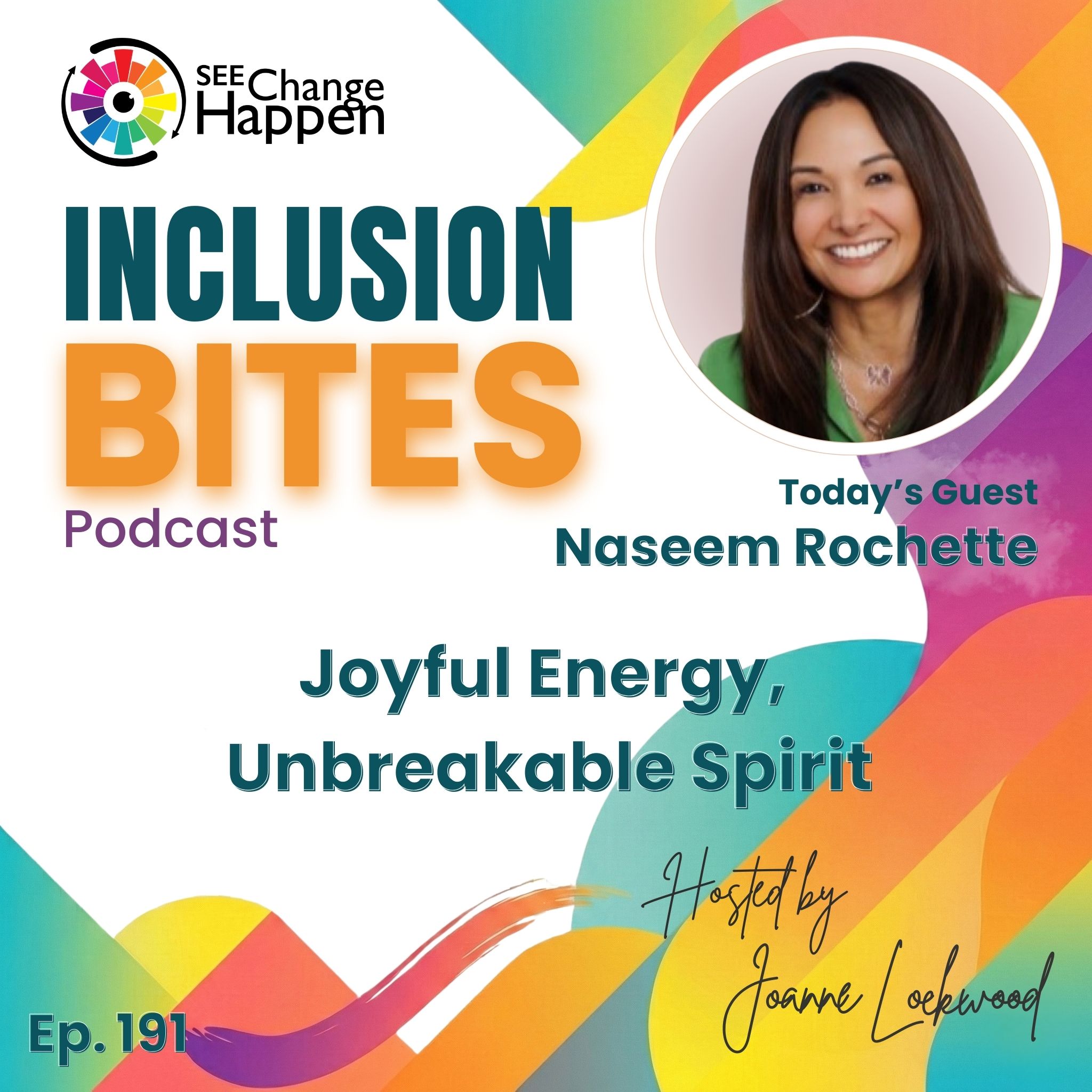
Joyful Energy, Unbreakable Spirit
with Naseem Rochette · 09 January 2026
Mental Health Wellbeing Trauma
Joanne Lockwood speaks with author and speaker Naseem Rochette about what it means to survive a life-altering traumatic event and consciously choose a different story afterward.
Naseem recounts being hit and run over by a car three times in a pedestrian crosswalk, the physical aftermath (including ongoing effects of a traumatic brain injury), and the emotional impact of navigating other people’s reactions—especially the driver’s lack of remorse. She shares how that experience pushed her into a period of instability and the need for additional support, including trauma therapy and medication.
Together, they explore the practical power of reframing: naming the anniversary “Unbreakable Day,” choosing words and energy intentionally, learning to accept help, and allowing vulnerability to deepen relationships. They also discuss how showing the “whole picture” (rather than a curated perfection) can create more genuine connection and belonging.
The conversation leaves listeners with a grounded message: difficult moments can become turning points, not by denying pain, but by meeting it with kindness, perspective, and deliberate choices about what to carry forward.
About Naseem Rochette
One-sentence summary
Naseem Rochette’s message is that joy is not naïve optimism but a deliberate, hard-won choice to stay open-hearted after life tries to break you.
---
Synopsis
Naseem Rochette grew up feeling both festive and frightened — a happy child at home, yet deeply insecure at school, conscious of being one of the only Indian-origin children in her town. She learned early how it felt to be different, to feel outside the circle. It took her years to accept who she was, and even longer to become someone she genuinely liked. By adulthood she had built a full life — three children, a demanding career, a reputation for coping with everything without asking for help. She wore competence like armour.
Then, on what began as an ordinary day, she was run over three times by an SUV and left pinned beneath it, fully conscious, certain she was about to die. In those seconds, she did not think about promotions or savings. She thought about her children, about laughter in the kitchen, about love. She survived — miraculously, without broken bones — but everything changed. The greater shock came later: a driver who showed no remorse, a legal outcome that felt hollow, and the realisation that strength without vulnerability had isolated her. What Naseem is trying to change now is how we respond to trauma — our own and others’. She wants people to know that reframing pain does not erase it; it gives it purpose. She is building a world where people are kinder to themselves, more honest about struggle, and brave enough to choose joy as an act of connection rather than denial.
---
10 Small, digestible concepts for easy learning
1. Joy is a practice, not a personality.
It’s something you return to intentionally, especially when it feels far away.
2. Energy feeds energy.
The tone you choose shapes the response you receive.
3. Not asking for help isn’t strength.
Letting people help can heal them as much as it helps you.
4. Tough moments can become badges, not baggage.
What breaks you can also define your depth.
5. Reframing changes reality.
Calling it “Unbreakable Day” turns survival into strength.
6. We regret what we didn’t say, not the targets we missed.
At the edge of life, only people matter.
7. Kindness to yourself is not indulgent — it’s necessary.
Self-judgement prolongs pain; grace builds resilience.
8. We never see the whole story of the person in front of us.
Everyone carries hidden triggers and private battles.
9. You don’t return to who you were — you build someone new.
A “new normal” isn’t lesser; it’s different.
10. Connection grows through vulnerability.
Perfection isolates; honesty invites belonging.
---
The “why” in the story
What they believe is true about people
People are more fragile and more resilient than they realise. They long to belong, to matter, to feel seen in both strength and struggle.
What they cannot unsee
How quickly life can change — and how invisible trauma is. No one looking at her now would know she was run over three times or lives with a brain injury.
What they are no longer willing to tolerate
Living behind armour. Pretending everything is fine. Valuing achievement over connection. Withholding appreciation.
What they are trying to build instead
A culture of reframing — where survival is honoured, vulnerability is welcomed, and joy becomes a shared language rather than a private luxury.
---
Narrative structure
1. The trigger
Being run over three times, lying under a car convinced she was dying — followed by the emotional shock of the driver’s lack of acknowledgement.
2. The tension
Wanting to stay joyful while feeling broken. Navigating sadness without turning bitter. Facing a world that did not deliver justice or remorse.
3. The insight
She realised in those near-death moments that joy is what endures. And later, that strength includes accepting help and sharing pain.
4. The pivot
She reframed the day as “Unbreakable Day”. She wrote the book. She began to speak openly about anxiety, a suicide attempt in her youth, and the reality of recovery. She stopped performing perfection.
5. The destination
A life where struggle is not hidden, where people feel safer sharing their own pain, and where joy is chosen daily — not because it’s easy, but because it protects what matters.
---
Five key takeaways and learning points
1. You are allowed to change.
The person you become after trauma is valid — even if they’re quieter or more sensitive.
2. Say the thing while you can.
Appreciation left unsaid becomes regret.
3. Let people help you.
It restores dignity on both sides.
4. Reframe without denying.
Pain acknowledged and reframed becomes growth; pain neglected becomes bitterness.
5. Ask less, state more in times of crisis.
“I’m here for you” demands less emotional labour than “How are you?”
---
Ten distinct ideas explained
1. Invisible trauma shapes behaviour.
We don’t see the internal injuries — physical or emotional — that influence someone’s tone or reactions.
2. Performance can block connection.
When you appear to have it all together, people don’t feel needed — or safe to share.
3. Remorse is a human bridge.
What hurt most wasn’t the accident itself, but the absence of acknowledgement afterwards.
4. Justice and healing are not the same.
Legal outcomes cannot repair emotional wounds.
5. A “new normal” requires self-compassion.
Judging yourself for not being who you were only deepens suffering.
6. Acceptance is active.
Choosing not to pursue revenge was not weakness — it was a boundary to protect her peace.
7. Community needs participation.
When you allow others to help, you affirm their capacity for kindness.
8. Language directs emotion.
The words we attach to events shape how the body remembers them.
9. Survival can expand identity.
What once felt like weakness — sensitivity, openness — became leadership strengths.
10. Belonging begins with honesty.
When someone shares their struggle, others gain permission to drop the mask.
---
How people should change as a result
1. Think
- Shift from “Why did this happen to me?” to “What can I carry forward from this?”
- See vulnerability as strength, not deficiency.
- Recognise that everyone’s behaviour has unseen roots.
- Understand that reframing is power, not denial.
2. Feel
- Move from defensiveness to empathy.
- From self-criticism to self-kindness.
- From bitterness to intentional peace.
- From fear of change to curiosity about growth.
3. Act
- Tell someone specifically why they matter to you.
- Replace “How are you?” with “I’m thinking of you — I’m here.”
- Ask for help in one small way this week.
- Re-name a painful anniversary as a marker of survival.
- Turn the volume down on influences that drain you.
- Share one honest struggle instead of projecting perfection.
- Pause before judging someone’s reaction and consider what you cannot see.
---
One thing to remember
Joy is not the absence of trauma — it is the decision to stay open after it.