Lived Experience Identity
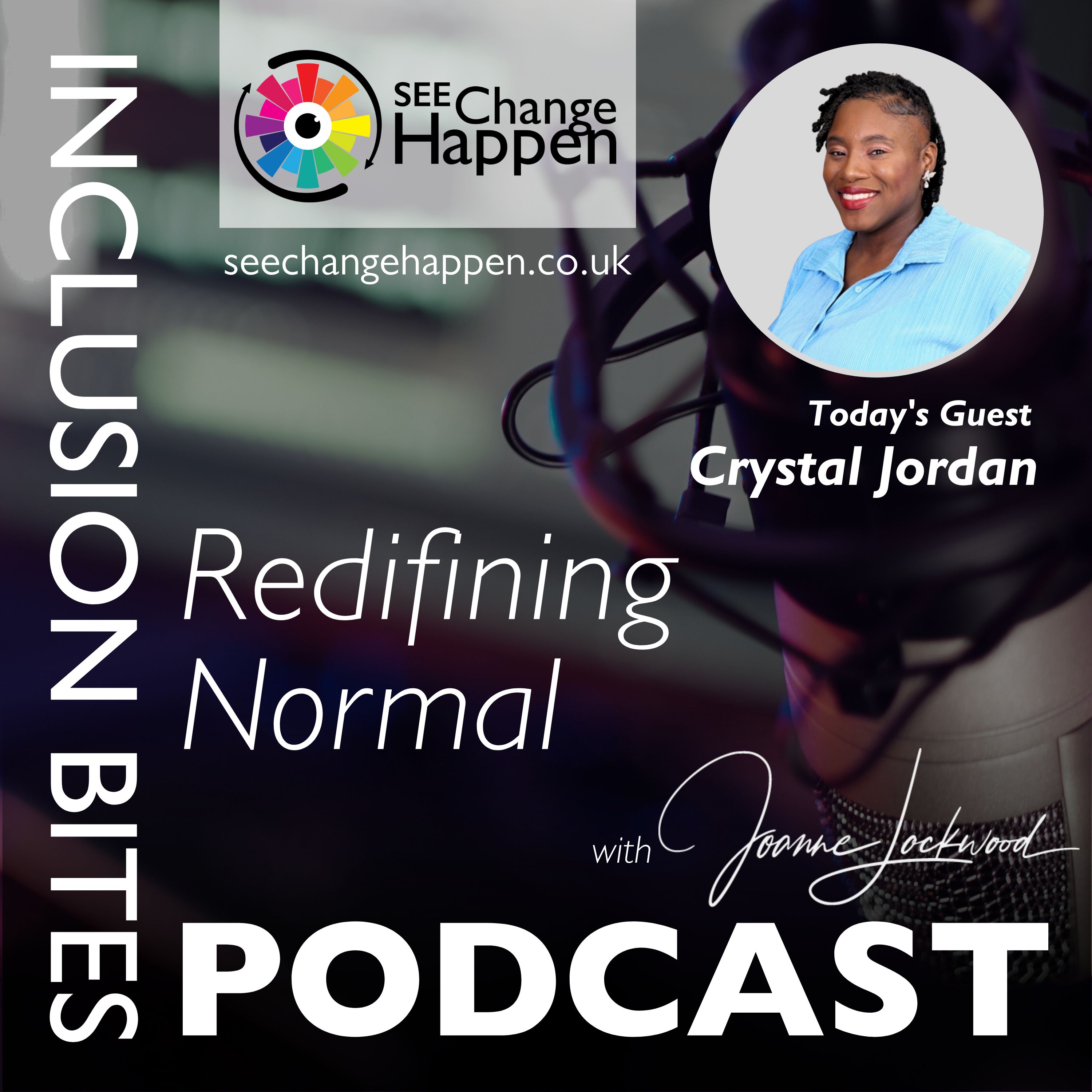
Joanne Lockwood is joined by autism advocate and author Crystal Jordan for a conversation about what it really means to “redefine normal” through the lens of autism and neurodiversity. Crystal shares how her son Zachariah’s diagnosis shaped her mission to amplify unheard voices, educate others, and push for environments where autistic people are treated with dignity and supported to thrive.
They discuss the practical realities of raising a nonverbal autistic child, including navigating multiple therapies, dealing with long waits for services, and the emotional load of parenting while advocating. Crystal explains why she often enters schools and service settings in “advocate mode,” and why families shouldn’t have to fight so hard to access what their children are entitled to.
The episode also explores long-term inclusion: preparing children for independence, the gaps in support once autistic young people become adults, and the need for employers and institutions to make work and life accessible to non-speaking and higher-support-needs individuals. Along the way, Crystal shares everyday moments that reveal Zachariah’s personality and progress, and offers concrete advice on how friends and communities can support parents with understanding, patience, and practical help.
About Crystal Jordan
One-sentence summary
Crystal Jordan is fighting for a future where her non-verbal son is not pitied, limited or sidelined, but recognised as capable, mischievous, intelligent and worthy of independence.
---
Synopsis (two paragraphs)
Crystal’s advocacy did not begin with a title — it began with her son. She did not call herself an advocate; others did. When Zachariah was diagnosed at two, she admits she “cried at the fair” and grieved the life she had imagined. But by the following Monday she was on the phone arranging speech therapy and support. A single mother who once faced the possibility of losing him before he was even born, she learned quickly that loving her son meant becoming “his advocate first”. She describes switching between “mum” and “advocate” — turning emotion off when needed, stepping into legal language, pushing for services, refusing to be dismissed.
What she is trying to change is simple and radical: she wants a world where her son can grow up, get dressed, get a job, pay his own bills, and not be underestimated because he does not speak. She refuses to let people reduce him to a diagnosis. She wants people to see that he is “more to his disability” — that he laughs, hides his shoes for fun, understands more than others assume, and deserves opportunity. Her mission is not abstract awareness. It is job security for non-verbal adults. It is independence before she is no longer here to protect him. It is dignity that lasts beyond childhood.
---
10 Small, digestible concepts for easy learning
1. Autism is one word and a million different stories.
Every child’s needs, strengths and personality are different.
2. Normal is personal.
What feels ordinary to one person looks different to another — neither is wrong.
3. Diagnosis isn’t the end — it’s a starting point.
Crystal grieved on Friday and began strategising on Monday.
4. Being a parent sometimes means becoming a negotiator.
Compassion at home; firmness in the meeting room.
5. Non-verbal does not mean non-understanding.
Silence is often misread as absence.
6. Independence begins with small wins.
Putting on shoes and brushing teeth are acts of freedom.
7. Support should not require a battle.
Parents should not have to become experts in law to secure basic help.
8. Childhood services are not enough.
The real question is: what happens when they grow up?
9. Empathy starts with imagination.
“What if this was your granddaughter?”
10. Inclusion is economic as well as social.
Dignity includes the ability to work, earn, and live safely.
---
The “why” in the story
What they believe is true about people
Crystal believes people with autism are “awesome just the way they are” and capable of far more than society expects.
What they cannot unsee
She cannot unsee the vulnerability of non-verbal adults who cannot access work, pay bills, or advocate for themselves.
What they are no longer willing to tolerate
She is no longer willing to tolerate systems that respond only when someone says the word “advocate”, long waiting lists for essential services, or debates over language that ignore real-life survival.
What they are trying to build instead
A future where neurodiverse children grow into secure, employed, independent adults — and where parents don’t have to fight for every service.
---
Narrative structure
1. The trigger:
Zachariah’s diagnosis at two, the grief at the fair, and the immediate pivot into action. Later, losing her own voice at work — and being told, “your voice is a part of your uniform” — gave her a visceral glimpse into her son’s reality.
2. The tension:
Switching between loving mother and relentless advocate. Long waiting lists. Not enough providers. Worries about adulthood. Dating as a single mother with a non-verbal son. Systems that only respond to pressure.
3. The insight:
Advocacy is not optional when your child cannot speak for himself. If she does not think ahead — education plans, transitions, employment — no one else will.
4. The pivot:
She treats meetings like negotiations. She learns the laws. She insists on SMART goals. She builds a brand, writes nearly twenty books, forms communities, and creates resources so other parents don’t feel alone.
5. The destination:
A grown Zachariah who can dress himself, cook, work, live independently, and laugh in a home that is his own. A world where she can step back from manager to assistant — and eventually simply mum.
---
Five key takeaways and learning points
1. Grief and determination can coexist.
You can mourn the fantasy and still fight fiercely for reality.
2. Independence is built deliberately.
It doesn’t happen by accident; it requires structure, repetition and belief.
3. Systems respond to confidence.
Knowing your rights changes how people treat you.
4. Silence hides assumptions.
If someone is non-verbal, we must question what we project onto them.
5. The real inclusion test is adulthood.
If someone cannot secure housing or work, society has failed them.
---
Ten distinct ideas explained
1. The cost of silence
When someone cannot speak, others often assume inability. That assumption can shrink opportunities long before ability is tested.
2. Advocacy fatigue
Parents should not have to become legal experts to secure basic support. The emotional toll of constant vigilance is heavy.
3. Waiting lists as barriers
A year without speech support is not an inconvenience; it is lost developmental time.
4. Independence as protection
Teaching a child to dress themselves is not trivial — it reduces lifelong dependence.
5. Economic dignity
Work is not just income; it is identity, routine and belonging.
6. Grief as transformation
The moment of shock after diagnosis can become the seed of purpose.
7. Empathy through imagination
Change accelerates when people visualise someone they love in the same position.
8. The hidden future crisis
Children with disabilities grow into adults with disabilities — and support often drops away.
9. Community reduces isolation
Facebook groups and other mothers turn loneliness into shared strategy.
10. Seeing personality beyond diagnosis
A boy who hides his shoe and laughs is not a case file — he is funny, clever and self-aware.
---
How people should change as a result
1. Think
- Shift from “What’s wrong?” to “What does this person need to thrive?”
- Stop assuming non-verbal equals non-thinking.
- See childhood services as the beginning, not the end, of responsibility.
- Recognise that independence is a human right, not a bonus outcome.
- Understand that advocacy fills gaps systems should already cover.
---
2. Feel
- Move from nervousness to gentle curiosity.
- Shift from pity to respect.
- Replace guilt with responsibility.
- Let empathy outweigh discomfort.
- Feel urgency about adulthood support, not just early intervention.
---
3. Act
- Offer practical respite: an hour of babysitting, a grocery run, a listening ear.
- Educate yourself before entering the room — don’t rely on the parent to explain everything.
- Ask what works for the child rather than assuming.
- Support policies and organisations that focus on adult independence and employment.
- In workplaces, question whether non-verbal roles could exist — and redesign tasks where possible.
- When meeting someone non-verbal, address them directly and with patience.
- Advocate within your own networks for accessible hiring and training.
---
One thing to remember
Autism is not the limit — low expectations are.