Secrets From The Habitologist
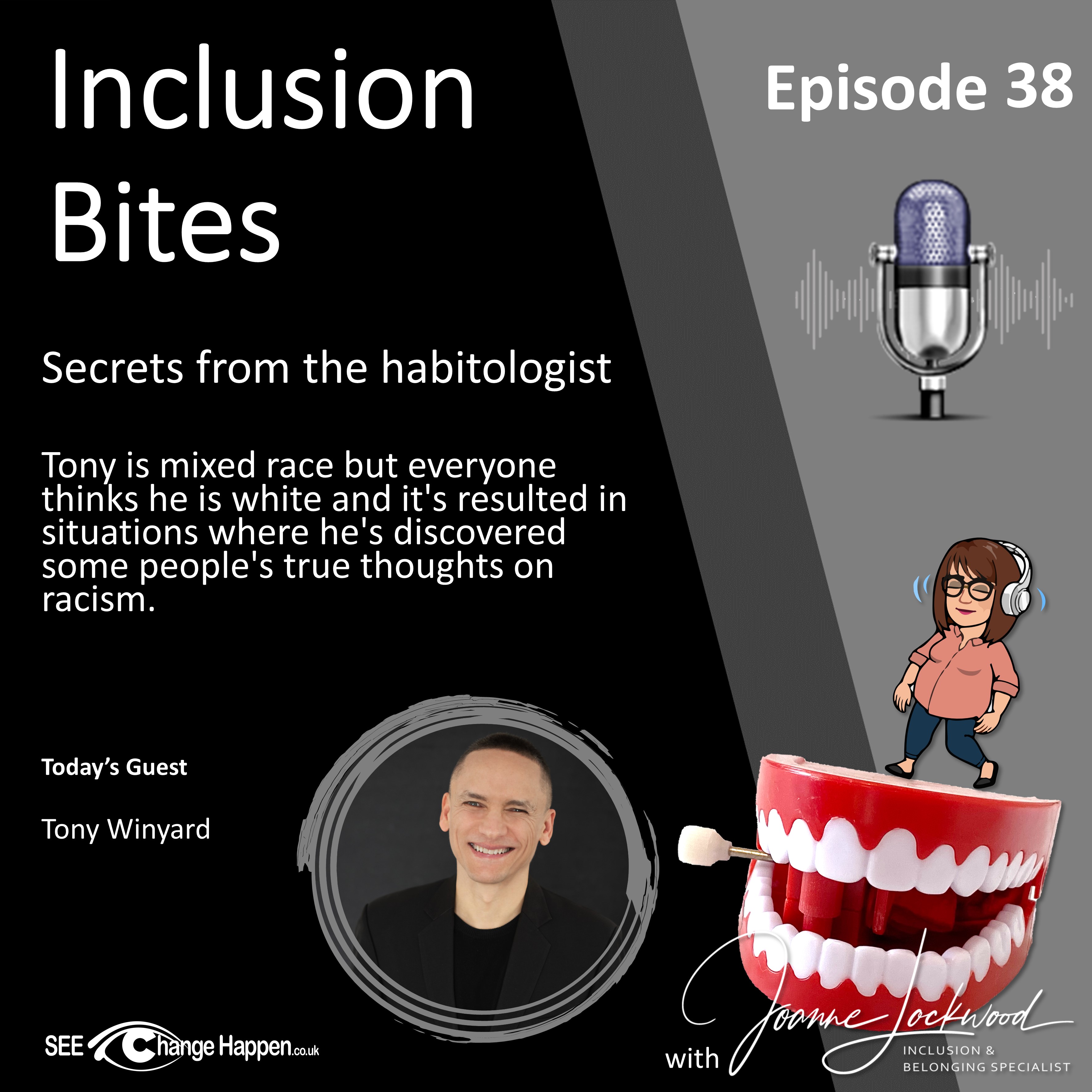
with Tony Winyard · 29 July 2021
Workplace Culture Systems
Joanne Lockwood talks with Tony Winyard about why lasting change tends to come from starting small. Tony explains how his work in health and his training in the “Tiny Habits” approach helped him move beyond simply sharing information, to supporting people to implement better sleep, nutrition, movement and breathing through micro-changes that become automatic.
They explore what makes habits stick, including enjoyment, consistency, and reducing the pressure of unrealistic goals. Both share personal examples, from building fitness through short, manageable cycling sessions to lessons learned from public speaking and stand-up comedy about pacing, pausing, and making messages land.
The conversation also moves into inclusion and communication: how language, speed, idioms and media narratives shape understanding, bias and belonging. Tony shares lived experience of being mixed race while often being perceived as white, and how that has influenced what he’s witnessed and learned about racism and identity. Joanne reflects on assumptions, the fear of getting things wrong, and the value of emotional intelligence in connecting with people across difference.
About Tony Winyard
One-sentence summary
Tony Winyard’s story is about learning to live honestly in his own skin — choosing self-awareness over victimhood, curiosity over fear, and tiny, consistent actions over grand gestures.
---
Synopsis
Tony Winyard is someone who has spent his life adapting — to countries, cultures, stages and identities. He has lived in eleven countries, worked as a DJ in nightclubs and at weddings, interviewed celebrities, stood nervously on comedy stages, and rebuilt his career more than once. Beneath the reinventions sits something quieter: a man who grew up mixed race but perceived as white, watching racism play out around him while often escaping its consequences. He speaks openly about the guilt of that privilege, the confusion of identity, the pressure to “fit in”, and the long road towards becoming comfortable with who he truly is.
What he is trying to change isn’t dramatic on the surface. It’s the way people relate to themselves. He believes transformation doesn’t begin with grand plans but with tiny, repeatable acts that restore agency. Whether it’s pricing yourself properly, speaking differently so others can understand you, or refusing to see yourself as a victim, Tony’s work is about helping people regain control of their habits — and in doing so, reclaim dignity. There’s a quiet insistence in him: you don’t need to overhaul your life. You need to take ownership of it.
---
10 Small, digestible concepts for easy learning
1. Big change begins with small proof.
Run round the block before you run a marathon; confidence grows from evidence.
2. If it isn’t enjoyable, it won’t stick.
Habit isn’t forced discipline — it’s sustainable satisfaction.
3. You are allowed to reprice your worth.
Undercharging often reflects self-doubt, not market value.
4. Victimhood can feel protective — until it traps you.
Responsibility, though uncomfortable, restores power.
5. Identity isn’t always visible.
What others assume about you may not reflect the complexity you carry.
6. Passing comes with privilege — and cost.
Being spared discrimination can create guilt when others aren’t.
7. Speed can exclude.
Slowing down your language is an act of inclusion.
8. Media shapes fear more than reality does.
Question the stories that teach you what to be afraid of.
9. Pause long enough for meaning to land.
In comedy, in conversation, in conflict — space matters.
10. Adaptation is a skill, not a betrayal of self.
You can adjust to environments without losing your core.
---
The “why” in the story
What they believe is true about people
That most people already know what to do — they simply struggle to turn knowledge into action. And that people behave better, and live better, when they feel in control.
What they cannot unsee
He has seen racism performed differently depending on who is in the room. He has seen how stories distort reality. He has seen how easy it is to blame circumstances instead of facing one’s own contribution.
What they are no longer willing to tolerate
Living unconsciously. Pricing himself small because others do. Consuming narratives that create fear. Playing the victim in his own life.
What they are trying to build instead
Lives built from deliberate habits. Conversations built on presence rather than scripts. A way of living rooted in agency, awareness and quiet integrity.
---
Narrative structure
1. The trigger
Several moments layered together: growing up mixed race but perceived as white; witnessing friends stopped by police while he was spared; exaggerating his English identity to fit in; and later, a painful separation that pushed him into self-pity. Added to that, returning to England and realising the media had shaped his fear of places he used to know well.
2. The tension
The internal discomfort of passing for something you’re not. Guilt at benefiting from privilege friends didn’t have. The temptation to blame others in personal conflict. The insecurity of undervaluing his own work. The fear of not being good enough when stepping onto new stages.
3. The insight
Nothing changes until you take ownership. Whether it’s habits, money, language or identity, agency begins the moment you say: this is mine to shape. He learned that small adjustments — in pricing, pacing speech, or daily routines — can create disproportionate impact.
4. The pivot
He stopped seeing himself as a victim. He doubled his fees. He simplified his interviewing style to real conversation. He stopped reading newspapers that fuelled fear. He focused on habits as the missing link between knowledge and action.
5. The destination
A steadier life with less stress and more intention. People improving their sleep, movement and mindset because change feels achievable. A world where conversations are clearer, identities are held with less shame, and growth feels human-sized.
---
Five key takeaways and learning points
1. You can adapt without disappearing.
So what: You don’t have to reject your environment to protect your identity — but you must stay aware of when you’re performing rather than belonging.
2. Privilege may spare you, but it doesn’t make you separate.
So what: Use your position to listen deeply and question what others don’t have to see.
3. Self-awareness can be uncomfortable — and freeing.
So what: Admitting your part in conflict gives you control over what happens next.
4. Fear often comes second-hand.
So what: Before you inherit outrage or anxiety, check whether you’ve experienced it for yourself.
5. Consistency beats intensity.
So what: Sustainable self-respect grows from small daily actions, not dramatic reinventions.
---
Ten distinct ideas explained
1. Passing and invisibility
When others assume you belong to the dominant group, you gain safety — but may lose the freedom to express the full truth of who you are.
2. Guilt as a by-product of advantage
Watching friends suffer discrimination you avoid can create a quiet, unresolved shame.
3. Cultural adaptation
Changing how you speak so others can understand you isn’t patronising — it’s respect.
4. Media-conditioned fear
Repeated negative narratives can make safe places feel dangerous and whole communities seem reduced to crisis.
5. Victim mindset
Blame can temporarily soothe, but it quietly removes your ability to change outcomes.
6. Value and pricing
Setting your price based on others rather than your worth keeps you small.
7. Emotional intelligence
Reading the room is about curiosity, not manipulation — it is attention to how others are experiencing you.
8. The power of pause
Silence allows meaning, humour and emotion to connect; without it, everything becomes noise.
9. Habits as identity-shapers
Repeated tiny actions reinforce who you believe you are becoming.
10. Self-directed learning
Choosing what information you consume shapes not just knowledge, but mood and worldview.
---
How people should change as a result
1. Think
- Move from “This is happening to me” to “What is within my control here?”
- Shift from “That’s just how things are” to “Whose narrative is this?”
- Replace “I need to overhaul my life” with “What is the smallest step I can take today?”
- Consider that someone you see as typical may carry an unseen complexity.
- Remember that privilege can exist alongside pain.
2. Feel
- From defensiveness to curiosity about your blind spots.
- From guilt about privilege to responsibility for how you use it.
- From overwhelm to steadiness through small actions.
- From fear of doing it wrong to willingness to start small.
- From performance to authenticity.
3. Act
- Choose one tiny habit today — something that takes under two minutes — and attach it to an existing routine.
- Slow down your speech in your next meeting; notice who participates more.
- If you hear a stereotype, ask a gentle question rather than staying silent.
- Audit where your news consumption comes from and whether it increases or reduces clarity.
- Review where you may be undervaluing yourself — and adjust, even slightly.
- When conflict arises, identify one part that is genuinely yours to own.
- Build pause into conversations: let people finish fully before responding.
---
One thing to remember
You don’t transform your life in leaps — you reclaim it in small, honest steps.