Swimming Upstream Against The Flow!
with Lewis Bell-Cawthra · 13 June 2020
Lived Experience Identity
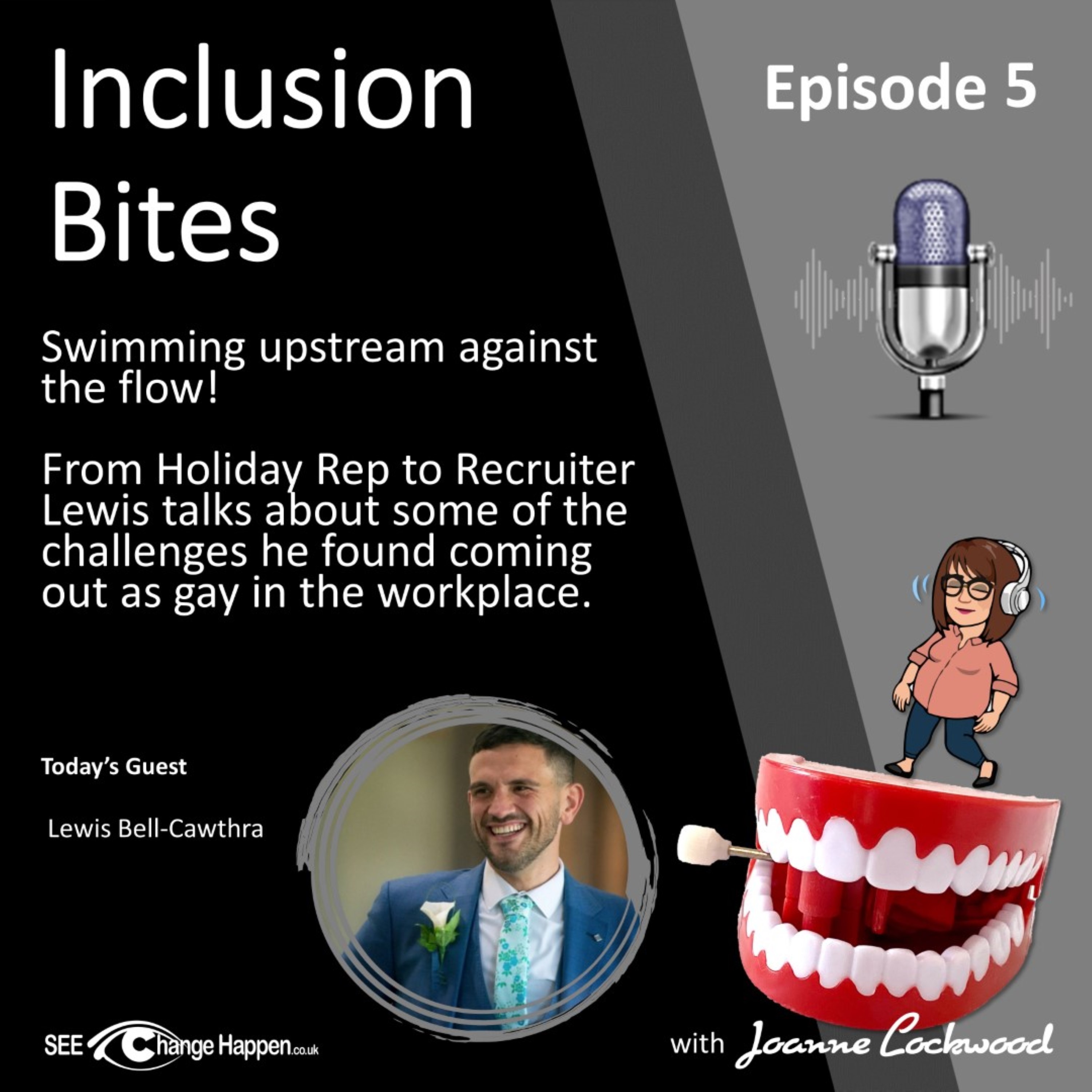
Lewis Bell-Cawthra reflects on what it has meant to “swim upstream” as a gay man moving from an accepting environment into a corporate recruitment culture where he experienced exclusion, stereotyping and homophobic abuse. He and Joanne Lockwood explore how everyday assumptions and workplace “banter” can escalate into real harm when leaders and HR minimise incidents rather than address them.
Lewis shares how he responded by choosing visibility and advocacy: becoming a trustee and communications lead for Exeter Pride, speaking with schools and businesses, and encouraging employers to treat inclusion as more than a tick-box exercise. He discusses practical changes he has made as a recruiter to challenge bias in hiring, including tailoring job adverts to attract broader audiences, anonymising details where appropriate, and having direct conversations with clients about diversity early in the relationship.
The conversation also touches on the importance of allyship and internal networks, building safe community spaces (including an LGBTQ+ football team), and sustaining motivation during furlough and lockdown through connection, routines and learning. Throughout, Lewis emphasises openness, persistence and finding or shaping workplaces where people can be themselves without having to repeatedly “come out.”
About Lewis Bell-Cawthra
One-sentence summary
A man who once tried to run from himself chose instead to stand still, speak up and build the spaces he wished had existed — so others wouldn’t have to feel alone.
---
Synopsis
Lewis Bell-Cawthra didn’t start out wanting to be visible. He admits he went into the travel industry “to escape… and not wanting to be gay and not wanting to be something that wasn’t the norm.” In that world, he found acceptance. But returning to the corporate recruitment sector in 2015, he was jolted by small, cutting assumptions — being asked why he hadn’t declared he was gay at interview, being left out of football socials because colleagues assumed he wouldn’t like it. Later, the assumptions escalated into abuse on a work night out. When he was told it would be easier to move on quietly than pursue a complaint, something shifted. He stopped trying to fit in and began deciding what he stood for.
What Lewis is trying to change is simple, and deeply human: he wants people to be able to walk into work — or onto a football pitch — without bracing themselves. He wants no one to have to “come out all over again” every time they enter a new room. He believes recruitment can either lock doors or open them, and he has chosen to use his influence to open them wider: anonymising CVs, challenging biased briefs, proudly displaying his pronouns, and even founding an LGBT football team when exclusion stung. His work is not about corporate optics; it’s about dignity, safety, and the feeling of being able to hold your partner’s hand in public without fear.
---
10 Small, digestible concepts for easy learning
1. You don’t stop coming out — you choose whether to hide.
New spaces often mean reintroducing yourself; safety determines how much of you arrives.
2. Assumptions exclude long before insults do.
Not being invited can wound as much as open hostility.
3. Silence protects systems, not people.
Being urged to “let it go” usually preserves comfort for the majority.
4. Visibility is a signal of safety.
A small pronoun on a signature can say, “You’re safe with me.”
5. If a space doesn’t exist, build one.
An LGBT football team began with loneliness in a pub.
6. Bias hides in ‘preferences’.
“Young”, “red brick”, “attractive” — coded language shapes lives.
7. Voice is a responsibility.
Recruitment isn’t just filling roles; it’s shaping who gets seen.
8. Education works better than outrage — most days.
Correct gently, persistently, and repeatedly.
9. Culture is easier to build than to repair.
New organisations can choose inclusivity from day one.
10. Belonging is practical, not theoretical.
It’s who gets invited, promoted, protected and heard.
---
The “why” in the story
What they believe is true about people
Lewis believes most people can learn. He believes that when someone is seen properly, they thrive — and when they aren’t, they shrink.
What they cannot unsee
He cannot forget being called a slur by a colleague and told it would be simpler not to pursue it. He cannot ignore that there is still no openly gay male professional footballer. He cannot ignore that he still hesitates to hold his husband’s hand in public.
What they are no longer willing to tolerate
He is no longer willing to pretend exclusion is banter. He is no longer willing to recruit for companies where someone must hide who they are.
What they are trying to build instead
He is building workplaces where identity isn’t a risk factor. He is building teams — on pitches and in offices — where difference isn’t a liability but a given.
---
Narrative structure
1. The trigger
A manager questioning why he hadn’t “declared” he was gay. Being left out of football invitations. A colleague shouting “dirty queer” and attempting to strike him. Then being encouraged to smooth it over.
2. The tension
He loves challenging conversations, yet grows tired of having to explain himself again and again. He wants to educate, but he also feels anger. He wants visibility, yet knows visibility can invite risk.
3. The insight
Waiting for permission doesn’t change culture. Small, consistent actions do. A flag in a signature. A direct conversation with a client. A refusal to add names to biased CV screening.
4. The pivot
He left the organisation that minimised his experience. In interviews afterwards, he deliberately mentioned his husband and Pride work. “If it does make a difference, then they’re not the right company for me.” He stopped shrinking and started screening employers as much as they screened him.
5. The destination
A world where no one has to rehearse who they are before a meeting. Where a gay teenager can join a football club without anxiety. Where marriage, family and ambition are not conditional.
---
Five key takeaways and learning points
1. Being excluded quietly still hurts loudly.
Pay attention to who isn’t invited — inclusion is often revealed in absence.
2. Policies don’t protect people if culture won’t.
HR processes mean little if leaders prioritise comfort over accountability.
3. Visibility changes who comes forward.
When you signal safety, people entrust you with honesty they hide elsewhere.
4. Influence sits in unexpected roles.
Recruiters, managers, teammates — all shape belonging more than they realise.
5. You can turn isolation into infrastructure.
What begins as a personal wound can become a community resource.
---
Ten distinct ideas explained
1. Coming out is repetitive.
Each new job, client or social circle resets the disclosure decision. That mental calculation is invisible labour.
2. Micro-decisions create macro-cultures.
Who gets invited to football, who gets described as ‘a good fit’ — these moments accumulate into systemic patterns.
3. Language subtly filters opportunity.
Job adverts coded with certain words attract or repel different applicants, shaping who dares apply.
4. Anonymity can protect — but also flatten.
Removing names reduces bias, yet risks stripping away identity; balancing fairness with humanity is delicate work.
5. Allies reduce risk.
Knowing there is someone you can go to shifts whether you speak up or stay silent.
6. Corporate reputation doesn’t equal safety.
Well-known organisations can still harbour cultures that excuse harm.
7. Community isn’t just social — it’s protective.
An LGBT football team isn’t about sport alone; it’s about psychological safety on the pitch.
8. Internalised myths shape belonging.
Lewis once absorbed stereotypes about his own community — proximity dissolves caricature.
9. Advocacy can coexist with humour and joy.
Fitness sessions, drag shows, Spice Girls in the garden — resilience is fuelled by delight.
10. Equality is legal; acceptance is emotional.
Marriage rights matter, but so does feeling safe holding hands on a high street.
---
How people should change as a result
1. Think
- Move from “Is this discriminatory?” to “Who might feel left out here?”
- Recognise that inclusion is built in everyday interactions, not annual statements.
- Understand that visibility carries risk as well as pride.
- See recruitment and leadership as gatekeeping power, not neutral processes.
2. Feel
- Shift from defensiveness to curiosity when corrected.
- Move from pity to respect — advocacy is strength, not fragility.
- Replace indifference with responsibility when witnessing exclusion.
- Allow discomfort to become growth rather than retreat.
3. Act
- Audit who gets invited to informal socials and why.
- Add your pronouns to your signature to normalise the practice.
- Challenge biased hiring briefs — rewrite them if needed.
- Offer to be an ally; mean it.
- If excluded, consider building or supporting an alternative space.
- Have one honest conversation you’ve been avoiding.
- Support local community initiatives that provide safe spaces for young people.
---
One thing to remember
If the world won’t make room for you, build the room — and leave the door open for others.