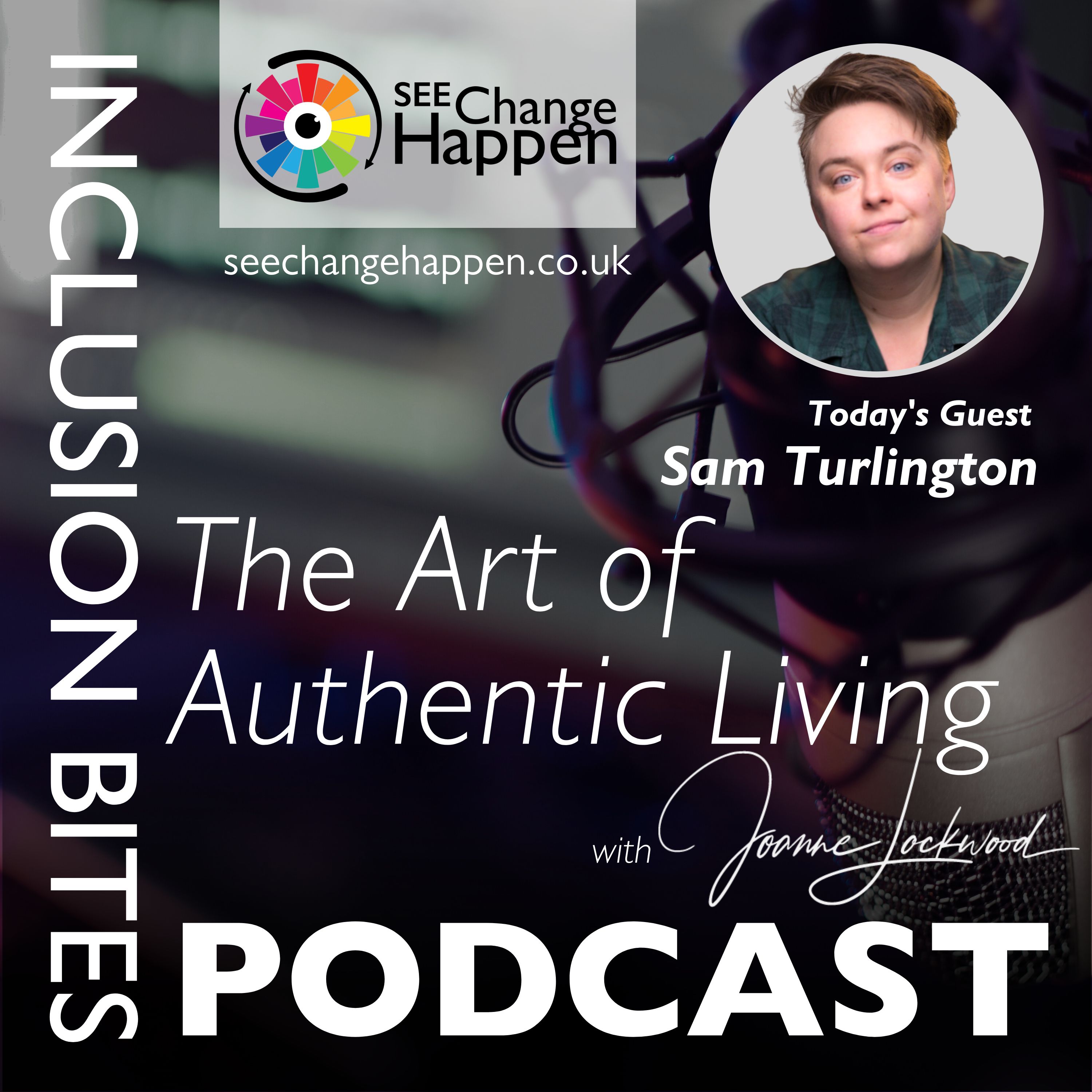
The Art Of Authentic Living
with Sam Turlington · 18 December 2025
Lived Experience Identity
Joanne Lockwood is joined by New York-based actor and multi-hyphenate creative Sam Turlington for a wide-ranging conversation about what it means to live authentically. Sam reflects on how curiosity and empathy shaped their path into performance, and how acting created unexpected routes into self-understanding, identity exploration, and more truthful storytelling.
Together they talk about representation in creative spaces, including when the arts feel welcoming and when they don’t. Sam shares experiences of bringing their identity to roles across genders, collaborating with directors and writers on the narrative implications of casting, and even adapting scripts and pronouns to make nonbinary identity visible and coherent within a production.
The discussion also touches on the lived realities of being visibly different—through gender expression and body size—and how everyday environments can be built without some bodies in mind. Against a backdrop of political pressure on queer communities in the US and UK, Sam describes “joy as resistance” and the importance of community connection, resilience, and finding places where people can both challenge and celebrate together.
About Sam Turlington
One-sentence summary
Sam Turlington’s message is that coming home to yourself — however long it takes — is worth the risk, because authenticity turns survival into joy and isolation into community.
---
Synopsis
Sam Turlington is a non-binary, award-winning actor who grew up in the American South feeling a quiet curiosity about a world bigger than the one they’d been given. Acting became their first passport out — a way to step into other lives, other bodies, other ways of being. What began as empathy training slowly turned inward. Playing a trans character, sitting across from a writer who gently asked them to be “curious about yourself”, Sam felt recognition instead of performance. “Is this me?” they remember asking. That role didn’t just shape their craft — it unlocked their identity. “Some people get here and make camp,” they say of being non-binary. “I got here and went, sweet, we’ve made it home.”
Now living in New York, working across theatre and film, Sam moves through the world visibly queer, visibly fat-bodied, visibly different — and deeply committed to joy. They have felt the weight of being “the only one in the room”, of carrying communities on their shoulders, of living in a country where their identity is debated and legislated. Yet what they protect is clear: connection, curiosity and dignity. “Being visible is me saying something,” they reflect. Instead of shrinking, Sam has chosen to expand — embracing what they call “joy as resistance”, building spaces where queer stories are not stereotypes but lived truths, and where authenticity isn’t a risk but a gift.
---
10 Small, digestible concepts for easy learning
1. Curiosity is a doorway.
What we’re brave enough to question — in others and in ourselves — often leads us home.
2. Empathy changes direction.
Learning to understand others can eventually make you understand yourself.
3. Not all binaries deserve your loyalty.
If a label boxes you in, you’re allowed to step off the line entirely.
4. Representation is lived knowledge.
“We know us, let us play us” — authenticity can’t be guessed from the outside.
5. Visibility carries weight.
Being the only one in the room means carrying both pride and pressure.
6. Joy can be defiance.
In hostile environments, happiness becomes a radical act.
7. The world isn’t built for every body — yet.
From theatre seats to restaurant aisles, design reveals who was considered.
8. Belonging evolves.
For some, identity is a journey; for others, it’s an arrival. Both are valid.
9. Community steadies the nervous system.
Shared struggle tightens bonds and restores hope.
10. Opening the door is optional — but powerful.
“Life is too short not to open the door and at least see what’s going on.”
---
The “why” in the story
What they believe is true about people
That at our core, we are built for curiosity, connection and togetherness — and that most people, when they see courage up close, can find empathy.
What they cannot unsee
How systems debate, shrink or ignore certain bodies — whether queer, trans or fat — and how exhausting it is to be politicised simply for existing.
What they are no longer willing to tolerate
Roles or narratives that cause harm. Spaces that demand silence. Stereotypes that flatten lived experience.
What they are trying to build instead
Art and communities where people are seen fully, where joy is shared, and where authenticity feels like home rather than rebellion.
---
Narrative structure
1. The trigger:
Playing a trans woman early in their career and sitting down with the playwright. As she described her experience, Sam remembers thinking, “I know this feeling.” When asked whether they had ever explored themselves, a door opened.
2. The tension:
Living visibly non-binary and fat-bodied in rooms not designed for them — audition spaces where “all eyes turn”, public spaces where chairs and aisles don’t fit, a country where identity is politicised. The fatigue of always being “on”.
3. The insight:
Authenticity deepens empathy. When Sam embraced who they were, they felt more connected — not less — to everyone else. “I’ve never felt so at home in myself and so joyful in the way that I live.”
4. The pivot:
Choosing to bring their whole identity into their work. Changing pronouns in Shakespeare. Challenging scripts. Declining harm. Embracing joy not as naïvety but as resistance.
5. The destination:
A world where no one is startled by difference. Where bodies fit the chairs. Where queer people are ordinary and celebrated. Where community feels stronger than fear.
---
Five key takeaways and learning points
1. You don’t have to know everything at once.
Self-understanding can unfold over time; curiosity is enough to begin.
2. Authenticity improves the work.
When Sam brought their real identity into a role, the story became richer — and more truthful.
3. Design reveals dignity.
The width of a chair or aisle quietly tells someone whether they were considered.
4. Being visible is labour.
Representation isn’t effortless; it carries responsibility and emotional cost.
5. Joy protects the spirit.
Choosing celebration in difficult times isn’t denial — it is preservation.
---
Ten distinct ideas explained
1. Playing yourself can be the bravest role.
Acting allowed Sam to hide at first; authenticity required stepping forward without a script.
2. Language shapes belonging.
When pronouns shifted in a Shakespeare production, it wasn’t cosmetic — it reflected dignity and narrative truth.
3. Stereotypes are shortcuts — not destinations.
They may open a conversation, but stopping there erases complexity.
4. Being ‘the only one’ is isolating.
It sharpens awareness and raises the stakes of every mistake.
5. Bodies remember exclusion.
The anxiety of sitting on fragile plastic chairs or squeezing through restaurant tables accumulates quietly.
6. Politics is personal.
Even if someone doesn’t follow laws, laws follow them home.
7. Community reduces fear.
Shared exhaustion becomes shared resilience.
8. Home can be discovered late.
Not everyone has language early in life; arrival is still real.
9. Art is a testing ground for identity.
The stage can model the world as it could be — inclusive, expansive, brave.
10. Rest is necessary resistance.
Advocacy requires energy; turning off is not betrayal but survival.
---
How people should change as a result
1. Think
- Move from seeing identity as a debate to seeing it as someone’s home.
- Notice how physical spaces reveal whose comfort was prioritised.
- Understand that visibility often equals vulnerability.
- Recognise that joy, especially for marginalised people, may carry cost.
2. Feel
- Shift from curiosity about labels to empathy for lived experience.
- Move from defensiveness to openness when confronted with difference.
- Replace pity with respect for resilience.
- Trade indifference for shared humanity.
3. Act
- Ask and use people’s pronouns without fuss or spectacle.
- Consider physical accessibility — seat widths, layout, movement — when organising events.
- Challenge stereotypes in conversations or creative briefs.
- Support work created by people telling their own stories.
- Check in on visibly marginalised colleagues — not with interrogation, but care.
- Make space for rest in yourself and others who carry representation labour.
- Choose small daily acts of joy that affirm your own authenticity.
---
One thing to remember
Coming home to yourself may feel risky — but it is where joy lives.