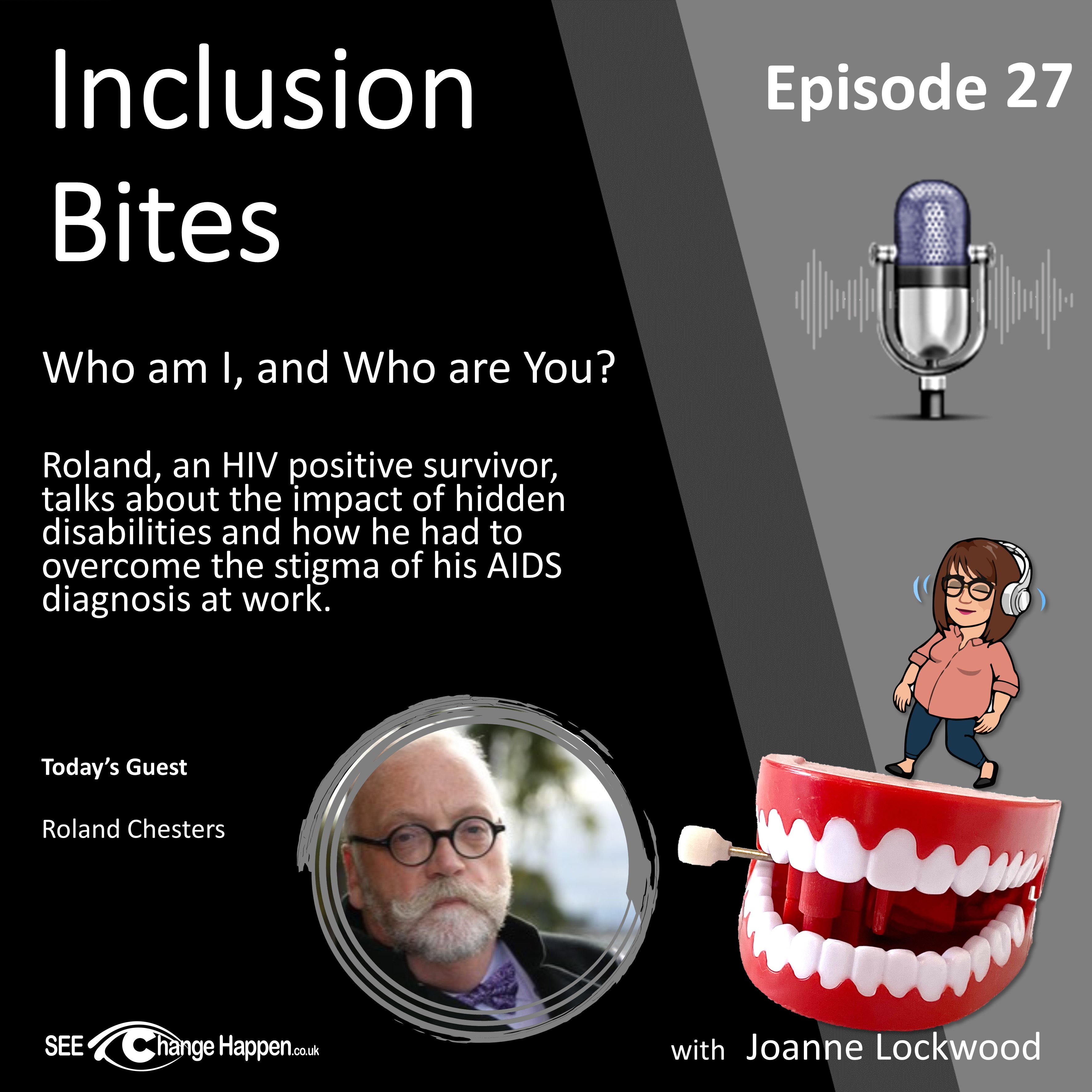
Who Am I, And Who Are You?
with Roland Chesters · 04 February 2021
Lived Experience Identity
Joanne Lockwood is joined by Roland Chester for a wide-ranging conversation about identity, labels, and the “hats” we wear in different contexts. Together they explore how intersectionality shows up in everyday life and why being able to bring your whole self to work matters for wellbeing, connection, and performance.
Roland shares his lived experience of being a gay man who once stayed closeted at work, and the shift he felt when he entered an environment where he could be open. He also speaks candidly about being diagnosed with HIV and AIDS, the stigma he encountered, and the impact workplace responses had on his ability to be authentic and on his mental health. The discussion covers myths and current information about HIV, including advances in treatment and prevention, and why education is still essential.
The episode also looks at how people make fast, automatic judgements, the role of unconscious bias, and how “slow thinking” can help us challenge assumptions. Joanne and Roland reflect on inclusion, safety, and belonging across workplaces and societies, including how visible and hidden aspects of identity can affect how people are treated. Roland closes by sharing his work in advocacy and education, including his book and involvement with the Positive Allies charter mark.
About Roland Chesters
One-sentence summary
Roland Chesters’ life is a testament to the quiet courage it takes to live as one whole person in the face of fear — and his refusal to shrink is rooted in the belief that authenticity is not indulgent, but essential for survival.
---
Synopsis (two paragraphs)
Roland Chesters is a man who has worn many labels — gay, civil partner, diplomat, HIV positive, AIDS survivor, disabled, campaigner — yet what defines him most is his deep commitment to being authentic. For years, he lived with the exhausting split of hidden identity: avoiding after-work drinks, censoring conversations, monitoring his words in case a “wrong” detail slipped out. When he joined the Foreign Office in 2000 and walked in with, as he describes it, his “metaphorical rainbow scarf gracefully draped” around him, he felt a profound relief. At last, he could speak freely about his partner, his weekends, his life. That freedom — being one person instead of two — changed everything.
But life tested that wholeness again. Diagnosed with HIV and AIDS and told he had two weeks to live, Roland faced not only mortality but institutional silence. When his employer told him he could not share his diagnosis because they “could not be held responsible” for how others might react, he felt stripped of authenticity once more. That denial hurt more than policy; it struck at dignity. Posters he later put up about living with HIV were vandalised, and he experienced fear in its rawest form. Yet instead of retreating, Roland chose education over bitterness. He recognised that hatred often masks fear, and fear flourishes in ignorance. His mission became clear: replace myth with truth, silence with story, and stigma with human connection.
---
10 Small, digestible concepts for easy learning
1. Authenticity is a relief, not a luxury.
When you stop editing yourself, your mind grows quiet.
2. Hidden identities consume energy.
A brain constantly on alert cannot fully engage.
3. Fear fuels stigma.
People often attack what they do not understand.
4. Education disarms ignorance.
Facts, patiently shared, weaken old mythologies.
5. Labels shift with context.
We wear many hats, but none should erase the others.
6. Privilege is layered.
A person can hold social advantage and still carry stigma.
7. Silence can wound.
Being told not to speak about who you are harms mental health.
8. Visibility carries risk — and power.
Choosing to be seen can change someone else’s future.
9. Authenticity increases productivity.
A settled mind performs better than a guarded one.
10. Slow thinking interrupts bias.
Pausing can prevent us from defaulting to fear-based judgement.
---
The “why” in the story
What they believe is true about people
Roland believes people are capable of understanding and kindness when given accurate information and space to think. He believes authenticity allows people to thrive.
What they cannot unsee
He cannot unsee the damage caused when stigma silences people — the mental exhaustion, the fear, the vandalised posters, the weight of hiding.
What they are no longer willing to tolerate
He is no longer willing to apologise for existing or accept institutional protectionism that prioritises reputation over human dignity.
What they are trying to build instead
A world where HIV is understood, difference is not feared, and people do not have to divide their lives into “safe” and “unsafe” compartments.
---
Narrative structure
1. The trigger
Being told he had two weeks to live. Later, being told he could not speak about his diagnosis.
2. The tension
Balancing safety with honesty. Facing ignorance masked as policy. Experiencing fear when his advocacy was met with vandalism.
3. The insight
Hatred is often a symptom of fear — and fear can be reduced with truthful, human conversation.
4. The pivot
He chose openness. He organised talks, wrote a book, became an ambassador, and publicly used his own name.
5. The destination
A future where someone newly diagnosed does not feel shame — and where workplaces respond with understanding rather than silence.
---
Five key takeaways and learning points
1. You cannot thrive while hiding.
So what: Concealing core parts of yourself drains mental and physical energy.
2. Stigma survives in ignorance.
So what: Accurate, current information is an act of care.
3. Authenticity strengthens organisations.
So what: People who feel safe bring their full talent to work.
4. Fast judgement fuels division.
So what: Slowing down helps us avoid reinforcing harm.
5. Visibility creates pathways.
So what: When someone stands up publicly, it becomes safer for others to follow.
---
Ten distinct ideas explained
1. The cost of living two lives
Constant self-monitoring creates cognitive overload, leaving little room for creativity or calm.
2. The peace of mental quiet
When identity fragments reunite, the mind settles; this is what belonging feels like internally.
3. Institutional overprotection
Policies framed as “care” can become silencing mechanisms that protect systems more than people.
4. Intersectionality lived, not theorised
Roland is privileged in some spaces and marginalised in others — identity cannot be reduced to a single category.
5. Hidden disability disclosure
When a condition is invisible, the burden of explanation repeatedly falls on the individual.
6. Public reaction as fear response
The defaced posters revealed how stigma is often driven by outdated narratives.
7. Education as activism
Hosting talks on World AIDS Day reframed HIV from taboo to topic.
8. Symbolic visibility
His bow ties and moustache are intentional — confidence armour for difficult conversations.
9. Echo chambers and tribal safety
People cling to group identity, sometimes prioritising belonging over truth.
10. Slow thinking as moral courage
Taking a pause allows us to choose response over reflex.
---
How people should change as a result
1. Think
- Move from “policy” to “person” when considering disclosure.
- Recognise that authenticity affects performance and wellbeing.
- Question your first judgement; your brain may be filling gaps.
- Understand that stigma often comes from outdated knowledge.
2. Feel
- Shift from discomfort to curiosity.
- Replace fear with informed compassion.
- Move from guilt to shared responsibility.
- Feel gratitude for those who speak openly so others can feel less alone.
3. Act
- Update yourself on current HIV facts — especially U=U.
- Challenge myths gently but firmly when you hear them.
- Ask colleagues what support would help them feel safe being open.
- Create moments for learning rather than whispering.
- Offer visible allyship — not performative, but consistent.
- Check your quick reactions before expressing them.
- Remember the unseen adjustments others may be managing daily.
---
One thing to remember
No one should have to split themselves in two just to feel safe at work.