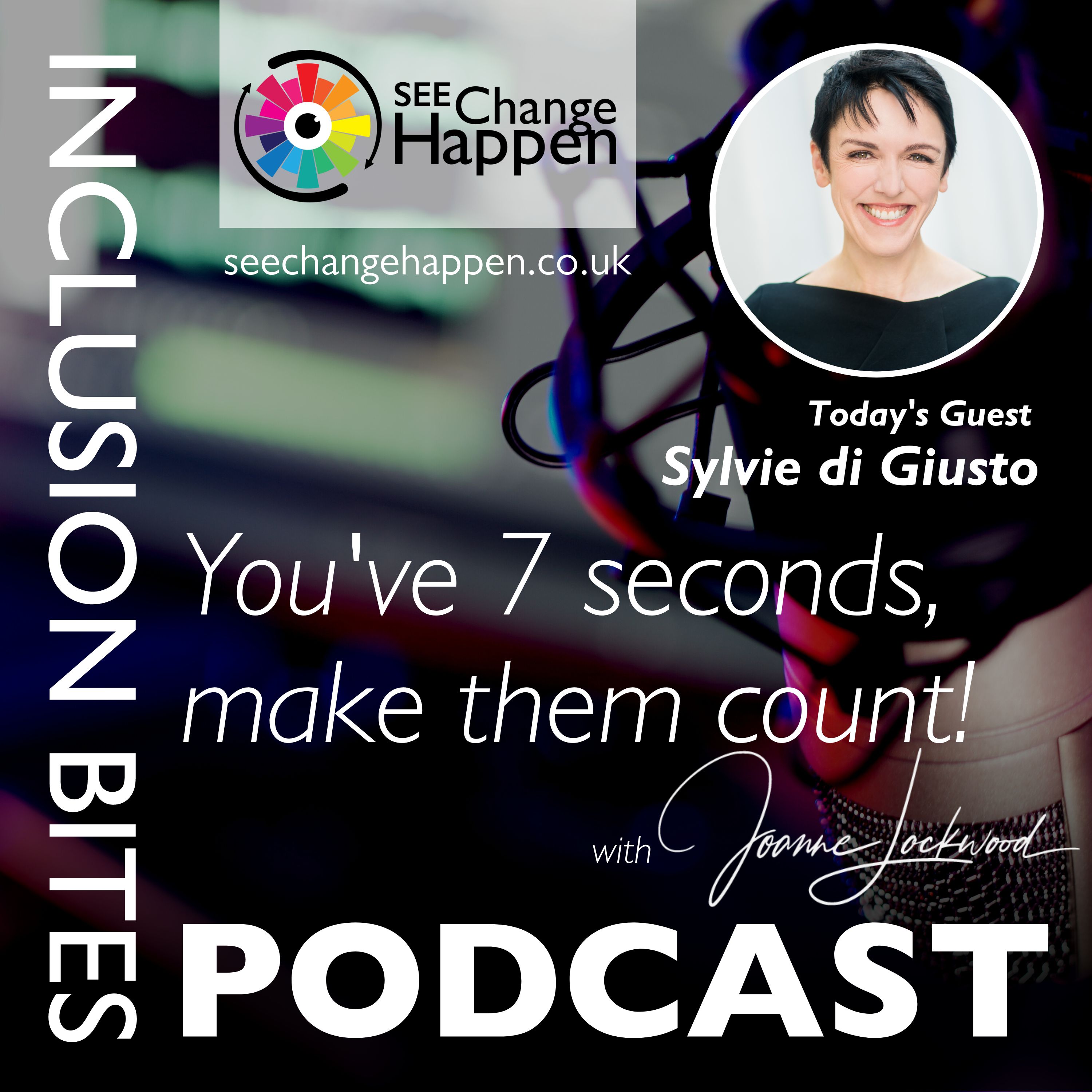
You’ve Seven Seconds, Make Them Count
with Sylvie di Giusto · 20 July 2023
Careers Growth Confidence
Joanne Lockwood is joined by personal branding and first-impression expert Sylvie di Giusto to unpack what really happens in the first few seconds of meeting someone, and why it matters for credibility, opportunity and inclusion.
Sylvie shares her ABCDE framework for first impressions: appearance, behaviour, communication, digital footprint and environment. Together they explore how these cues influence the assumptions people make at work, and how professionals can be more intentional about the signals they send in rooms, meetings and online. They also discuss authenticity in the context of professional life, including the trade-offs of sharing personal views on social media and how to communicate with respect for different audiences.
The conversation broadens into leadership and development: why organisations often hire for hard skills but lose leaders due to soft-skill gaps, and how self-awareness and emotional intelligence underpin better communication, empathy and active listening. Both reflect on confidence, imposter feelings, and the role of natural talents in helping people thrive and feel a stronger sense of belonging.
Along the way, Joanne references her identity as a trans woman and how discomfort or fear of “getting it wrong” can become a barrier to inclusion, while Sylvie shares a moment of learning after worrying she may have caused offence, highlighting accountability and growth as essential habits for respectful workplaces.
About Sylvie di Giusto
One-sentence summary
Sylvie di Giusto believes that who you are in the first few seconds — and how consciously you carry it — can either open doors to connection and belonging or quietly close them without your knowledge.
---
Synopsis
Sylvie di Giusto is someone who has learned, often the hard way, that what once felt like her weakness could become her power. Austrian by birth, American by choice, carrying an accent that once made her feel small in rooms full of polished commentators, she remembers watching herself on television and cringing. She felt out of place, less sophisticated, not quite enough. Until someone told her the truth: her difference was the reason she belonged there. Her clarity, her simplicity, her presence — that was the gift. That moment shifted something. She stopped trying to polish herself into sameness and began refining herself into alignment.
What she is trying to change is quiet but profound: the way people drift unconsciously through interactions without realising the impact they’re having. She knows we are judged instantly — that brains make decisions long before intentions are explained — and she refuses to let that be an invisible force. Instead, she teaches self‑awareness as a form of self‑respect. Because when people understand their appearance, behaviour, communication, digital footprint and environment, they don’t become artificial — they become intentional. And when someone feels intentional and aligned, others feel cared for. For Sylvie, this is not about manipulation; it is about dignity, presence and making sure no opportunity is lost simply because we didn’t understand the imprint we leave behind.
---
10 Small, digestible concepts for easy learning
1. Your difference may be your advantage.
What feels awkward to you might be exactly what makes you memorable.
2. You don’t stop being judged — you start being intentional.
First impressions happen anyway; awareness simply gives you agency.
3. Care is visible.
When you take care of yourself, others instinctively trust you to take care of them.
4. Authenticity isn’t carelessness.
Being real does not mean being reckless.
5. Listening makes you interesting.
People remember how seen they felt, not how clever you sounded.
6. Soft skills are human skills.
Technical ability may get you hired; emotional intelligence keeps you trusted.
7. Talent feels easy to you.
If something comes naturally and others struggle, pay attention — it might be your gift.
8. Alignment builds trust.
When how you look, speak and behave match, people relax.
9. Your digital self speaks before you do.
Often, you’ve already made an impression before entering the room.
10. Preparation is a form of respect.
Knowing something about someone before you meet them says, “You matter.”
---
The “why” in the story
What they believe is true about people
Sylvie believes people want to feel cared for, respected and understood — and that most of us are trying our best with incomplete awareness.
What they cannot unsee
She cannot unsee how many opportunities are quietly lost because someone’s presence, message or digital footprint misfired without them ever knowing.
What they are no longer willing to tolerate
She is no longer willing to shrink parts of herself — her accent, her background, her polish — just to blend in.
What they are trying to build instead
She is building a world where professionals understand their uniqueness, align it consciously, and walk into rooms with clarity instead of self-doubt.
---
Narrative structure
1. The trigger:
Watching herself on television, cringing at her accent among articulate political commentators. Feeling like the outsider.
2. The tension:
Wanting to belong without losing herself. Being perceived as polished and powerful — yet risking being seen as distant or intimidating.
3. The insight:
Her accent — the thing she saw as a flaw — was the reason she was invited back. Simplicity and difference were strengths.
4. The pivot:
She chose to study perception, self-awareness and first impressions, and to refine how she shows up without erasing who she is.
5. The destination:
Rooms where people feel cared for, seen and confident — where no one misses an opportunity simply because they misunderstood their own value.
---
Five key takeaways and learning points
1. Self-awareness is protection.
When you understand your strengths and blind spots, you reduce the chance of accidental harm or missed connection.
2. Perception shapes opportunity.
Even if it feels unfair, how others read you affects access to clients, promotions and trust.
3. You are the CEO of your career.
Waiting for someone else to define your value gives away your power.
4. Respect starts with self-respect.
Showing up prepared and present communicates dignity — for yourself and others.
5. Mistakes are inevitable; repair is optional.
Growth happens when you notice, ask, apologise and adjust.
---
Ten distinct ideas explained
1. First impressions are neurological, not personal.
The brain makes shortcuts. Knowing this reduces shame and increases responsibility.
2. Appearance communicates before intention.
Fair or not, people read signals instantly. Alignment prevents confusion.
3. Behaviour reveals emotional intelligence.
Micro‑moments — eye contact, phone use, posture — tell others whether they matter.
4. Voice carries identity.
Tone, pace and accent shape how safe or credible you feel to someone else.
5. Digital footprints outlive conversations.
Someone may decide about you long before you ever know they looked.
6. Environment reflects values.
Who and what you surround yourself with subtly shapes how others read your priorities.
7. Natural talent fuels belonging.
When you use your innate strengths, work feels less like performance and more like alignment.
8. Polish without warmth creates distance.
Excellence builds admiration; empathy builds connection.
9. Preparation reduces anxiety — for both sides.
When someone shows they’ve done their homework, it lowers social friction.
10. Care is the universal first impression.
Across industries and roles, people simply want to feel that you genuinely care.
---
How people should change as a result
1. Think
- Shift from “Is this fair?” to “How can I be intentional?”
- Move from “I hope they like me” to “How do I want them to feel?”
- See weaknesses as potential differentiators.
- Understand that presence is not vanity — it’s communication.
2. Feel
- From embarrassment to ownership about your differences.
- From defensiveness to curiosity when you make mistakes.
- From impostor syndrome to recognition of natural talent.
- From fear of judgement to responsibility for alignment.
3. Act
- Audit your digital presence — remove what doesn’t reflect who you are becoming.
- Prepare one thoughtful opener for important meetings.
- Ask a trusted friend what you’re naturally good at.
- Practise active listening — reflect back what someone has said before adding your own view.
- Apologise quickly when you misstep; learn publicly when appropriate.
- Identify one quality you want people to feel after meeting you — and act accordingly.
---
One thing to remember
What you see as your flaw might be the very reason you belong in the room.